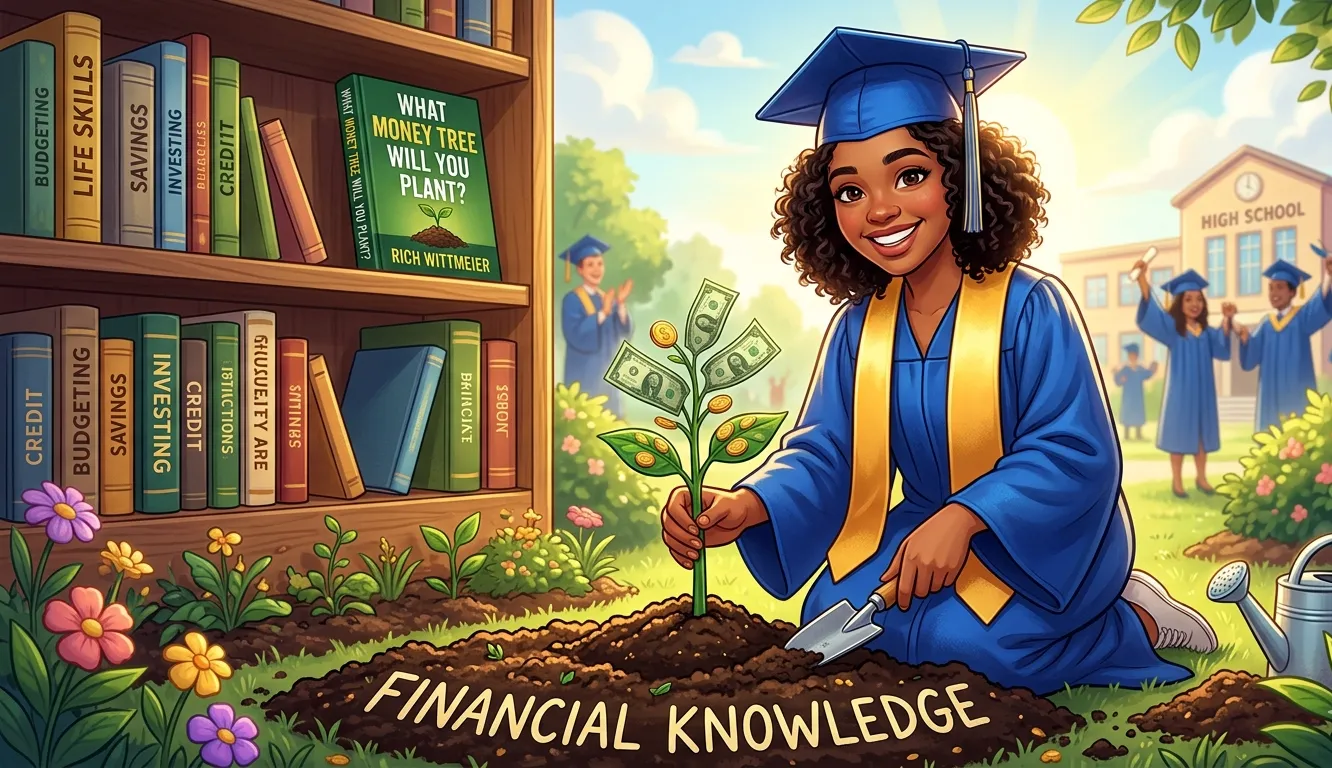

Financial literacy is no longer a “nice-to-have” skill. Instead, it is a life-essential foundation that shapes how young people navigate adulthood, make decisions and build long-term stability. Yet, across the United States, many high school students graduate without a clear understanding of budgeting, credit, debt, taxes or even basic financial planning.
This growing gap in education is exactly what inspired What Money Tree Will You Plant by Rich Wittmeier. More than just a book, it represents a mission, one that aims to equip high school juniors and seniors with the financial knowledge they need before stepping into the real world.
In this blog, we will explore how What Money Tree Will You Plant serves as a powerful educational tool, why Rich Wittmeier created it and how it contributes to improving financial education in America.
The Growing Need for Financial Education in Schools
To begin with, it is important to understand the problem this book addresses. Many students enter adulthood without understanding how money truly works. Although they may learn algebra, literature and science, they often receive little to no formal education on personal finance.
As a result, young adults frequently struggle with:
- Managing student loans.
- Understanding credit cards and interest rates.
- Budgeting monthly income and expenses.
- Planning for housing, transportation and taxes.
Moreover, financial stress becomes a common challenge early in adulthood. Without guidance, students often learn through trial and error, which can be costly.
This is where What Money Tree Will You Plant by Rich Wittmeier becomes especially valuable. It bridges the gap between academic learning and real-world financial readiness.
The Mission Behind What Money Tree Will You Plant
At its core, What Money Tree Will You Plant is driven by a mission rather than a trend. Rich Wittmeier is not a traditional financial expert or academic writer. Instead, he brings a unique perspective shaped by decades of real-world professional experience in engineering and executive leadership.
However, what truly motivated him was something more personal: a deep concern about the declining state of financial education in schools and the long-term impact it has on students.
Consequently, he created this book as a practical guide to help high school juniors and seniors think critically about their financial futures. Rather than overwhelming readers with complexity, he focuses on clarity, relevance and real-life application.
What Makes What Money Tree Will You Plant Different?
Unlike many financial books that target adults or professionals, What Money Tree Will You Plant is designed specifically for students preparing to enter adulthood. This makes it both accessible and highly relevant.
Additionally, the book avoids technical jargon and instead focuses on real-world scenarios students can relate to. For example, it addresses questions such as:
- Should I go to college or start working right away?
- How much will housing actually cost me?
- What happens if I misuse a credit card?
- How does inflation affect my future lifestyle?
Because of this approach, students are not just learning concepts; they are learning how those concepts apply directly to their lives.
Understanding Financial Decision-Making Early
One of the key strengths of What Money Tree Will You Plant by Rich Wittmeier is its emphasis on early financial decision-making. Transitioning from high school to adulthood is a critical phase where small choices can lead to long-term consequences.
For instance, choosing a college major, taking on student loans or entering the workforce all have financial implications. Therefore, the book helps students evaluate:
- Short-term needs vs. long-term goals.
- Immediate income vs. future earning potential.
- Costs of education vs. expected career outcomes.
Furthermore, it encourages students to think ahead instead of reacting to financial pressures after the fact.
Teaching Budgeting and Financial Discipline
Another major pillar of What Money Tree Will You Plant is budgeting. While many students hear about budgeting, few are actually taught how to apply it effectively in daily life.
To address this, Rich Wittmeier introduces budgeting in a practical and approachable way. He helps students understand how to:
- Track income and expenses clearly.
- Prioritize needs over wants.
- Plan for both expected and unexpected costs.
- Develop consistent financial habits.
In addition, the book emphasizes discipline. Budgeting is not just about numbers; it is about behavior. As students learn to control spending, they gain confidence in their financial decisions.
Credit, Debt and the Importance of Awareness
Transitioning into adulthood often comes with exposure to credit cards, loans and financing options. While these tools can be helpful, they can also lead to financial challenges if misunderstood.
Therefore, What Money Tree Will You Plant by Rich Wittmeier provides clear explanations of:
- How credit works.
- Why interest matters.
- How debt accumulates over time.
- How credit behavior affects future opportunities.
Moreover, it encourages students to think before they borrow. Instead of seeing credit as “extra money,” they learn to view it as a responsibility with long-term consequences.
As a result, students are better prepared to avoid common financial mistakes that many adults face later in life.
Preparing Students for Real-World Expenses
Another important aspect of financial readiness is understanding real-world costs. Unfortunately, many young people underestimate the financial demands of adulthood until they experience them firsthand.
What Money Tree Will You Plant helps bridge this gap by explaining:
- Housing and rental costs.
- Transportation and car ownership expenses.
- Taxes and paycheck deductions.
- Inflation and rising living costs.
Furthermore, it connects these concepts to real-life planning. Students begin to see how their career choices and education paths directly impact their financial future.
Building Confidence Through Financial Knowledge
One of the most valuable outcomes of financial education is confidence. When students understand how money works, they feel more in control of their lives.
Instead of feeling overwhelmed by financial decisions, they begin to:
- Plan with clarity.
- Make informed choices.
- Avoid unnecessary debt.
- Set realistic goals.
Additionally, they develop a mindset of long-term thinking, which benefits them well beyond high school and college.
The Author’s Perspective: Why Rich Wittmeier Wrote This Book
The story behind What Money Tree Will You Plant adds depth to its message. Rich Wittmeier’s background in engineering and executive leadership provided him with decades of real-world experience in problem-solving, planning and decision-making.
However, over time, he became increasingly concerned about the lack of financial education in schools. As he raised his family, he observed how unprepared many students were for real-life financial challenges.
Consequently, he decided to take action not through policy or criticism, but through education. This book is his contribution toward improving how young people understand money and prepare for their futures.
A Mission That Extends Beyond a Book
Ultimately, What Money Tree Will You Plant is more than just a reading resource. It is part of a larger mission to improve financial education across America.
By equipping students with practical financial knowledge early, the book helps reduce:
- Long-term debt struggles.
- Credit mismanagement.
- Financial anxiety.
- Poor economic decision-making.
Furthermore, it encourages schools, parents and educators to prioritize financial literacy as a core life skill.
Final Thoughts
In conclusion, financial education plays a critical role in shaping the future of young adults. Without it, many students enter life unprepared for the financial realities they will inevitably face.
However, What Money Tree Will You Plant by Rich Wittmeier offers a meaningful solution. Through simple explanations, real-world examples and practical guidance, it helps students build the financial awareness they need to succeed.
Most importantly, it inspires them to think differently about money, not just as something they earn or spend, but as something they must understand and manage wisely.
As the next generation prepares to make life-changing decisions, one question becomes especially important:
What money tree will you plant and how will it shape your future?






















Sign in to leave a comment.