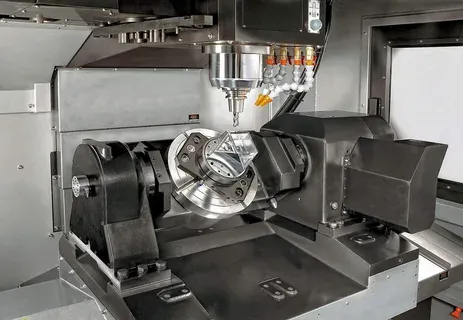

In today’s fast-evolving manufacturing landscape, precision, efficiency, and flexibility are essential for success. One technology that has revolutionized both prototyping and large-scale production is five-axis CNC machining. Unlike traditional machining methods, this advanced process allows movement along five different axes simultaneously, enabling manufacturers to create complex geometries with remarkable accuracy.
Whether you are developing a prototype or scaling up for mass production, five-axis CNC machining offers a competitive edge. It reduces setup time, enhances surface finish, and minimizes errors, making it a preferred choice across industries such as aerospace, automotive, medical, and electronics. This article explores how this technology supports both prototyping and mass production effectively.
Understanding Five-Axis CNC Machining
Five-axis CNC machining involves the simultaneous movement of cutting tools along five axes—X, Y, Z, and two rotational axes (A and B). This capability allows manufacturers to approach a workpiece from virtually any direction, eliminating the need for multiple setups.
This advanced machining process is particularly beneficial when working with complex parts that require intricate details and tight tolerances. Instead of repositioning the part manually, the machine adjusts automatically, improving precision and reducing production time.
Key features include:
- Simultaneous multi-axis movement for complex shapes
- Reduced need for multiple setups
- Enhanced precision and consistency
- Ability to machine hard-to-reach areas
- Improved surface finish
These features make five-axis CNC machining a powerful tool for both rapid prototyping and high-volume manufacturing.
Advantages in Prototyping
When it comes to prototyping, speed and accuracy are critical. Five-axis CNC machining enables engineers to quickly transform digital designs into physical models with minimal errors. This reduces development time and accelerates product innovation.
Additionally, the flexibility of this machining process allows for quick design modifications. Engineers can test different iterations without the need for extensive retooling, making it ideal for research and development projects.
Benefits for prototyping include:
- Faster production of complex prototypes
- High precision for accurate testing
- Reduced material waste
- Easy design adjustments and iterations
- Shorter time-to-market
With these advantages, businesses can validate their designs efficiently before moving to mass production.
Efficiency in Mass Production
While prototyping focuses on flexibility, mass production demands consistency and efficiency. Five-axis CNC machining excels in this area by delivering uniform results across large production runs. Its automation capabilities ensure that each part meets the same quality standards.
The reduction in manual intervention also lowers the risk of human error. This not only improves product reliability but also reduces operational costs over time. Manufacturers can achieve higher output without compromising quality.
Advantages for mass production include:
- Consistent quality across all units
- Reduced cycle times
- Lower labor costs due to automation
- Minimal rework and scrap
- Increased production efficiency
As a result, companies can scale their operations while maintaining high standards.
Cost-Effectiveness and Time Savings
Although the initial investment in five-axis CNC machining equipment may be higher than traditional machines, the long-term benefits outweigh the costs. By combining multiple operations into a single setup, manufacturers save both time and resources.
Fewer setups mean less downtime and faster production cycles. Additionally, the improved accuracy reduces the need for secondary finishing processes, further lowering costs.
Cost-saving factors include:
- Reduced setup and machining time
- Lower labor requirements
- Decreased material waste
- Fewer finishing operations
- Increased tool life due to optimized cutting paths
These factors contribute to a more efficient manufacturing process, making it a cost-effective solution for businesses of all sizes.
Applications Across Industries
The versatility of five-axis CNC machining makes it suitable for a wide range of industries. From creating intricate medical devices to manufacturing aerospace components, this technology meets diverse production needs.
Its ability to handle complex geometries and tight tolerances ensures that it can produce high-quality parts for demanding applications. This adaptability makes it a valuable asset for both small-scale and large-scale manufacturers.
Common applications include:
- Aerospace components with complex shapes
- Automotive parts requiring precision
- Medical implants and surgical tools
- Electronics housings and components
- Industrial machinery parts
These applications highlight the importance of five-axis CNC machining in modern manufacturing.
Conclusion
Five-axis CNC machining has become a cornerstone of modern manufacturing, bridging the gap between prototyping and mass production. Its ability to produce complex parts with high precision and efficiency makes it an invaluable tool for businesses aiming to stay competitive.
From accelerating product development to ensuring consistent quality in large-scale production, this technology offers numerous advantages. By investing in five-axis CNC machining, manufacturers can streamline their operations, reduce costs, and deliver superior products to the market.


























Sign in to leave a comment.