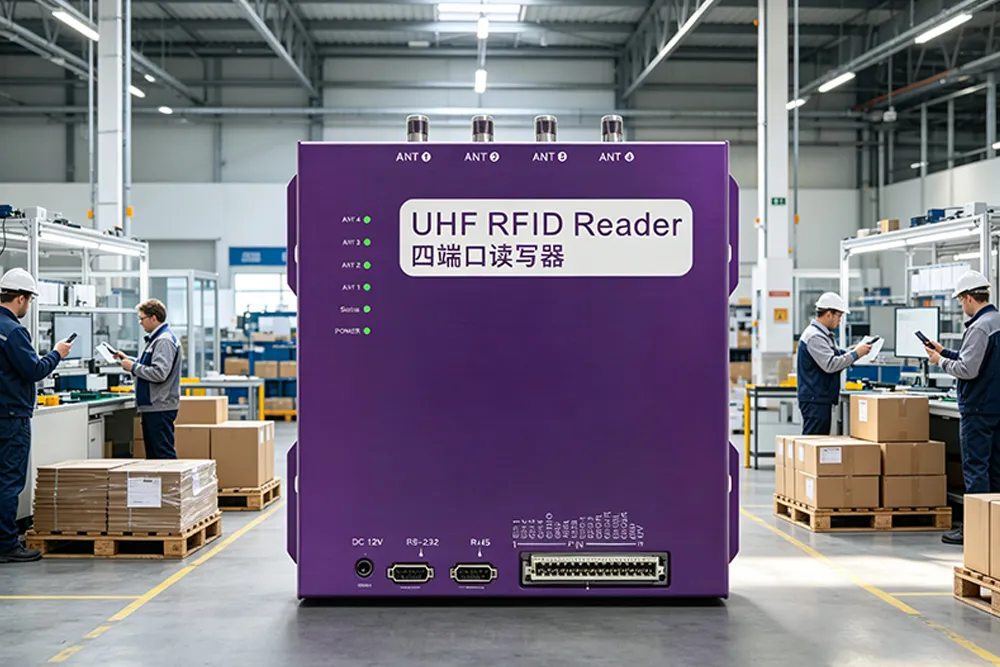

In many RFID projects, the spotlight often falls on tags, software platforms, or cloud dashboards. Yet after years of working with warehouse operators, manufacturing managers, and logistics integrators, I have learned that the true backbone of most automated RFID systems is the fixed reader.
A properly deployed fixed reader operates quietly in the background. It never asks for attention. It simply captures data day after day, whether inventory is moving through a dock door at 6 a.m. or production components are crossing a workstation at midnight.
The difference between a successful RFID deployment and one that constantly requires troubleshooting is often not the software. It is usually how the fixed reader has been selected, positioned, and configured within the physical environment.
At Cykeo, our engineering team has participated in RFID deployments across warehouses, manufacturing facilities, tool cribs, asset management projects, and logistics hubs. One lesson remains consistent: RFID hardware specifications matter, but environmental understanding matters more.
Why a Fixed Reader Remains the Core of RFID Infrastructure
Unlike handheld devices that rely on operators, a fixed reader continuously monitors RFID-tagged assets without human intervention.
Installed at strategic locations, readers automatically collect information whenever tagged items enter a designated read zone.
Common installation points include:
- Warehouse dock doors
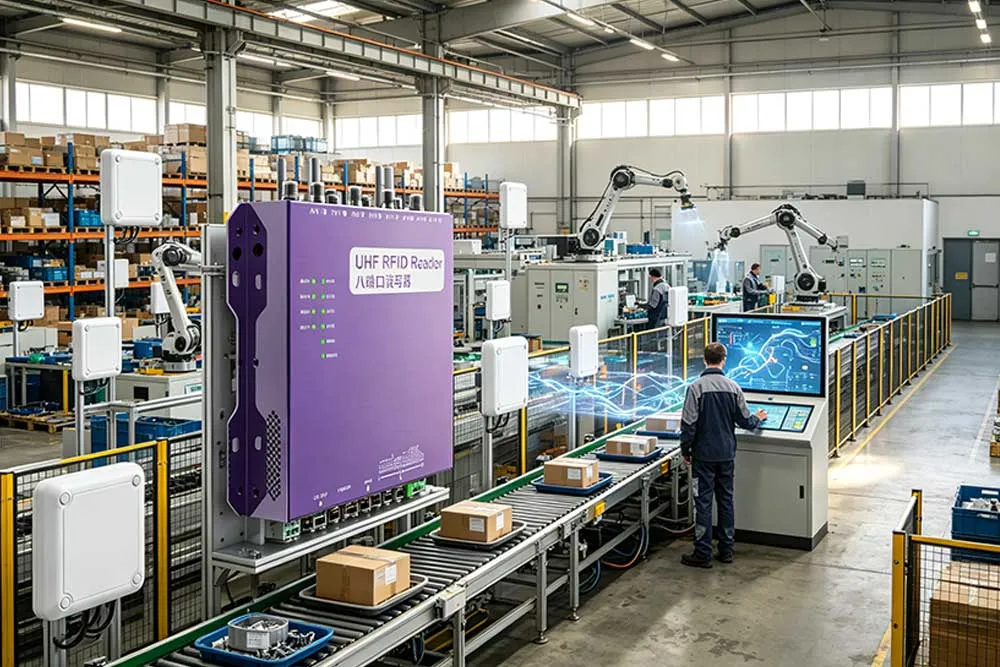
- Conveyor systems
- Production workstations
- Inventory storage zones
- Tool checkout stations
- Vehicle access gates
- Automated sorting lines
The ability to operate continuously makes fixed readers essential for organizations seeking real-time visibility.
According to the RFID technology standards organization GS1, automated data capture significantly reduces manual entry errors while improving inventory accuracy across supply chain operations.
The key word here is "automated."
Automation only works when data collection happens consistently.
That responsibility falls directly on the fixed reader.
The First Warehouse Project That Changed My View
Several years ago, I visited a regional distribution center that planned to replace barcode scanning with RFID.
The management team expected immediate productivity gains.
The hardware installation seemed straightforward.
Four readers.
Eight antennas.
Several loading doors.
Everything looked perfect during testing.
Then live operations began.
Forklift drivers occasionally stopped pallets near the portal instead of driving directly through. Inventory accumulated temporarily beside the loading area. Suddenly, the system started collecting unexpected reads.
The readers were functioning exactly as designed.
The workflow was not.
What solved the issue was not replacing equipment. We redesigned the read zone geometry and adjusted antenna angles.
Read accuracy improved immediately.
That experience reinforced a reality many buyers overlook:
A fixed reader performs within the environment it is given.
The environment often determines success.
How Modern Fixed Reader Technology Works
A fixed reader communicates with RFID tags through radio frequency signals.
The process happens in milliseconds:
- The reader transmits RF energy.
- Nearby RFID tags receive power.
- Tags respond with unique identification data.
- The reader captures and forwards information to software systems.
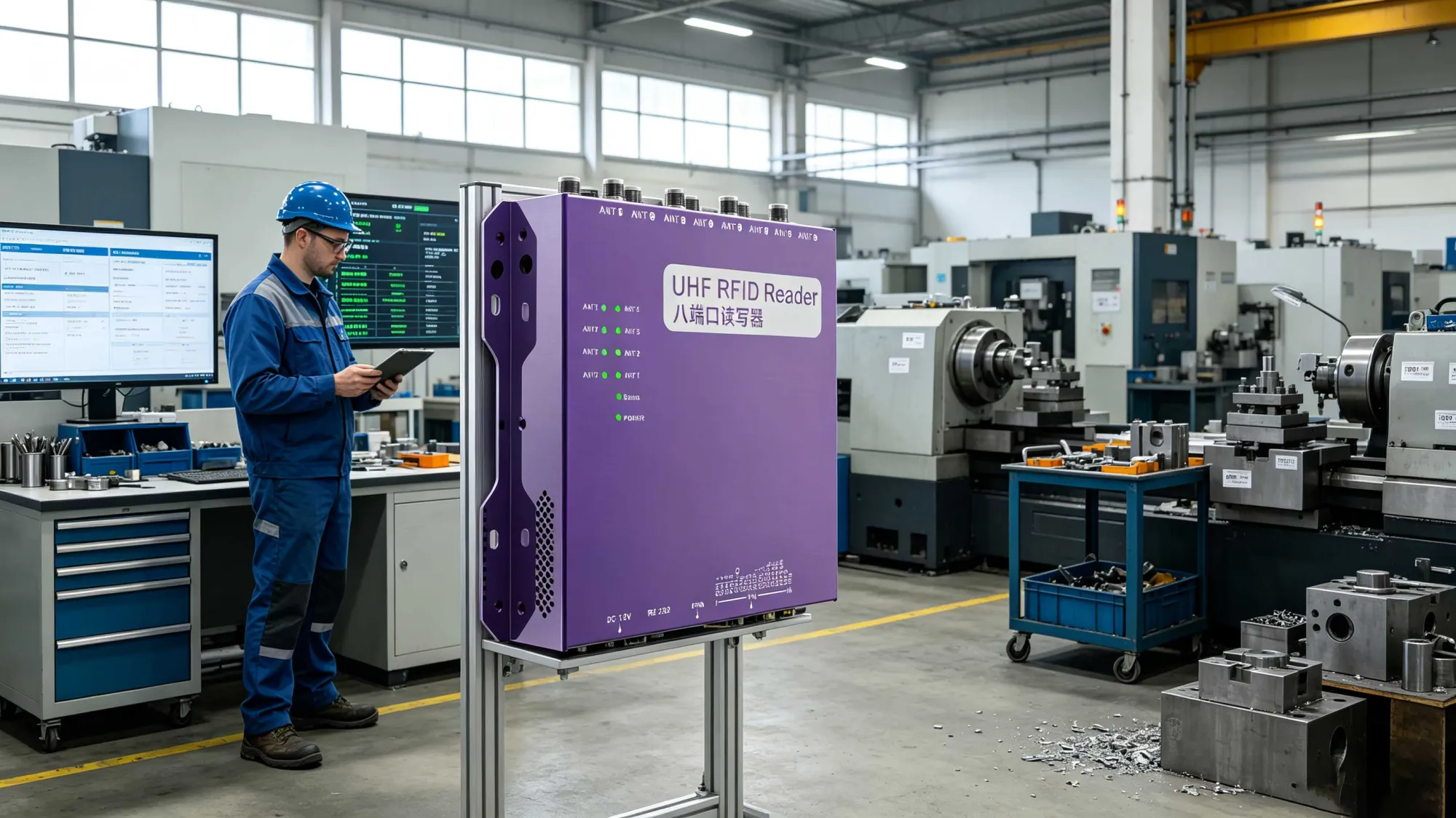
Modern UHF readers support:
| Capability | Operational Benefit |
|---|---|
| Multi-tag reading | Read hundreds of tags simultaneously |
| Long-range detection | Monitor large operational zones |
| Network connectivity | Real-time system integration |
| Multi-antenna support | Flexible coverage design |
| Continuous operation | 24/7 monitoring capability |
According to the RAIN RFID Alliance, billions of RFID tags are now deployed annually worldwide, with logistics and industrial operations among the fastest-growing adoption sectors.
The increasing volume of deployments has elevated the importance of robust fixed reader infrastructure.
Industrial Fixed Reader Deployments Require Different Thinking
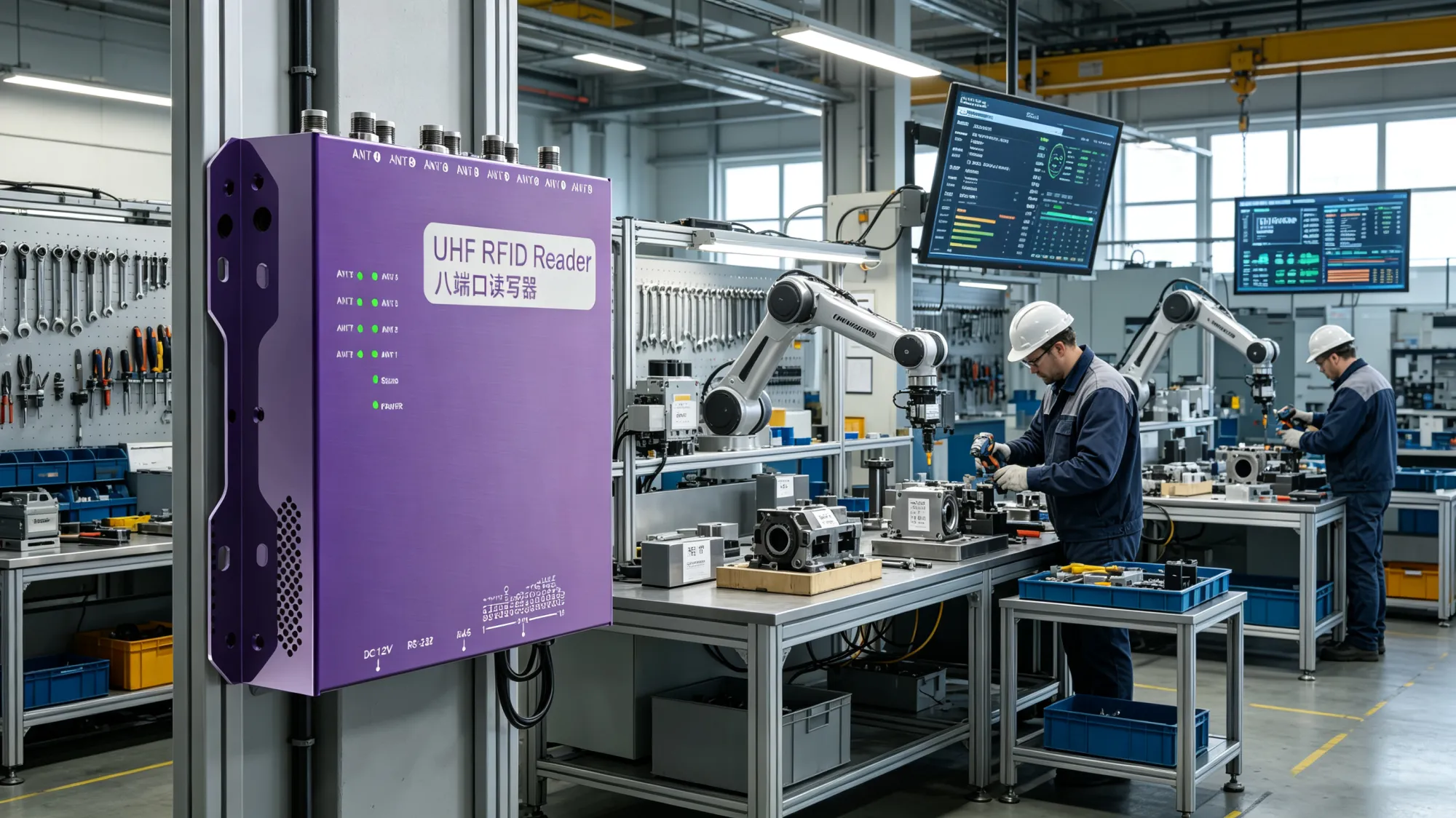
An industrial fixed reader faces challenges that office or retail environments rarely encounter.
Factories contain:
- Steel structures
- Machinery
- Conveyor systems
- Electrical equipment
- Vibration
- Dust
- High temperatures
Each factor influences RF performance.
One manufacturing facility we supported produced heavy metal components. During commissioning, read rates fluctuated unpredictably.
Initial suspicion focused on reader settings.
The actual problem was reflected RF energy caused by nearby steel worktables.
Relocating the antennas by less than one meter significantly improved performance.
No hardware replacement was necessary.
RF behavior often surprises people because it cannot be seen.
Yet it directly impacts every RFID installation.
Warehouse RFID Fixed Reader Systems and Inventory Accuracy
Inventory accuracy remains one of the most common reasons companies adopt RFID.
Research conducted by Auburn University's RFID Lab has repeatedly demonstrated that RFID can achieve inventory accuracy levels exceeding traditional barcode-based processes in many operational environments.
A warehouse RFID fixed reader creates visibility that manual scanning simply cannot match.
For example:
A pallet enters receiving.
The reader captures every tagged case.
Inventory updates automatically.
No scanning gun.
No paperwork.
No delay.
When thousands of items move through a facility each day, those saved seconds accumulate rapidly.
More importantly, visibility improves.
Warehouse managers can locate inventory faster because the system knows where assets were last detected.
UHF Fixed Reader Installations Are Growing Rapidly
The majority of modern RFID infrastructure relies on UHF technology.
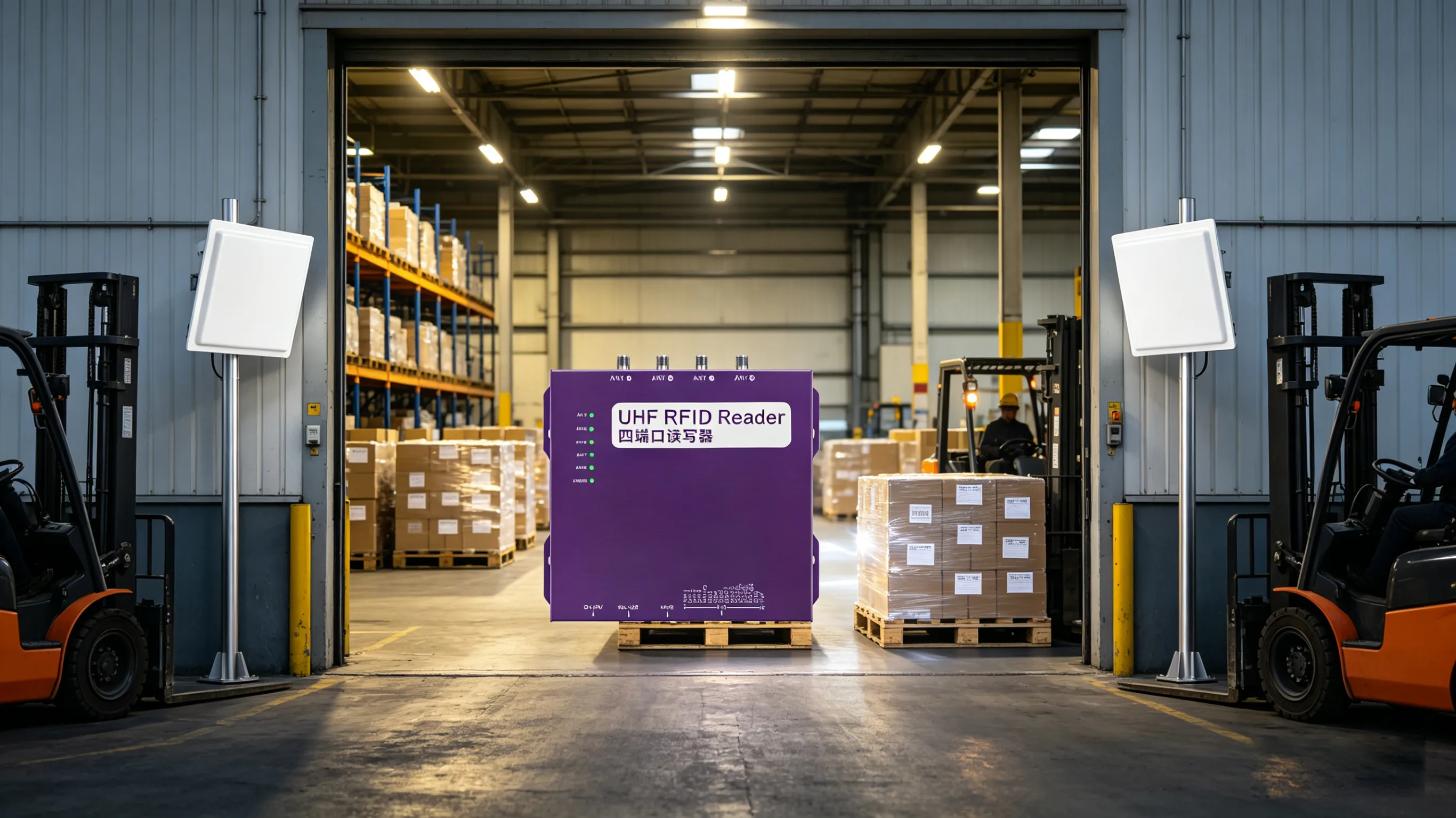
A UHF fixed reader offers several advantages:
Extended Read Range
UHF readers can support portal-based applications, vehicle identification systems, and warehouse automation projects.
Faster Throughput
Large groups of tags can be identified simultaneously.
Global Standards Support
Most enterprise RFID deployments rely on EPC Gen2 and RAIN RFID standards.
Scalability
Additional antennas, software modules, and read zones can be added as operations expand.
These characteristics make UHF technology particularly attractive for logistics, manufacturing, and industrial automation.
The Most Common Mistake in Fixed Reader Projects
Interestingly, the most frequent deployment issue is not hardware failure.
It is over-coverage.
Many organizations initially request maximum reading distance.
More range sounds better.
In practice, excessive coverage often creates unwanted reads.
I recall a logistics site where readers successfully detected inventory located inside adjacent staging areas.
Technically, the reader performed exceptionally well.
Operationally, the data became confusing.
Reducing RF power and narrowing coverage improved accuracy.
RFID success is often about reading the correct tag rather than reading the most tags.
That distinction matters.
What Experienced RFID Engineers Evaluate First
When reviewing a proposed RFID installation, our Cykeo engineering team typically evaluates several factors before discussing hardware models.
Asset Characteristics
- Metal assets
- Plastic containers
- Liquid-filled products
- Mixed inventory
Environmental Conditions
- Temperature
- Humidity
- Dust exposure
- Electromagnetic interference
Operational Flow
- Forklift traffic
- Conveyor speed
- Worker movement
- Inventory density
Read Objectives
- Identification
- Verification
- Tracking
- Process automation
Understanding these factors often prevents expensive redesigns later.
Why Fixed Readers Continue to Drive RFID Growth
Industry demand for automation continues increasing.
Warehouses need better visibility.
Manufacturers require real-time production tracking.
Logistics providers want faster throughput.
The fixed reader sits at the center of these requirements.
While software receives much of the attention, accurate software decisions depend entirely on accurate data collection.
That data begins with the reader.
After observing RFID deployments across diverse industries, one conclusion remains clear: organizations that invest time in reader placement, RF planning, and workflow design achieve better long-term results than those focused solely on hardware specifications.
The technology itself is mature.
The advantage now comes from implementation.
For businesses pursuing operational visibility, automation, and asset traceability, a properly engineered fixed reader solution remains one of the most valuable components in modern RFID infrastructure.
About the Author
This article was written by the Cykeo RFID engineering team, drawing on practical deployment experience across warehouse automation, industrial manufacturing, asset tracking, logistics management, and inventory control projects. Our specialists work with UHF RFID systems, fixed readers, antennas, and enterprise integration platforms to help organizations achieve reliable RFID performance in real-world environments.
























Sign in to leave a comment.