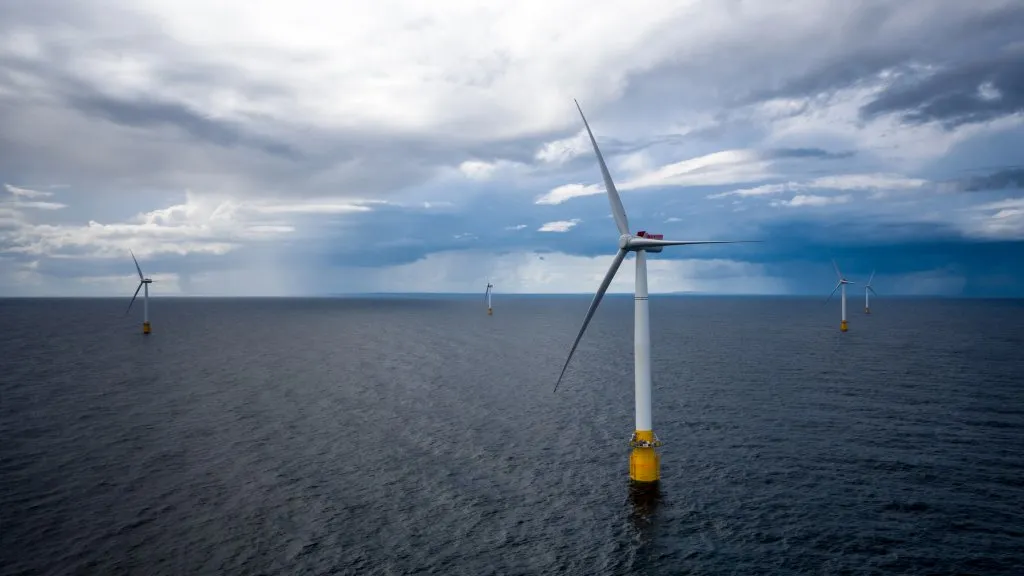

The world is always looking for better ways to produce clean energy, and floating wind is becoming one of the most promising answers. Unlike traditional wind turbines that are fixed to the ocean floor in shallow waters, floating wind turbines can operate in deep seas where winds are stronger and more consistent. This opens up a massive portion of the world's coastline that was previously off-limits for wind energy. Countries with deep coastal waters, like Japan, Norway, and parts of the United States, can now tap into this resource in a way that was simply not possible a decade ago.
Why Deep-Sea Wind Energy Matters
Most offshore wind farms today are built in waters no deeper than 60 meters. Beyond that depth, fixed foundations become too expensive and technically difficult to install. The problem is that a large share of the best wind resources sits in waters that are 60 to 1,000 meters deep. That is where floating turbines come in.
Floating wind platforms are anchored to the seabed with mooring lines, which means they can stay stable even in very deep water. This approach dramatically increases the geographic range for wind energy development. Areas like the Pacific Coast of North America, much of the Mediterranean, and the coast of Japan are now potential sites for large-scale clean energy production.
How the Technology Actually Works
A floating wind turbine sits on a platform that is designed to remain upright and stable on the water surface. There are a few main platform types in use today: semi-submersible platforms, spar-buoys, and tension leg platforms. Each one handles the movement of ocean waves a little differently, but all of them keep the turbine functioning in a reliable way.
Floating offshore wind technology has improved rapidly over the past several years. Early prototypes faced challenges with how to transmit electricity from turbines far out at sea back to the shore grid. Today, developers use dynamic cables and floating substations to solve this. The cost of the technology is also coming down as more projects get built and engineers refine the designs.
Case Study 1: DemoSATH, Spain
The DemoSATH project became Spain's first floating wind turbine to connect to the national electricity grid when it began generating power in September 2023. Located about two miles off the Basque coast, it was developed by Saitec Offshore Technologies alongside RWE and Japan's Kansai Electric Power. The project uses a 2-megawatt turbine on a prestressed concrete twin-hull platform, a design that stands out from conventional floating structures. Its annual output covers the electricity needs of roughly 2,000 Spanish households. The project also runs an environmental monitoring program studying how the platform affects birds, marine life, and underwater sound, and has been officially recognized by Spain's Ministry for Ecological Transition.
Case Study 2: WindFloat Atlantic, Portugal
The WindFloat Atlantic project off the coast of Portugal is one of Europe's first commercial-scale floating wind installations. It uses three semi-submersible platforms and has a capacity of 25 megawatts. The project, led by a consortium including EDP Renewables, has been supplying power to the Portuguese grid since 2020. It proved that floating platforms can survive Atlantic Ocean storm conditions while continuing to generate electricity consistently. The project has been widely cited as a model for future floating wind development in southern Europe and beyond.
Challenges That Still Need Solving
Despite the progress, floating wind is not without its difficulties. Installation costs remain higher than those for fixed-bottom offshore wind. Moving large turbine assemblies far offshore, connecting them to the grid, and maintaining them in deep water all add to the expense. Supply chain capacity is another concern, as the world does not yet have enough specialized vessels and manufacturing facilities to support rapid large-scale deployment.
Grid connection is also complex. Long underwater cable runs from deep-water sites to onshore grids require significant investment. Regulatory frameworks in many countries have not yet caught up with the speed at which the technology is developing, which can slow down project approvals.
That said, costs have been falling steadily, and there is strong momentum from governments and private investors who see floating wind as a critical part of the clean energy future.
What the Future Looks Like
The global pipeline for floating wind projects is growing quickly. Several countries, including the United Kingdom, South Korea, and the United States, have announced targets and policy frameworks specifically for floating wind. The UK alone has set a goal of 5 gigawatts of floating wind capacity by 2030.
As the industry scales up, events like the Floating Offshore Wind Conference play an important role in connecting developers, policymakers, engineers, and investors. These gatherings help accelerate knowledge sharing and collaboration, which in turn speeds up project development and cost reduction across the sector.
The technology is expected to become cost-competitive with fixed-bottom offshore wind within this decade. When that happens, it will unlock an enormous amount of new clean energy capacity around the world.
Conclusion
Floating wind is not just an experimental idea anymore. It is a real, working technology that is already powering homes and industries. With successful projects in Norway and Portugal leading the way, and with growing policy support from governments worldwide, the path forward is becoming clearer. Events such as the Floating Offshore Wind Conference are helping to bring the global industry together and push progress forward faster. As costs continue to fall and more projects are built, floating wind will become an increasingly important part of how the world generates clean, reliable electricity from the ocean.
Frequently Asked Questions
1. What is floating wind energy and how is it different from regular offshore wind?
Floating wind energy uses turbines mounted on floating platforms that are anchored to the seabed, rather than fixed directly to the ocean floor. This allows them to be installed in much deeper water, typically beyond 60 meters, where conventional offshore wind turbines cannot be placed. The result is access to stronger, more consistent wind resources that were previously unreachable.
2. Is floating wind technology proven and reliable?
Yes. Projects like Hywind Tampen in Norway and WindFloat Atlantic in Portugal have shown that floating wind turbines can operate reliably in real ocean conditions, including rough weather and strong currents. The technology has moved well beyond the prototype stage and is now entering commercial-scale deployment.
3. Why is floating wind more expensive than other types of wind energy?
The higher cost comes from the complexity of designing and building floating platforms, installing them far offshore in deep water, and connecting them to onshore electricity grids through long submarine cables. However, these costs have been declining year by year as more projects are completed and the supply chain matures.
4. Which countries are leading in floating wind development?
Norway, the United Kingdom, Portugal, and Japan are among the frontrunners. Norway has the advantage of deep fjords and a strong offshore engineering industry from its oil and gas sector. The UK has set ambitious capacity targets, while Japan is actively developing projects to address its lack of shallow coastal shelf.
5. When will floating wind become affordable enough for widespread use?
Many industry analysts and developers expect floating wind to reach cost parity with fixed-bottom offshore wind sometime in the late 2020s or early 2030s. Continued improvements in platform design, installation methods, and manufacturing scale are expected to drive costs down to that level within the current decade.























Sign in to leave a comment.