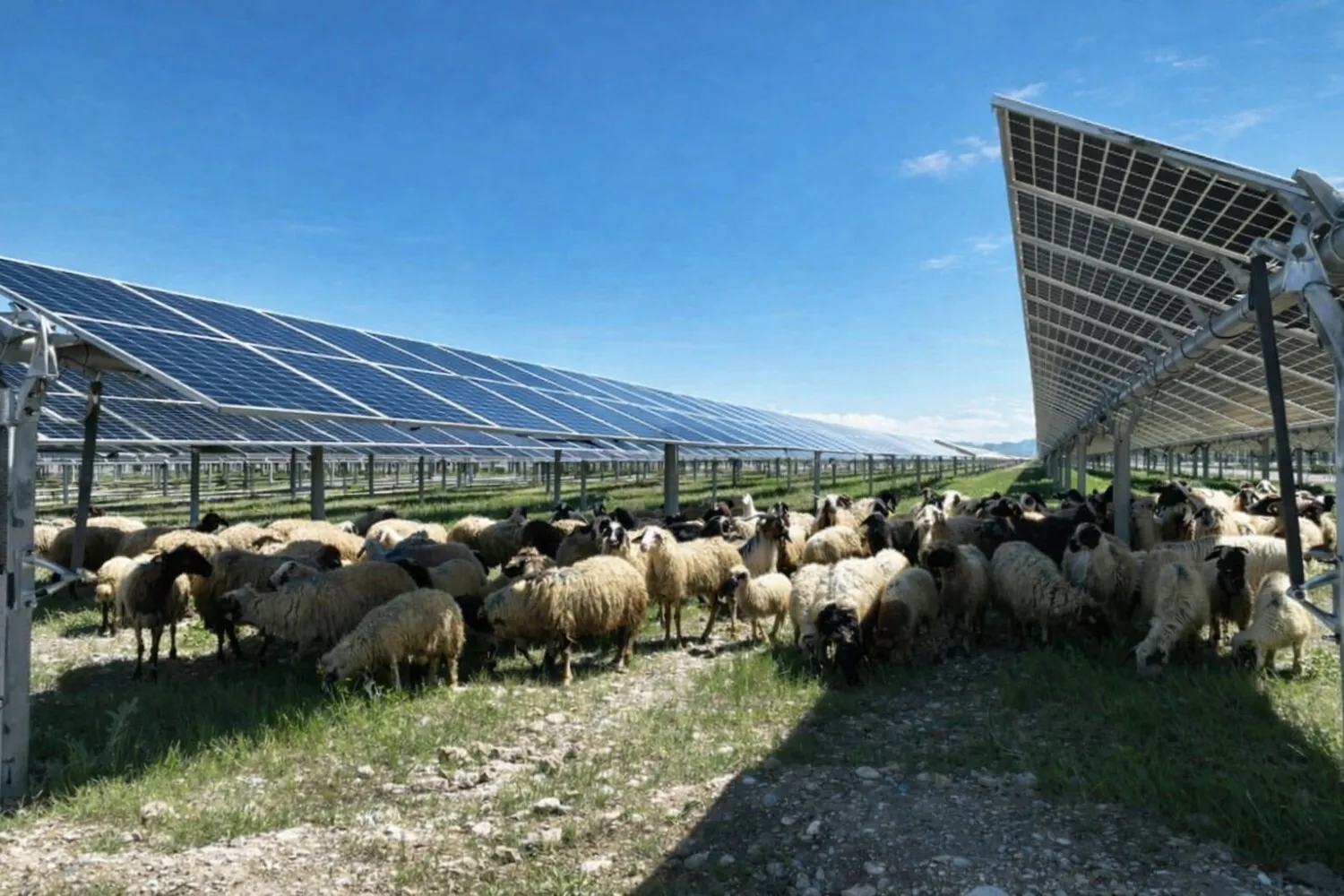

Solar energy and farming used to be seen as competitors for the same piece of land. That thinking is changing fast. More businesses now want to generate clean power without giving up agricultural output, and this is exactly the problem that smart land-use planning is solving today.
What Is Agrivoltaics
Agrivoltaics is the practice of growing crops or raising livestock on the same land where solar panels are installed. Instead of choosing between food production and energy generation, this approach allows both to happen at once. Panels are usually raised higher off the ground or spaced further apart than a typical solar farm, which lets sunlight, rain, and airflow reach the plants underneath. For companies exploring renewable energy projects on farmland, this model offers a practical middle path that satisfies both agricultural partners and sustainability targets.
Why Businesses Are Paying Attention
Land is expensive, and farmland is often protected by zoning laws or community pressure to remain in agricultural use. When a business proposes a solar project on farmland, local farmers and regulators frequently push back, worried about losing food production capacity. A well-designed system removes that objection. Businesses can secure land access more easily, build goodwill with rural communities, and often qualify for additional incentives tied to dual land use. It also diversifies revenue streams, since a single plot can generate income from electricity sales and crop sales at the same time.
Does Shade Really Hurt Crops
The most frequently raised concern is this one, and the answer largely depends on both the crop being grown and the system's design. Some plants, such as lettuce, spinach, and certain berries, actually grow better with partial shade because they avoid heat stress and lose less water to evaporation. Other crops, particularly those that need full sun for maximum yield, may show reduced output if the panel layout is not planned carefully. The key is matching panel height, spacing, and tilt angle to the specific crop being grown. Businesses that skip this planning step are the ones most likely to see disappointing harvests.
Designing for Both Energy and Food
A successful project starts with an honest assessment of the crop's light requirements. Taller panel structures, wider row spacing, and single-axis tracking systems all help balance sunlight between plants and panels. Soil health also matters more than many people expect, since construction activity can compact soil and affect drainage if not managed properly. Businesses working in this space, sometimes referred to under the broader label of agrisolar, benefit from bringing in agronomists early in the design process rather than treating crop planning as an afterthought once the panels are already installed.
Case Study 1: A lettuce trial in Hawaii
A pilot farm was built at an existing megawatt-scale solar site in central Oahu. Rather than relying on simulated data, researchers ran an actual variety trial to find which lettuce type performed best under the panels in a hydroponic setup. The project identified a specific variety that proved the most profitable choice for that environment, and the team built a detailed cost budget from real operating numbers. This gives businesses a rare, practical financial model instead of a theoretical estimate, which is far more useful when pitching a project to investors or landowners.
Case Study 2: A training center pilot in Tanzania
A project in the Morogoro region combined solar panels with beans, Swiss chard, and maize at an agricultural training center. The results were striking. Crop yields under the panels outperformed conventional farming methods, irrigation water use dropped by nearly fourteen percent, and bean survival rates were about sixty percent higher than in unshaded plots, likely because the panels protected the plants from extreme heat. The land equivalent ratio reached 1.86, meaning the combined system produced eighty six percent more output per hectare than growing crops and generating power separately would have achieved. This case shows that in hot, water-scarce regions, the shading effect can become a genuine advantage rather than a drawback.
Common Mistakes Businesses Should Avoid
Many projects fail not because the concept is flawed but because of poor execution. Common issues include installing panels too low for farm machinery to pass underneath, ignoring local crop expertise, underestimating maintenance access needs, and failing to involve the farming partner in early design decisions. Skipping a proper microclimate study is another frequent error, since temperature and humidity under panels can differ meaningfully from open fields. Businesses that treat this as purely an engineering project, without agricultural input, tend to see the weakest crop results.
The Financial Case
Beyond the environmental appeal, there is a straightforward business argument. Dual land use means one parcel generates two income streams, which improves the overall return on investment compared to a solar-only or farming-only project. Reduced irrigation needs, as seen in the Tanzania case, also lower operating costs over time. Some regions offer tax benefits or grants specifically for combined energy and agriculture projects, which can shorten the payback period considerably.
Conclusion
Solar power and farming no longer need to compete for the same land. With thoughtful design, the right crop selection, and early collaboration between engineers and agronomists, businesses can build systems that support both clean energy goals and reliable harvests. Companies serious about entering this space should also consider attending an agrivoltaics conference, where real project data, design lessons, and regional case studies are regularly shared among developers, farmers, and researchers. Learning from those already running these systems is often the fastest way to avoid costly design mistakes.
Frequently Asked Questions
Q1. Does adding solar panels always reduce crop yield?
Not always. Some crops perform better in partial shade, while others may see reduced yield if panel spacing is not designed correctly for that specific plant.
Q2. What crops work best under solar panels?
Leafy greens, berries, and certain vegetables tend to do well because they benefit from reduced heat stress and lower water loss. Full-sun crops need more careful planning.
Q3. Is this approach expensive to set up compared to a standard solar farm?
Initial costs can be higher due to taller structures and wider spacing, but the combined revenue from energy and crops often improves long-term returns.
Q4. How much water can businesses expect to save?
Savings vary by location and crop, but some field trials have recorded irrigation reductions of over ten percent due to lower evaporation under the panels.
Q5. Who should be involved in planning a project like this?
A mix of solar engineers, agronomists, and the farming operator should be involved from the start to balance energy output with crop performance.





























Sign in to leave a comment.