

The mobile app development landscape is evolving rapidly, with businesses demanding faster development cycles, cross-platform compatibility, and user-friendly experiences. Among the many options available, Flutter and React Native continue to dominate as the best mobile app development frameworks in 2025. Both have grown significantly in capabilities, offering developers powerful tools to build high-performance applications. But the debate remains: when it comes to Flutter vs React Native 2025, which framework should you choose for your next project?
Why Flutter and React Native Still Lead the Market
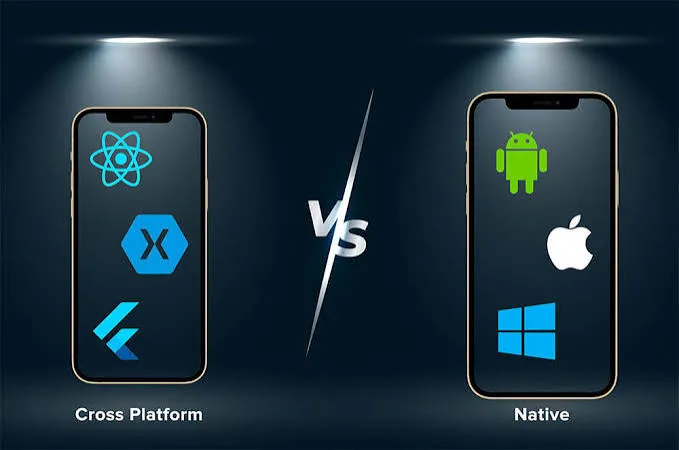
Both Flutter, developed by Google, and React Native, backed by Meta (formerly Facebook), have matured over the years. They allow developers to build cross-platform apps using a single codebase, saving time and reducing costs compared to building separate native apps.
In 2025, their dominance is driven by:
- Community Support: Both frameworks have thriving communities and continuous updates.
- Cross-Platform Compatibility: Apps can run seamlessly on iOS, Android, web, and even desktop.
- Scalability: They are being used by startups as well as enterprise-level organizations worldwide.
Now, let’s dive deeper into Flutter vs React Native 2025 to see how they compare in terms of features, performance, and suitability.
Flutter in 2025
Flutter has gained momentum as one of the most popular frameworks for developers who want near-native performance. It uses the Dart programming language and is particularly loved for its expressive UI capabilities.
Key Advantages of Flutter
- Unified UI Experience: Flutter offers a highly customizable widget system, ensuring consistent design across all platforms.
- Performance: Since it compiles to native ARM code, apps built with Flutter offer faster performance with minimal lag.
- Hot Reload: Developers can instantly see changes in the app while coding, reducing development time.
- Multi-Platform Expansion: By 2025, Flutter has expanded its support beyond mobile, allowing smooth development for web, Windows, macOS, and Linux.
Limitations of Flutter
- The Dart language, though powerful, is less widely adopted compared to JavaScript.
- Larger app size compared to React Native.
React Native in 2025
React Native remains a favorite among developers who already work with JavaScript. It allows fast development and integration with native modules, making it versatile for a wide range of applications.
Key Advantages of React Native
- JavaScript Ecosystem: React Native benefits from the massive ecosystem of JavaScript, one of the most widely used programming languages.
- Third-Party Plugins: In 2025, its extensive library of plugins makes it easier to integrate with APIs and third-party tools.
- Faster Prototyping: Ideal for MVPs (Minimum Viable Products) where speed and cost-efficiency matter most.
- Large Community: With continuous support from Meta and a strong developer base, React Native remains highly reliable.
Limitations of React Native
- Slightly weaker performance compared to Flutter for graphics-intensive apps.
- Complex UI designs can sometimes require additional native coding.
Flutter vs React Native 2025: Side-by-Side Comparison
When we compare Flutter vs React Native in 2025, the differences lie in language, performance, and overall use cases. Flutter uses Google’s Dart language and compiles directly to native code, which gives it an edge in performance and smooth rendering. It also offers a rich widget system, ensuring that the user interface looks consistent across platforms. This makes Flutter particularly appealing for apps with complex designs and heavy animations.
React Native, on the other hand, is powered by JavaScript and backed by Meta. Its biggest strength is the massive JavaScript ecosystem, which makes it easier to find developers and integrate third-party tools. React Native apps rely on native components for UI, so while they may sometimes require additional native coding for advanced designs, the framework remains highly flexible. It is especially well-suited for startups and companies looking to build MVPs quickly because of its rapid development cycle and cost-effectiveness.
In terms of community support, React Native still leads thanks to its maturity and the widespread use of JavaScript. Flutter, however, is catching up fast with strong backing from Google and its growing developer base. Both frameworks are scalable and reliable, but Flutter tends to deliver better performance for graphics-heavy apps, while React Native excels in speed-to-market and accessibility for teams already skilled in JavaScript.
Which One Should You Choose in 2025?
The choice between Flutter vs React Native 2025 depends on your project requirements, resources, and long-term goals.
- Choose Flutter if:
- You want highly consistent and rich UI across all platforms.
- Performance is a top priority (e.g., gaming, high-graphics apps).
- You plan to expand your app across mobile, desktop, and web using a single framework.
- Choose React Native if:
- Your team already has expertise in JavaScript and React.
- You want to build MVPs or prototypes quickly.
- You need a wide range of third-party integrations and plugins.
The Future of Mobile App Development
In 2025, both Flutter and React Native are among the best mobile app development frameworks, with neither fully outpacing the other. Instead, they cater to different needs. Flutter is the go-to for polished, performance-heavy apps with stunning design consistency, while React Native is the favorite for rapid, cost-effective app development with broad ecosystem support.
Ultimately, the decision lies in aligning the framework’s strengths with your project’s vision. Businesses that carefully assess their goals, developer expertise, and scalability needs will find success with either framework in 2025.


























Sign in to leave a comment.