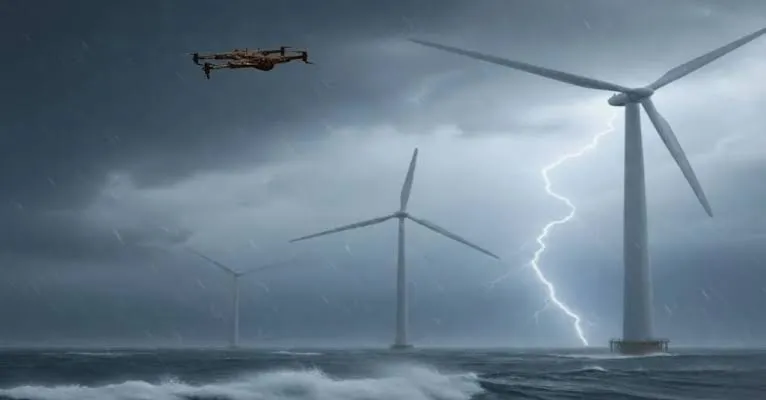

Every drone pilot has been there clear skies, good light, perfect shot lined up, and then a gust hits from nowhere. Suddenly your steady hover turns into a fight for control. Wind isn't just an inconvenience for drone operators. It's one of the biggest safety and performance variables in any flight.
Most people assume a drone's weight tells you everything about how it'll handle wind. It doesn't. A heavier drone with weak motors can perform worse than a lighter one built with better aerodynamics and stronger control response. What actually matters is the full system propeller design, motor torque, frame shape, and how fast the flight controller reacts to disturbances.
So how windy is too windy?
Consumer drones generally start struggling above 18 mph of sustained wind. Professional cinematic drones can push into moderate winds, often up to 30 mph, when flown by experienced pilots. Industrial and mapping drones are a different category altogether built for tougher jobs where grounding the fleet isn't an option, they can sometimes operate in wind approaching 40 mph, but only when the aircraft is rated and maintained for it.
What actually determines wind performance?
It comes down to a handful of engineering factors working together:
- Mass-to-surface ratio — more mass per exposed area usually means less drift
- Propeller design — carbon fiber blades hold pitch better than flexible plastic ones under load
- Frame rigidity — a rigid airframe prevents flex that throws off handling mid-flight
- Flight controller intelligence — IMUs, GPS, RTK, and sensor fusion correct disturbances faster than any pilot's thumbs can
Here's the part most hobbyists miss: GPS doesn't make a drone wind-resistant. It just helps the aircraft find its way back to position after drift. The real stabilizing work happens through the IMU and flight controller, correcting tilt and acceleration within milliseconds.
Flying smart in wind matters more than flying brave
Before any windy flight, check wind speed at your actual flight altitude, not just ground level it's almost always stronger up there. Fly upwind first so your return leg is easier on the battery. And raise your landing reserve. If 20% feels safe on a calm day, aim for 35-40% when it's gusty.
Gusts matter more than average wind speed too. A drone might handle a steady 20 mph breeze just fine but lose control when gusts spike to 28 mph every few seconds. That's why professional operators track gust spread, not just the forecast average.
For anyone doing commercial work inspections, mapping, aerial surveys the stakes go beyond just keeping the drone in the air. A flight can be technically safe and still fail the job if wind compromises image sharpness or positional accuracy. This detailed wind resistance guide breaks down how ratings are tested, how different drone categories compare, and what pilots should check before any go/no-go call.
At the end of the day, no amount of piloting skill can create extra motor power or fix a weak battery. Sometimes the smartest flight decision is the one where you don't take off at all.

























Sign in to leave a comment.