
Choosing the right engine configuration can have a major impact on generator performance, maintenance, fuel consumption, and operating life. Understanding four stroke vs two stroke generator engines is therefore important for anyone comparing generator technologies for industrial, commercial, residential, or backup-power applications.
Although both engine types convert fuel energy into mechanical power, they complete their combustion cycles differently. That difference affects how efficiently the engine uses fuel, how much power it can produce for its size, how frequently it requires maintenance, and the characteristics of its exhaust emissions. Knowing these distinctions can help generator owners make a more informed decision rather than choosing equipment based only on rated power or purchase price.

Understanding the Basic Difference
The most fundamental difference between the two designs is the number of piston strokes required to complete one combustion cycle. A four-stroke engine completes its operating cycle through four separate piston movements: intake, compression, power, and exhaust. The crankshaft generally makes two complete revolutions during this process. A two-stroke engine, by comparison, completes the cycle in only two piston strokes, with the crankshaft making one revolution. Intake and exhaust processes are integrated into the compression and power movements. This simpler cycle allows a two-stroke engine to produce a power stroke more frequently relative to engine speed.
That difference may sound technical, but it has practical consequences. A two-stroke engine can achieve a high power-to-weight ratio and a relatively compact design, while a four-stroke engine generally provides better fuel efficiency, controlled combustion, and suitability for applications where long-term operating economy is important.
Why Four-Stroke Generators Are Widely Preferred
Four-stroke engines are commonly associated with modern diesel generator sets because they offer a useful balance between performance, durability, efficiency, and emissions control. Since combustion occurs once every two crankshaft revolutions, the engine has more time to complete each stage of the combustion process. This controlled cycle can contribute to efficient fuel utilization and stable operation under varying loads. For businesses that depend on generators for standby power, continuous operation, or prime-power applications, fuel consumption can become a significant part of total operating costs. Even relatively small efficiency differences can become meaningful when a generator operates for hundreds or thousands of hours. Another advantage is durability. Four-stroke engines are generally designed with robust lubrication and cooling arrangements, making them suitable for demanding applications. They are widely used in industrial generators, commercial backup systems, construction equipment, agricultural machinery, and other applications where reliability matters.
However, four-stroke engines are not perfect. Their construction can be more complex and heavier than comparable two-stroke designs. They may also have a higher initial equipment cost depending on the generator model and manufacturer. Nevertheless, their efficiency and long-term operating characteristics often make them attractive for modern generator applications.
Where Two-Stroke Engines Have an Advantage
Two-stroke engines have historically been valued for their mechanical simplicity and ability to generate substantial power from a relatively compact engine. Because a power stroke occurs with every crankshaft revolution, these engines can provide strong power output relative to their size. This characteristic can be useful where weight, compactness, and high power density are important. Two-stroke engines have been used extensively in certain industrial, marine, transportation, and specialized power applications.
Their simpler operating cycle can also mean fewer mechanical components in certain designs. However, the benefits come with trade-offs. Traditional two-stroke engines can consume more fuel and lubricating oil and may produce higher levels of certain exhaust pollutants than comparable four-stroke designs. These characteristics have contributed to the declining use of conventional two-stroke technology in many modern applications where fuel economy and emissions performance are major considerations. It is important to remember that engine design has evolved significantly. Actual performance depends on the specific engine, fuel system, operating conditions, after-treatment technology, maintenance condition, and manufacturer engineering rather than simply whether an engine is classified as two-stroke or four-stroke.
Fuel Efficiency and Operating Costs
For generator owners, fuel consumption is often more important than the engine's theoretical power output. A generator that consumes excessive fuel can become expensive to operate even if its purchase price initially appears attractive. Four-stroke diesel engines generally have an advantage in fuel efficiency because their combustion cycle allows better control of intake, compression, combustion, and exhaust processes. For generators that operate for extended periods, this can translate into lower fuel costs over the equipment's operating life.
Two-stroke engines can still be effective in specialized situations, particularly when their compact design and power density provide a specific operational advantage. However, buyers should evaluate the complete lifecycle cost, including fuel, lubrication, servicing, spare parts, downtime, and expected operating hours.
Maintenance and Engine Longevity
Maintenance requirements also deserve attention when comparing generator engines. Four-stroke engines contain more components involved in valve operation and lubrication, but their established design and widespread use mean that servicing knowledge and replacement parts are commonly available for many models. Regular oil changes, cooling-system checks, air-filter replacement, fuel-system maintenance, and inspection of exhaust components remain important regardless of engine type. Neglecting maintenance can reduce efficiency and increase emissions while potentially shortening engine life.
Two-stroke engines can have simpler mechanical arrangements, but that does not automatically mean they require less overall care. Fuel and oil consumption, combustion condition, cooling, and exhaust performance must still be monitored carefully. The correct maintenance schedule should always come from the engine or generator manufacturer.
Engine Choice and Emission Control
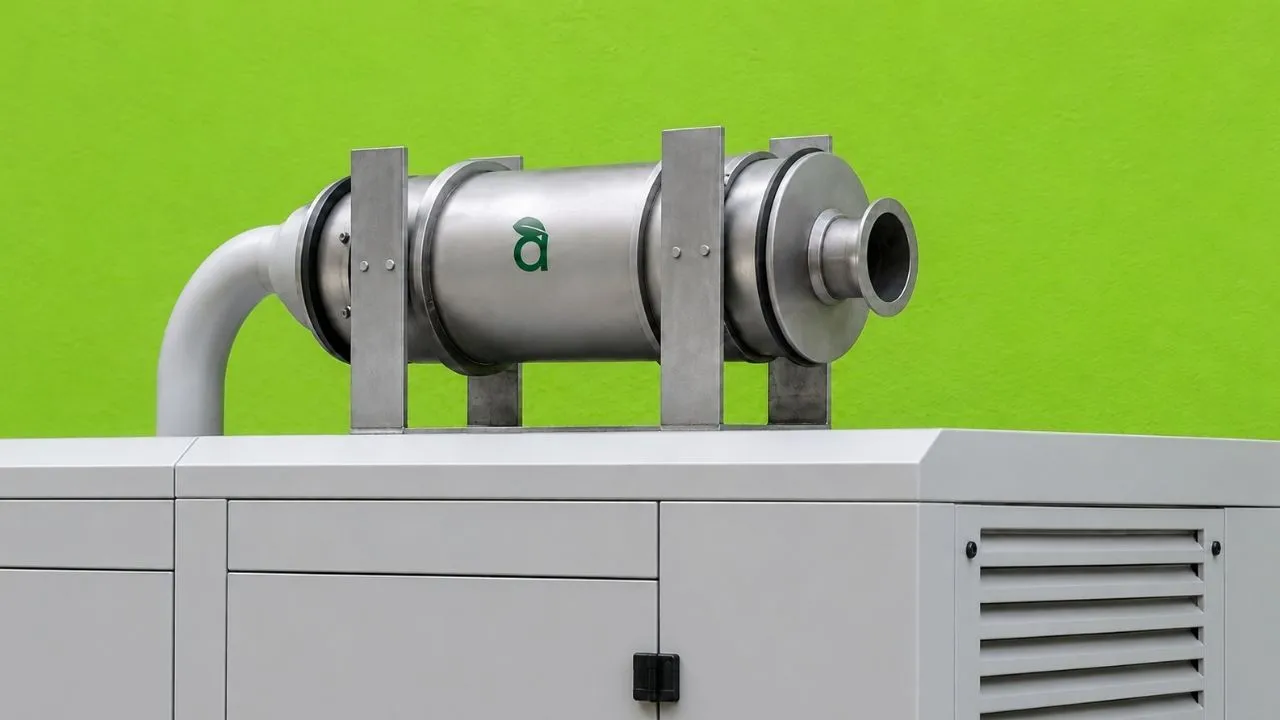
Modern generator owners must consider emissions alongside performance and operating economics. Engine combustion naturally produces pollutants such as particulate matter, carbon monoxide, hydrocarbons, and nitrogen oxides. The actual emission profile varies according to engine design, fuel quality, load conditions, engine condition, and emission-control technology. For existing diesel generator sets, retrofit emission-control equipment can be considered where technically appropriate and permitted under applicable requirements. Technologies such as diesel oxidation catalysts, diesel particulate filters, and selective catalytic reduction can address different components of exhaust emissions.
When evaluating CPCB approved RECD manufacturers, buyers should avoid relying solely on marketing terminology. The suitability of a retrofit emission-control device depends on the specific DG set, engine characteristics, operating conditions, applicable regulatory requirements, and the technical documentation associated with the system. CPCB requirements and related directions can change and may differ according to generator capacity, installation location, and other circumstances. Therefore, DG set owners should verify the latest applicable requirements with the Central Pollution Control Board, relevant State Pollution Control Board, CAQM where applicable, or another competent authority before making compliance-related decisions.
Which Generator Engine Is Better?
There is no universal winner between two-stroke and four-stroke engines. The better option depends on how the generator will actually be used. For most modern commercial and industrial diesel-generator applications, a four-stroke engine is often the more practical choice because of its combination of fuel efficiency, durability, serviceability, and compatibility with contemporary emission-control systems. A facility running a generator for long backup periods, for example, may benefit significantly from predictable fuel consumption and reliable long-term operation.
A two-stroke engine can make sense in applications where compact dimensions, power density, or a particular legacy equipment requirement takes priority. However, buyers should examine fuel consumption, emissions, maintenance availability, and regulatory considerations before selecting one. Ultimately, the engine should be evaluated as part of the complete generator system rather than in isolation. Alternator efficiency, generator loading, control systems, cooling, fuel quality, exhaust configuration, maintenance practices, and emission-control equipment can all influence real-world performance.
Conclusion
Understanding the technical distinction between two-stroke and four-stroke engines gives generator buyers a stronger foundation for comparing equipment. Instead of focusing only on the initial purchase price, consider expected operating hours, average load, fuel costs, maintenance requirements, available service support, emissions performance, and the regulatory environment in which the generator will operate. For existing diesel generators, replacing an entire genset is not always the only option worth evaluating. Depending on the equipment condition and applicable requirements, suitable retrofit emission-control technology may provide another approach to improving exhaust-emission performance. Any such decision should be based on technical assessment and current regulatory requirements rather than assumptions.
Frequently Asked Questions
What is the main difference between a two-stroke and four-stroke generator engine?
A two-stroke engine completes its combustion cycle in two piston strokes, while a four-stroke engine requires four strokes. This affects power delivery, fuel efficiency, mechanical design, and emissions characteristics.
Are four-stroke generators more fuel-efficient?
In general, four-stroke diesel engines are known for better fuel efficiency than conventional two-stroke designs. However, actual consumption depends on engine specifications, generator loading, maintenance, fuel quality, and operating conditions.
Are two-stroke generators still used?
Yes. Two-stroke engines continue to have applications in certain specialized and legacy systems where their compact design and power density are useful. Their suitability depends on the specific equipment and application.
Which engine type is better for industrial DG sets?
Four-stroke diesel engines are commonly preferred for many modern industrial DG applications because they offer a balance of efficiency, durability, serviceability, and emissions performance. The correct choice ultimately depends on the required application and generator specifications.
Does engine type affect emission-control requirements?
Engine design can influence the type and quantity of exhaust emissions produced, but applicable emission-control requirements depend on factors such as generator specifications, installation conditions, and current regulations. Always verify the latest requirements with the appropriate authorities before selecting or installing emission-control equipment.
























Sign in to leave a comment.