
From Manual Calls to AI Call Agents: The New Way to Negotiate Bills and Save Money
Introduction
There is a reason so many people keep overpaying for internet, phone plans, subscriptions, and random service fees: dealing with customer service is exhausting.
If you don't stay on top of those bills early on, you'll find yourself drowning in debt, and life is just gonna get a whole lot harder.
You call to fix one small thing and somehow end up spending 45 minutes on hold. Then you get transferred. Then you explain the whole problem again. By the time a real person finally picks up, you are already annoyed — and that is before the actual negotiation starts.
Most consumers do not ignore savings because they do not care. They ignore them because the process feels like a tax on their time and patience.
That is why AI call agents are starting to feel like a real category, not just a flashy idea. Instead of giving you a script and sending you off to do the hard part yourself, these tools are built to help carry out the task: making calls, sending emails, following up on complaints, handling refunds, and pushing customer service cases forward.
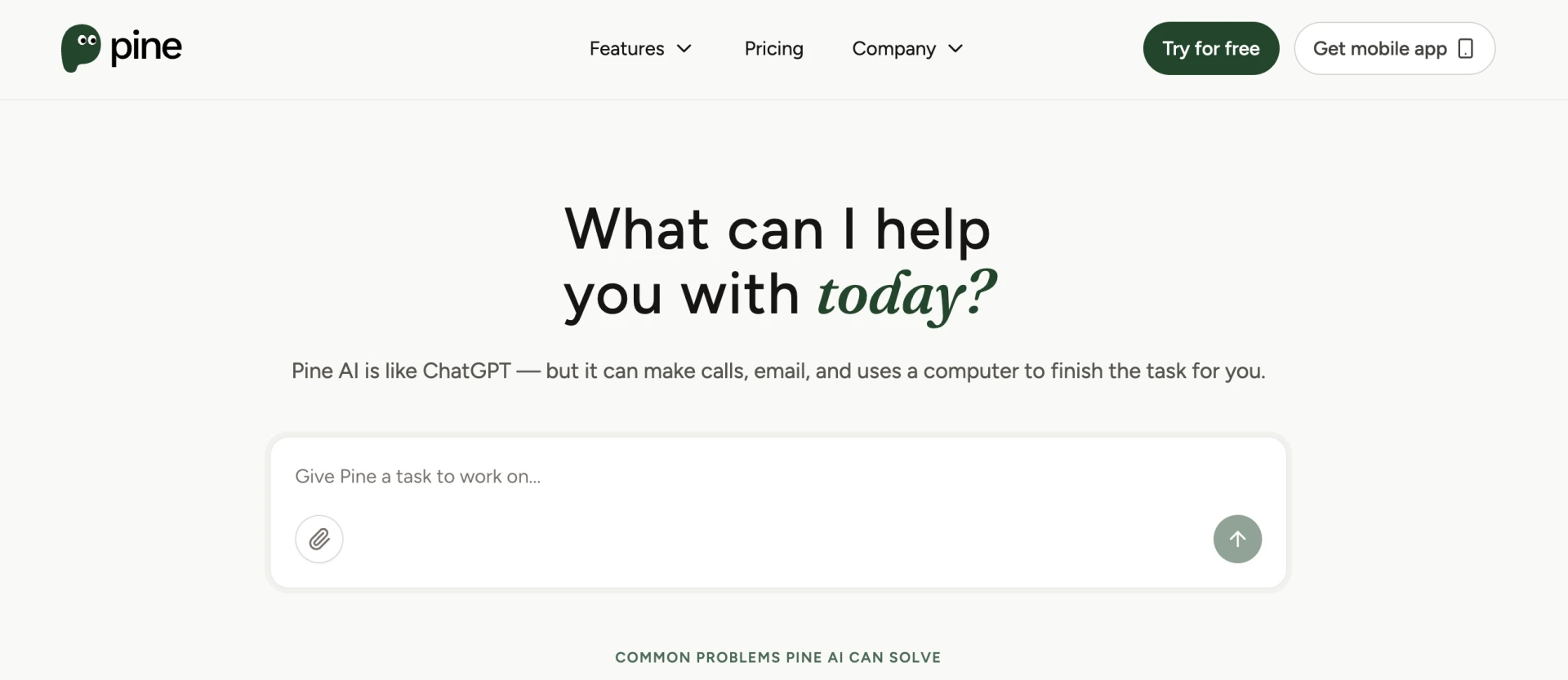
On Pine’s homepage, the company describes its product as an AI assistant that can “make calls, email, and uses a computer to finish the task for you,” with use cases ranging from lowering bills to subscription cancellations and complaint filing.
That shift matters because the broader customer-service world is already moving in this direction. Zendesk’s 2025 CX Trends report says consumers increasingly expect AI interactions that feel more human and personalized, and 67% of consumers surveyed said they were ready to delegate tasks like tracking orders and getting personalized recommendations to AI assistants. Salesforce’s latest State of Service report also says AI is expected to resolve 50% of service cases by 2027, up from 30% in 2025.
In other words, we are moving from an era where AI mostly gave advice to one where AI increasingly takes action. And for consumers trying to lower bills, get refunds, or cancel services without sacrificing an afternoon, that is a big deal.
Why Manual Customer Service Calls Wear People Down
The old way of saving money sounds simple on paper:
- call your provider
- ask for a lower rate
- dispute the charge
- cancel the subscription
- request the refund
In practice, it is rarely that simple.
A 2024 TCN survey found that only 56% of Americans said their issues were resolved on first contact, which means nearly half had to reach out more than once to get help. The same survey found that 63% of Americans said they were likely to abandon a brand after a single poor customer-service experience.
That lines up with how most people already feel. It is not just the wait time. It is the repetition. You repeat your name, your account number, your issue, your frustration, your preferred solution. Then someone says they need to transfer you to billing, retention, or another “specialized” team, and the cycle starts again.
Negotiating bills makes it even worse. A lot of people are not sure what can actually be negotiated. Internet? Usually. Cable? Often. Mobile plans? Sometimes.
Random account fees?
Maybe. But unless you are used to asking for discounts, it is easy to feel awkward or unprepared. Many people give up before they even dial.
And even when the potential savings are real, the emotional math does not always work. If you might save $15 a month but have to spend an hour arguing with support, a lot of people decide it is not worth the headache.
That gap — between money people could recover and money they actually pursue — is where AI call agents start to make sense.
What an AI Call Agent Actually Does
The phrase “AI call agent” can sound vague, so it helps to be specific.
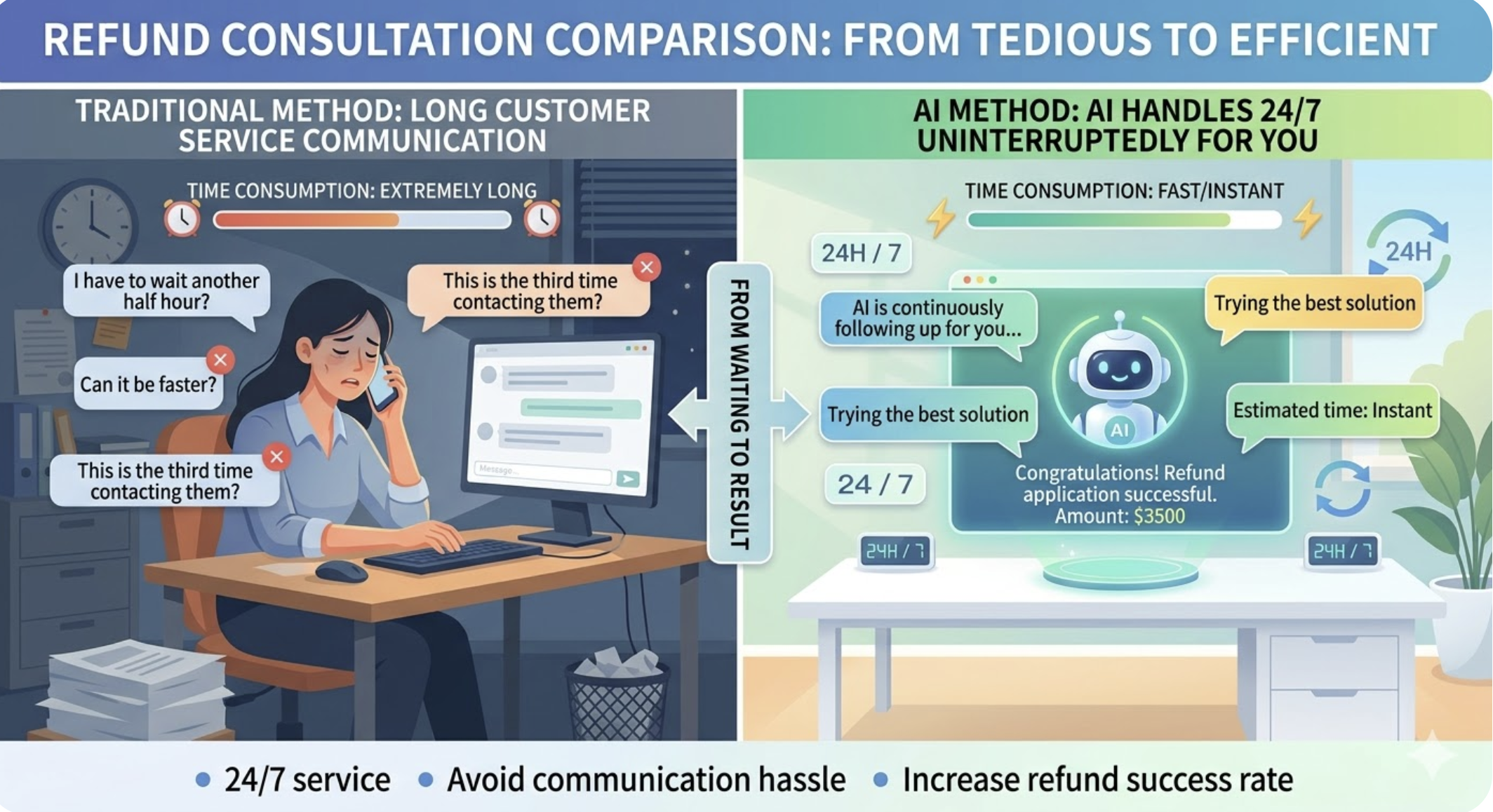
This is not just a chatbot that gives you a draft email. It is not just a search box with customer-service tips. A real AI call agent is designed to help execute tasks on your behalf.
That can mean handling outbound communication, organizing complaint details, dealing with repetitive back-and-forth, sending follow-ups, and moving an issue through the support process. Pine, for example, says it can help with bills, subscriptions, complaints, and refunds, and lists categories like utilities, telecom services, travel and stay, food delivery, e-commerce, and subscriptions directly on its homepage.
The distinction here is important. Old-school tools helped you think through the problem. Newer agent-style tools try to help you finish it.
That is a better fit for the kinds of tasks consumers usually avoid:
- negotiating a lower cable or internet bill
- canceling a subscription that seems easy to start but weirdly hard to end
- chasing a refund after a bad delivery, hotel stay, or airline experience
- filing a complaint that requires more persistence than most people want to give
The appeal is obvious. Most consumers do not need more advice on why they should ask for a refund. They need help actually doing it.
How AI Call Agents Help People Save Money
The clearest use case is recurring bills.
Internet, cable, telecom, and utility costs often drift upward over time. Intro rates expire. Promotional bundles disappear. Small monthly increases pile up. Technically, a lot of these charges can be negotiated. Realistically, most people do not want to spend their evening on hold just to test that theory.
That is where an AI call agent becomes more than a novelty. If the tool can handle the repetitive parts of the process, the user is much more likely to pursue savings they would otherwise ignore.
Refunds are another obvious category. Anyone who has dealt with a damaged order, a terrible hotel stay, a missed delivery, or a service that did not match what was promised knows the pattern: you complain once, get a generic response, then have to follow up again. And again. The issue is not always whether you deserve compensation. It is whether you have the patience to chase it.
Subscription cancellations sit in the same bucket. The FTC’s amended Negative Option Rule — often described as “click to cancel” — was designed to address exactly this kind of consumer friction. The FTC said the revisions were meant to protect people from misleading enrollment tactics, billing practices, and cancellation policies, and that companies should make cancellation as easy as sign-up.
The rule also says companies cannot require people to talk to a live or virtual representative to cancel if they did not have to do that to sign up. (Federal Trade Commission)
That tells you something important: the “hard to cancel” problem is not imaginary. It is common enough that regulators have spent years trying to address it. So it makes sense that tools built to handle cancellation friction would find a market.
And then there is the less obvious savings category: time.
If you recover $40 but spend two hours doing it, that still counts as a win, but it is not a clean one. People value money differently when it comes bundled with stress, waiting, and repetitive admin. AI call agents can reduce that hidden cost too.
Manual Calls vs. AI Call Agents
The difference between manual calls and AI call agents is not just convenience. It is leverage.
When you do everything yourself, the result depends on your schedule, your patience, your confidence, and your willingness to keep pushing after the first “no.” Some people are good at that. Most people are not good at it all the time.
AI call agents change the equation by scaling the part consumers hate most: repeated communication. Follow-ups. Clarifications. The mechanical parts of getting something done.
That does not mean the user disappears from the process. The better model is still user-led. You decide the goal. Lower this bill. Cancel that subscription. Chase that refund. The AI helps execute and follow through.
That balance matters, especially in a category that deals with personal accounts and real money. People want less effort, not less control.
Zendesk’s 2025 CX Trends report captures part of this shift. It found that consumers increasingly want AI interactions that feel useful, personalized, and human, and that half of consumers have already engaged with voice AI for more complex issues.
So the move from manual calls to AI call agents is not really about replacing consumers. It is about removing the friction that keeps them from acting in the first place.
Who Will Actually Use These Tools?
Not everyone needs an AI call agent. But a lot of people probably fit the target user more than they think.
The first group is obvious: consumers trying to lower monthly bills. If you have ever looked at your internet, mobile, cable, or utility bill and thought, I should really do something about this, you are in the audience.
The second group is people who hate customer service enough to procrastinate. Busy professionals. Parents. Freelancers. Anyone who already has enough admin in their life and does not want another annoying task sitting on top of the pile.
The third group is people dealing with refunds, disputes, or complaints. If you are trying to recover money after a bad experience, persistence matters. And persistence is exactly where most people fall off.
These users are not lazy. They are realistic. They know the process is annoying, and they know there is a decent chance they will put it off forever if they have to do all of it themselves.
What to Look For in an AI Bill Negotiation Tool
If this category is going to last, it will not be because “AI” sounds modern. It will be because some tools actually solve the right problem.
The first thing to look at is pricing. Pine emphasizes a results-based structure on its pricing page: “Only Pay When It Works.” The company also says it uses a pre-authorization at the start rather than an immediate final charge, and bills only once a task is successfully completed.
That model makes intuitive sense here. Consumers are not shopping for entertainment software. They are trying to reduce costs or recover money. Paying after a successful outcome feels more aligned with the job.
The second thing is whether the tool handles real tasks, not just suggestions. Advice is useful. Execution is better. If a product only gives you scripts, you are still doing the hard part yourself.
Third, trust matters. Pine says its data stays encrypted and that only essential information is used temporarily and with approval during calls. Whether a user chooses Pine or another provider, those are exactly the right questions to ask: how is my data handled, what permissions are required, and how visible is the process to me?
Finally, breadth matters. The most useful tools are not built for one microscopic problem. They cover the cluster of everyday consumer headaches that tend to overlap: bills, subscriptions, complaints, refunds, and follow-ups.
Why Pine AI Is Getting Attention
This is the point in the article where the product mention feels natural, because the broader case has already been made.
Pine is getting attention largely because it sits right at the intersection of three trends: customer-service fatigue, action-oriented AI, and outcome-based pricing.
On the product side, the positioning is clear. Pine says it can help with lowering bills, subscription cancellations, compensation and refunds, complaint filing, and related tasks across categories like utilities, telecom, travel, subscriptions, and e-commerce. It also says users have saved 270 minutes on average, that its negotiation success rate is 93%, and that it has saved consumers more than $3 million overall. Pine further claims telecom and cable bills are reduced by 20% on average through negotiation.
On the model side, the company is not pitching a generic monthly subscription. It is pitching a “pay as you go” service tied to successful outcomes. Again, that is a stronger fit for a user who is evaluating the tool with a simple question in mind: Did it actually help me save money or fix the problem?
And on the timing side, the market is ready for it. Consumers are more comfortable with AI-assisted service than they were a few years ago, and businesses are clearly investing in AI-driven support as a mainstream channel.
That does not mean every AI call agent will be good, or that every problem should be automated. It does mean the category is solving a real behavior problem: people want the result, but they do not want the process.
Final Thoughts
The most interesting thing about AI call agents is not that they use AI. It is that they apply it to one of the most universally annoying parts of consumer life.
For years, saving money in these situations required a very specific kind of discipline: make the call, stay calm, keep pushing, follow up, do not give up. That works, but only for people with enough time and tolerance for friction.
AI call agents offer a different model. You still decide what matters. The tool helps carry the load.
That shift — from advice to action, from manual effort to assisted execution — is why this category feels bigger than a passing trend. It lines up with how people actually behave. They do not mind taking action. They mind the hassle.
And if you are someone who keeps putting off a refund request, a cancellation, or a bill negotiation because you cannot face another support call, a results-based tool like Pine may be worth a closer look. Not because it makes customer service fun. Nothing can do that. But because it might finally make the process tolerable.



























Sign in to leave a comment.