
How to Make Money from AI-Generated Videos (And Scale It with a Simple System)
If you've been seeing people talk about making money with AI-generated videos, you're probably wondering one thing:
Is this actually real, or just another trend?
The short answer is — yes, it works. But not in the way most people think.
Most beginners focus on making one “good” video.
But the real leverage comes from building a system that can produce videos consistently — even in batches.
That’s what turns AI videos into income.
In this guide, I’ll break down:
what actually works today
how to create AI videos at scale
and how to turn them into real revenue
Can You Really Make Money from AI-Generated Videos?
AI video content is growing fast for one simple reason: it removes friction.
You don’t need to film.
You don’t need editing skills.
You don’t need a team.
At the same time, platforms like YouTube Shorts, TikTok, and Reels are pushing more content than ever. They reward volume, consistency, and retention.

That creates a new type of opportunity — one where speed matters just as much as creativity.
But not all AI videos make money.
The ones that work tend to follow a pattern:
they are simple
they solve a problem or deliver value
they are easy to reproduce
Faceless niche videos, short explainers, product reviews, and “quick tip” content are all strong examples.
And yes — it’s still worth starting now.
The space is more competitive than before, but most people still don’t have a repeatable system. They create randomly and stop quickly.
If you focus on consistency and batch production, you already stand out.
The Best Ways to Make Money with AI-Generated Videos
There are several ways to monetize AI videos, but not all of them are equally practical for beginners.
1. YouTube ad revenue
This is the long-term model. You build a channel, grow your audience, and earn from ads.
It takes time, but once you reach monetization, it becomes relatively stable. AI helps here by increasing your output, which improves your chances of getting traction.
2. Affiliate marketing
This is often the fastest way to make your first money.
You create videos around tools, products, or solutions. Then you include an affiliate link. When someone buys, you earn a commission.
The key advantage is intent. If someone is searching for a solution, they are already close to buying.
3. Selling AI video services
Instead of waiting for views, you can sell directly.
Businesses constantly need short-form content — ads, explainer videos, social clips. Most of them don’t care how it’s made. They care about speed and results.
If you can produce content quickly using AI, you can offer it as a service.
4. Ecommerce video content
Short videos drive conversions.
You can create multiple variations of product videos — different hooks, different angles — and test them. Winning versions can be scaled.
This is where batch production becomes especially valuable.
What Types of AI Videos Perform Best?
Not every format scales well.
The most effective ones usually share two traits: simple structure and repeatability.
Faceless niche videos — easy to produce, easy to scale
Product or review videos — strong buying intent
UGC-style ad creatives — high demand from brands
The key idea is not creativity. It’s repeatability.
If you can’t recreate the format easily, it won’t scale.
How to Batch Create AI Videos (Step-by-Step System)
This is where most people fail — and where the real opportunity is.
Instead of creating videos one by one, you need a pipeline.
Step 1: Choose a scalable niche
Pick something you can repeat.
Finance, AI tools, productivity, health tips — these niches have endless content angles.
Avoid niches that require constant originality. You want systems, not one-off ideas.
Step 2: Generate ideas in bulk
Don’t create ideas daily.
Create 20–50 ideas in one session.
Use:
AI tools
YouTube search
TikTok trends
This removes decision fatigue and speeds up production.
Step 3: Generate scripts with AI
Use a simple structure:
hook
value
CTA
AI can generate scripts in seconds. You only need to refine them slightly.
Step 4: Turn scripts into voice
Use AI voice tools to generate consistent audio.
Pick one voice style and stick to it. This builds familiarity and makes your content feel more cohesive.
Step 5: Generate visuals
Keep visuals simple and relevant.
You don’t need heavy editing. In fact, over-editing slows you down and often doesn’t improve performance.
Focus on clarity and pacing.
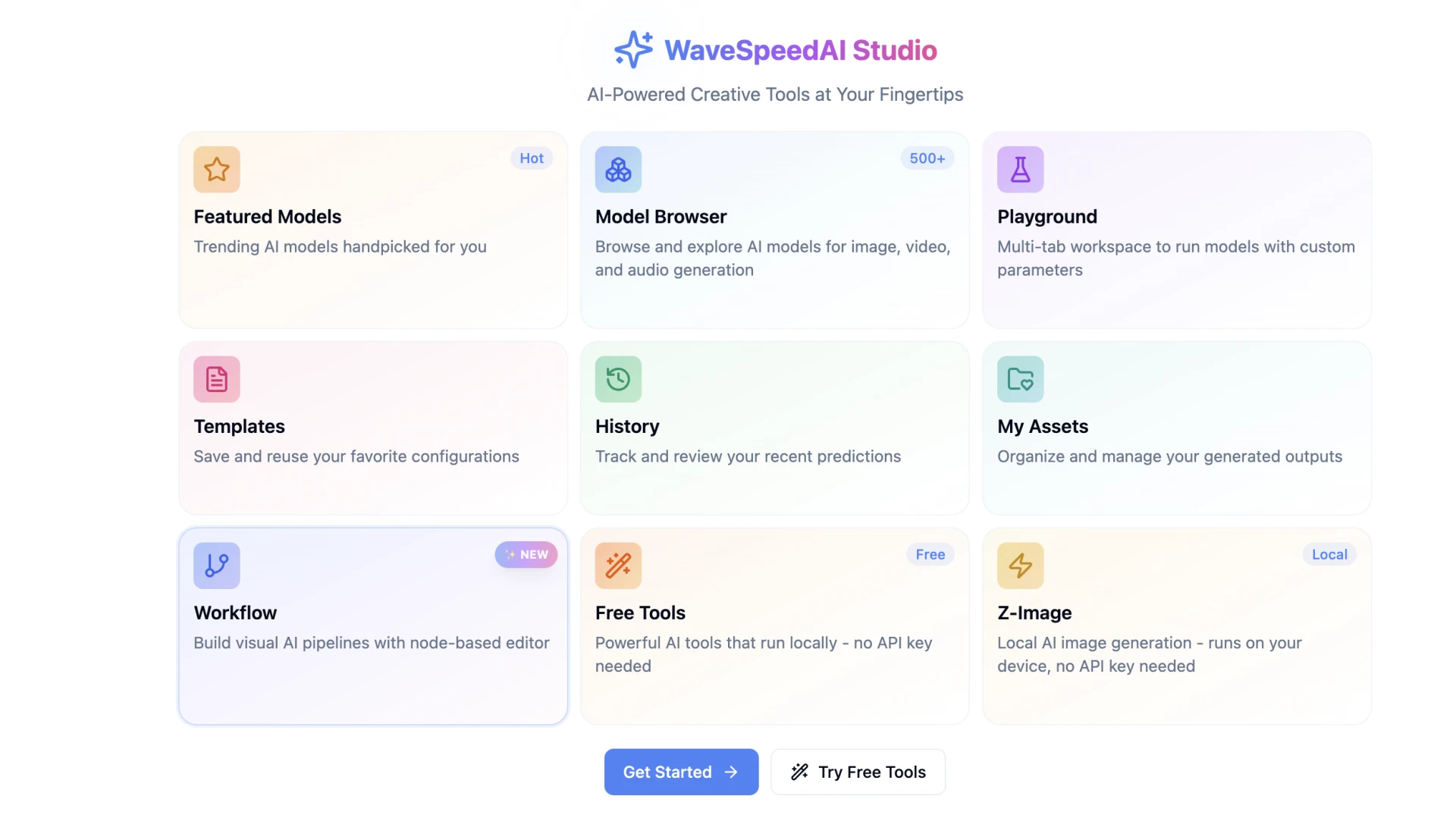
Step 6: Automate video generation (with Wavespeed AI)
This is the most important step if you want to scale.
At small scale, you can manually edit videos. But once you try to produce content consistently, manual workflows become the bottleneck.
This is where Wavespeed AI becomes useful.
Instead of stitching together multiple tools, you can use an API-based workflow to generate videos in batches.
In simple terms:
input scripts
process them automatically
output multiple videos
This changes the economics completely.
Instead of spending 30–60 minutes per video, you can generate multiple videos in the same time frame.
It also reduces cost per video, which matters when you're producing at scale.
For example, you can:
generate voice from text
create images or visual assets
and integrate them into video workflows
All through a unified API.

(Example: speech generation using Wavespeed AI)
In the example above, a simple script is turned into a natural-sounding voice file in seconds.
No manual recording. No editing.

This kind of setup becomes even more powerful when you scale.
You’re not just generating one asset.
You’re generating multiple components — voice, visuals, and video — in a single pipeline.
That’s what makes batch production possible.

Step 7: Distribute across platforms
Don’t rely on one platform.
Upload the same video to:
YouTube Shorts
TikTok
Instagram Reels
Sometimes a video fails on one platform and performs well on another.
Distribution multiplies your chances.
How to Monetize Across Platforms
Each platform plays a different role.
YouTube → long-term income (ads)
TikTok / Reels → reach and traffic
Affiliate links work across all platforms.
Strong CTAs also matter. Even simple prompts like “check the link in bio” can significantly improve conversions.
Your content is not just content — it’s a traffic engine.
How Much Can You Actually Make?
This depends on three main factors:
niche
volume
monetization method
Most beginners don’t earn much at the start. That’s normal.
The turning point usually comes when:
your workflow becomes consistent
your output increases
a few videos start performing well
At that point, results begin to compound.
Common Mistakes to Avoid
1. Focusing only on quantity
More videos won’t help if they are not engaging.
2. Ignoring hooks
The first few seconds decide everything.
3. No system
Without a repeatable workflow, scaling is impossible.
4. Relying on one income stream
Platforms change. Diversification protects you.
Final Thoughts
AI-generated videos are not a shortcut.
They are a leverage tool.
The real advantage is not in making one video faster — it’s in building a system that can produce consistently and scale over time.
If you approach it that way, the opportunity is still wide open.
And if you want to scale efficiently, tools like Wavespeed AI can help you turn a manual process into a repeatable pipeline — which is where real growth happens.

























Sign in to leave a comment.