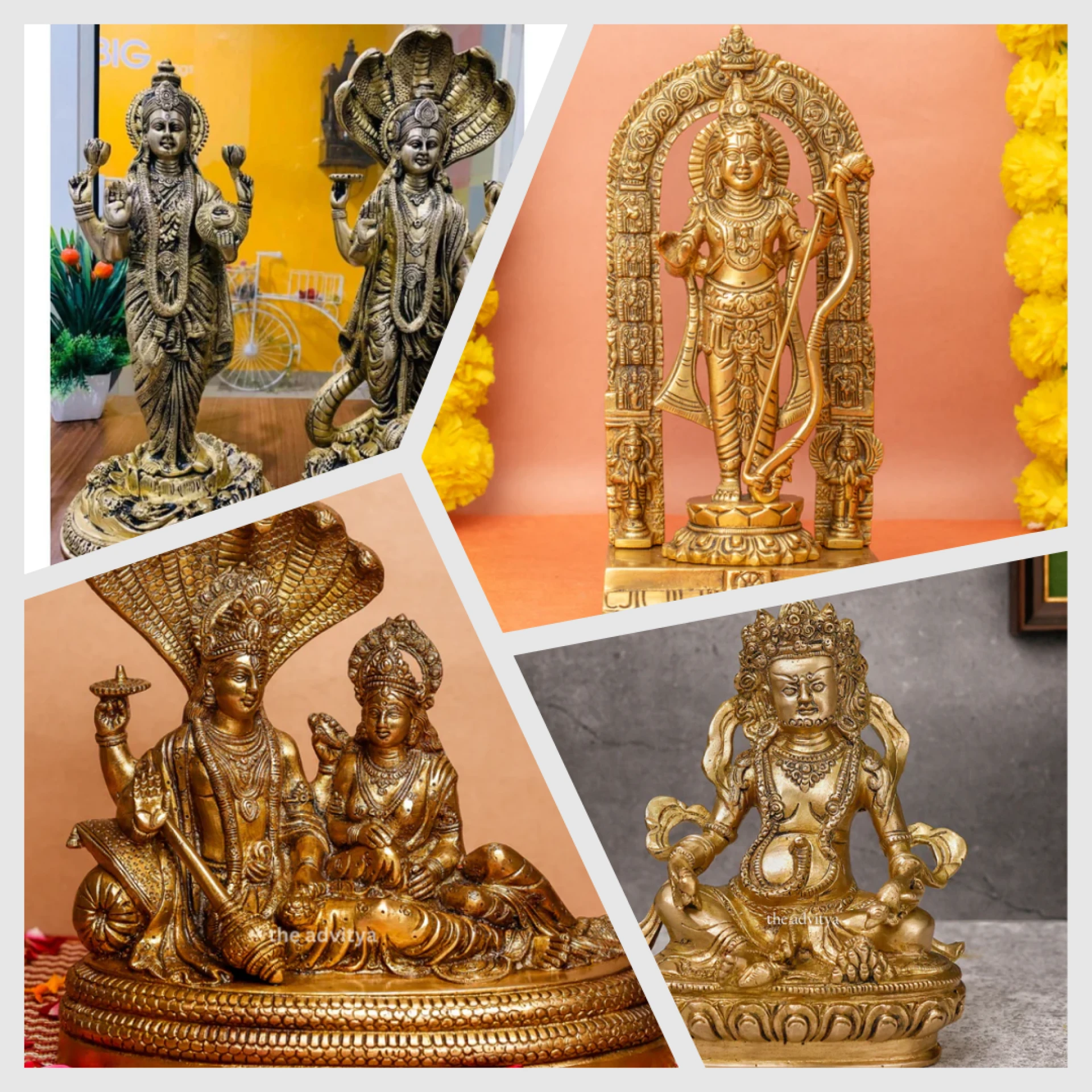

In Hindu tradition, the journey of the divine does not end in scripture—it begins there. Sacred texts describe the form of the gods, but it is through sacred art that these descriptions become visible, tangible, and living. The form of Lord Vishnu is one of the most carefully preserved and symbolically rich representations in spiritual history. From ancient Vedic hymns and Puranic descriptions to temple carvings and home worship, Vishnu’s divine form travels from word to stone, from philosophy to sculpture.
A Vishnu idol is not simply an artistic creation—it is scripture translated into form.
Vishnu in the Sacred Texts
Ancient scriptures describe Vishnu as the cosmic preserver, the one who sustains existence and restores balance whenever chaos rises. His form is defined not by physical beauty alone, but by symbolic perfection. Every element of his appearance carries meaning: calm eyes that reflect cosmic stillness, a posture that expresses balance, and ornaments that signify divine authority.
These descriptions are not poetic imagination—they are spiritual blueprints. They guide artisans, temple architects, and sculptors across centuries in shaping the divine form. The Vishnu idol becomes a visual scripture, allowing devotees to see what was once only described in sacred verses.
Sacred Iconography: Symbolism in Every Form
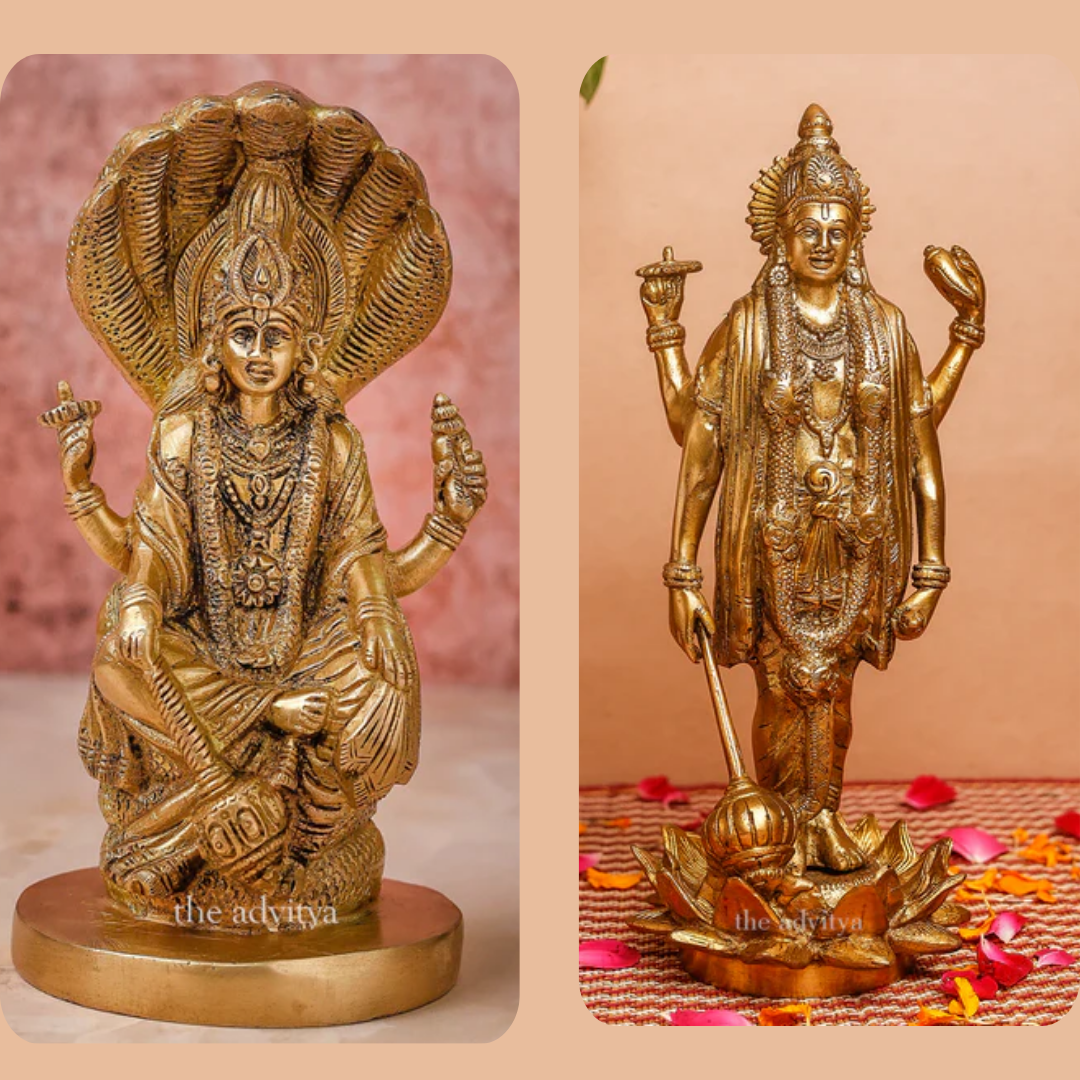
The divine form of Vishnu is never random. His iconography is a precise spiritual language. The four arms represent omnipresence and omnipotence. The chakra symbolises cosmic law, the shankha divine sound and creation, the gada spiritual strength, and the padma purity and transcendence.
A Vishnu statue carries this complete symbolic system within its form. It is theology made visible. Even his posture, whether standing, reclining on Sheshnag, or seated in serenity—represents cosmic states of creation, preservation, and rest. Sculpture becomes a sacred narrative, telling the story of the universe without words.
From Divine Description to Sacred Sculpture
The transformation of Vishnu from scripture to sculpture is an act of devotion, not just craftsmanship. Sculptors do not merely carve stone or mould metal—they follow sacred measurements, iconographic rules, and spiritual proportions passed down through generations. This tradition ensures that every Vishnu idol remains faithful to divine descriptions.
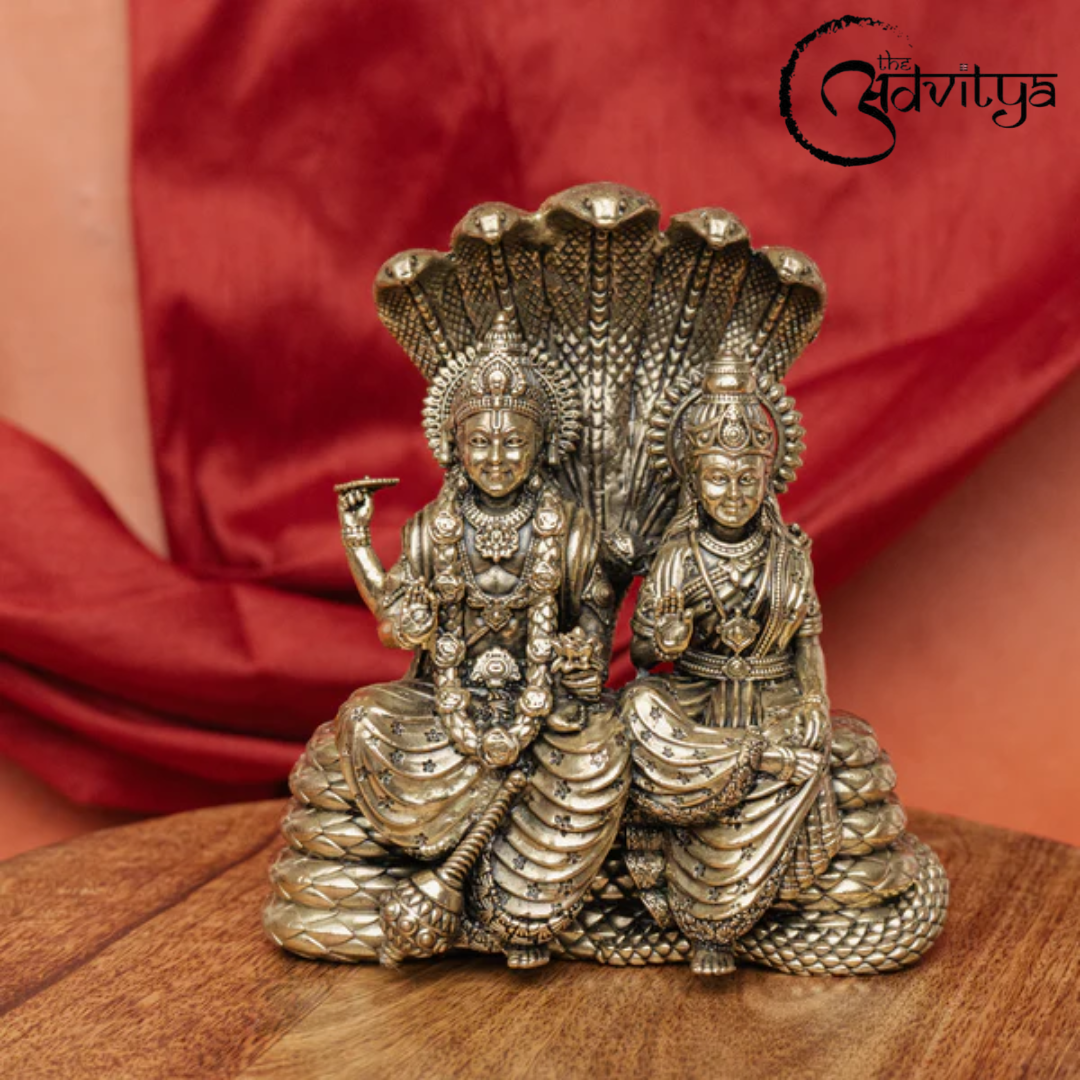
Each curve, line, ornament, and expression is intentional. The sculptor becomes a medium, translating sacred knowledge into form. This is why traditional god idols are not viewed as art objects alone; they are spiritual embodiments.
Vishnu in Temple Art and Home Worship
In temples, monumental Vishnu statues reflect divine grandeur and cosmic authority. In homes, smaller Vishnu idols express intimacy, protection, and personal devotion. Yet both forms carry the same spiritual essence.
Whether carved in stone, cast in metal, or sculpted in modern materials, the divine form remains unchanged in meaning. Scale does not change sanctity. A home Vishnu idol holds the same spiritual symbolism as a temple murti—it is divinity made accessible.
Sculpture as Living Presence
In Hindu philosophy, sacred sculpture is not a symbolic representation—it is presence. Once consecrated, a Vishnu statue is not viewed as an object but as a living spiritual form. The divine does not merely resemble Vishnu—it is believed to reside within the form. This belief transforms sculpture into a sacred presence, making the divine form of Vishnu not just something to look at but something to experience.
From ancient scriptures to sacred sculpture, the divine form of Vishnu represents the seamless union of shastra (scripture), shilpa (art), and bhakti (devotion). A Vishnu idol is philosophy made visible. A Vishnu statue is faith given form. Among all god idols, Vishnu stands as a timeless embodiment of divine order, cosmic balance, and spiritual continuity.
In every carved stone, every sculpted form, and every sacred image, Vishnu’s presence reminds us that the divine is not distant—it is shaped, seen, worshipped, and lived with.






























Sign in to leave a comment.