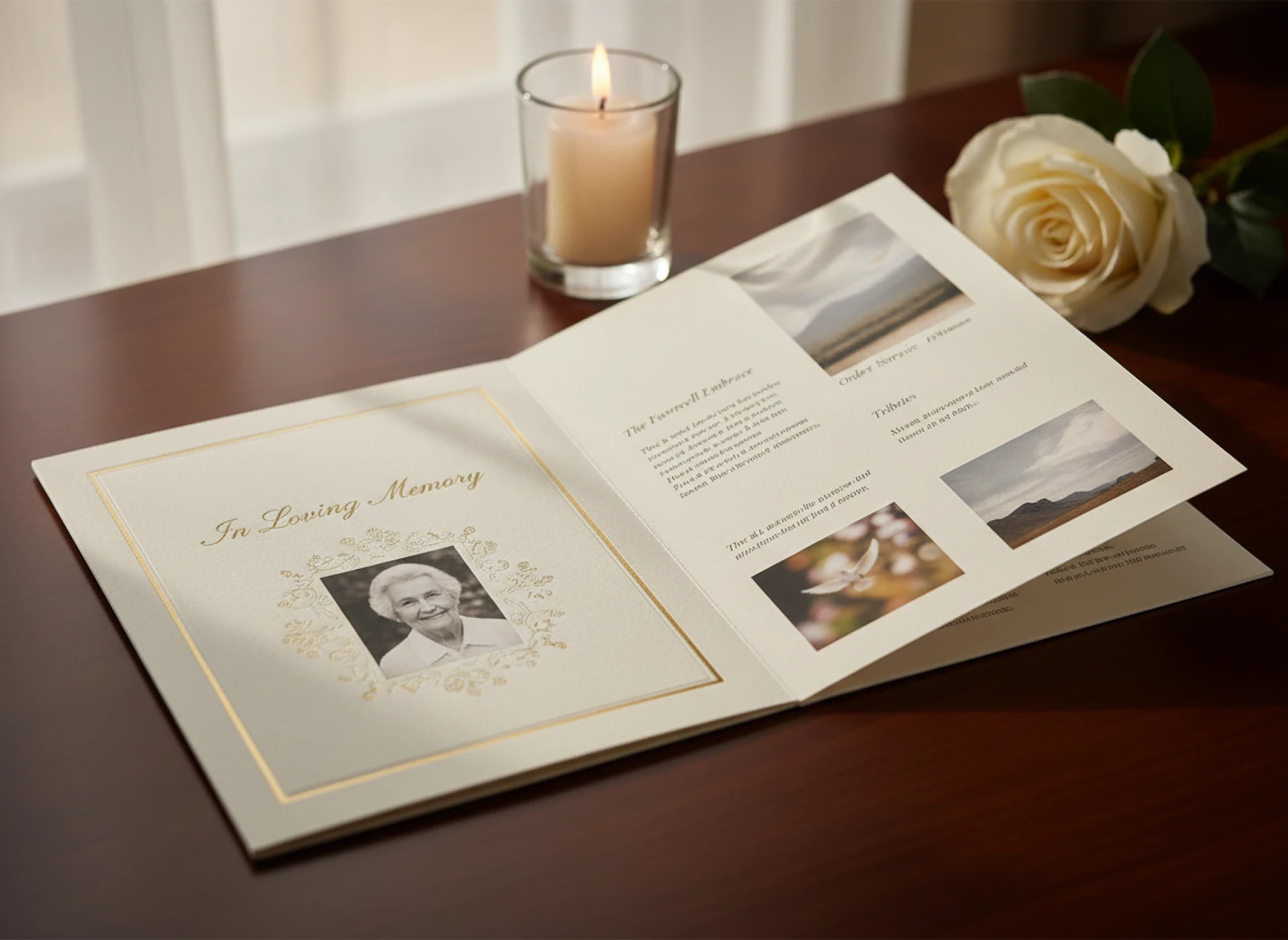

Families rarely start funeral planning by looking for templates.
The first days after a death tend to be occupied with practical matters. Registration must be completed. A funeral director becomes involved. Dates depend on venue availability and the schedules of those who will attend.
During this stage the ceremony still feels fluid. People discuss what might happen rather than what will.
Templates begin to enter the process later, when the service itself starts to stabilise. Once readings, music and speakers have begun to settle into a clear sequence, the need for a printed structure becomes obvious.
Guests will need to follow the ceremony without constant explanation. The order of service booklet becomes the quiet guide to what will happen in the room.
Templates simply provide the framework that allows that guide to take shape quickly.
The template is not the ceremony
A common misunderstanding appears when families first encounter funeral templates online. It can seem as though the template determines how the ceremony should look.
In reality the opposite is true.
The ceremony exists first. The template only reflects it.
Decisions about the running order — who speaks, when music is played, whether a moment of reflection sits between readings — form the content long before any page layout is considered. Once those elements settle, a template simply gives them a place to sit.
Experienced funeral professionals recognise this difference immediately. When templates are used after the service structure has been agreed, the booklet feels natural. When they are used too early, revisions multiply because the ceremony itself is still changing.
Templates work best when they follow decisions rather than attempting to lead them.
Booklets, programmes and leaflets serve slightly different roles
Although people often use the same language for them, printed funeral materials are not always identical in form.
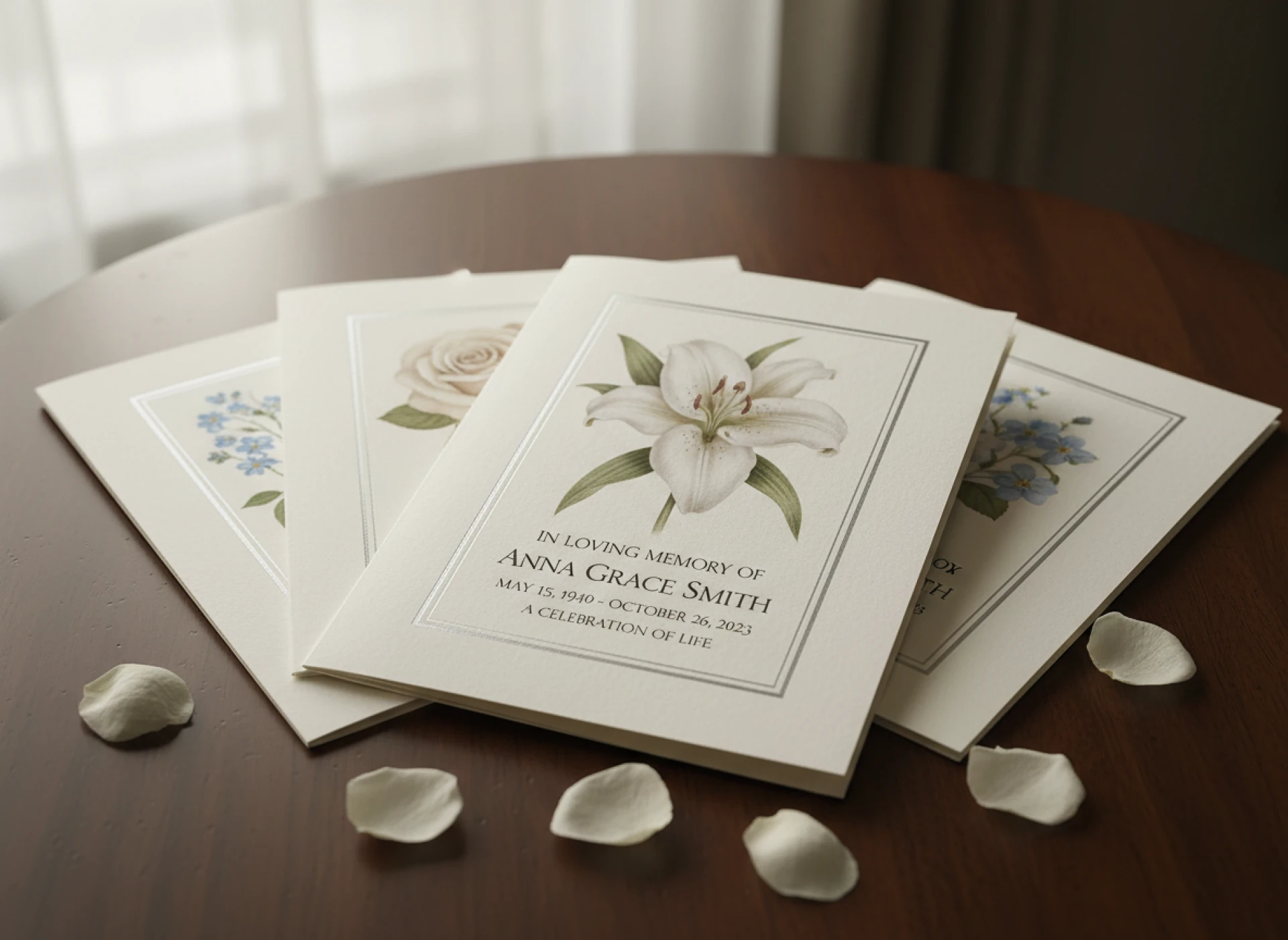
Some ceremonies use folded booklets containing several pages. Others rely on a single sheet programme. In certain services, particularly memorial gatherings held later, families may distribute a memorial leaflet rather than a full booklet.
Each format reflects how much information the service needs to communicate.
Booklets are typically used when the ceremony contains multiple readings, hymns or speakers. The additional space allows the sequence to unfold clearly.
Programmes often appear when the service is shorter or more informal. A single folded sheet can communicate the necessary order without excessive detail.
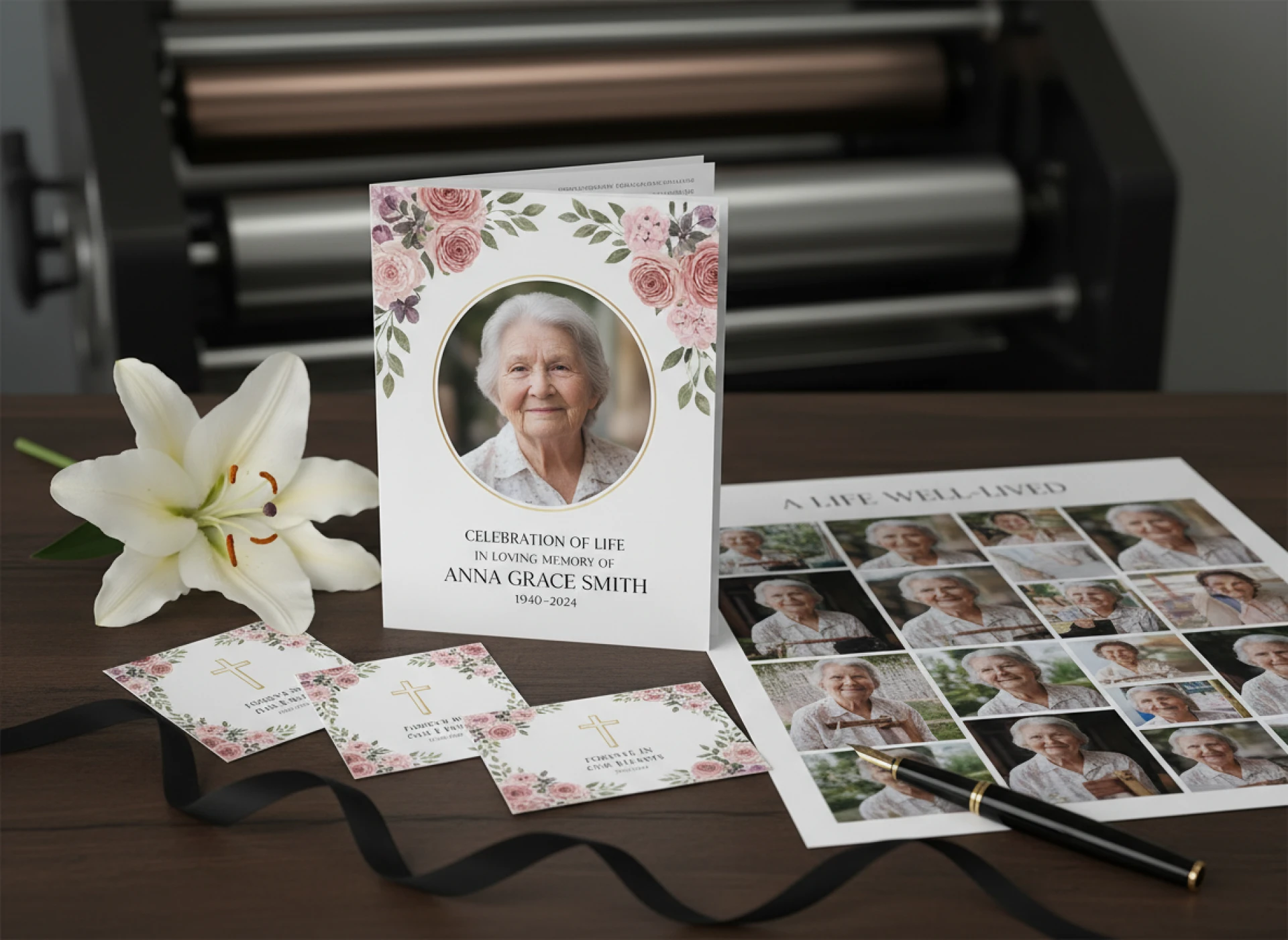
Memorial leaflets tend to prioritise photographs or a brief tribute rather than a full running order.
Templates exist for all three forms because funeral services themselves vary widely in structure.
Content develops before layout does
When families begin working with templates, they often expect design to be the central task. In practice, most of the preparation happens before any layout decisions are made.
The most time is usually spent confirming content.
Names are checked carefully. Spellings matter more than expected. Relationships are clarified so that the booklet reflects the person accurately. Readings and poems may be discussed several times before final wording feels appropriate.
Photographs introduce another stage of preparation. Images arrive from different relatives and devices, sometimes prompting quiet conversations about which moments best represent a life.
By the time a template is opened and pages begin to fill, most of the real work has already taken place.
Templates simplify a process that often happens quickly
Funeral planning rarely allows unlimited time. Once the service date has been confirmed, preparation tends to move steadily toward completion.
Templates help remove unnecessary complexity from that period.
Page structures are already organised. Font choices and margins are consistent. Space for photographs and text is predictable. Families can concentrate on the content rather than worrying about the mechanics of layout.
For printers and funeral directors this approach also reduces the likelihood of last-minute adjustments. When the structure is clear from the beginning, the final booklet tends to arrive feeling settled rather than provisional.
Templates therefore exist less as creative tools and more as practical ones.
The preparation stage often becomes collaborative
An interesting shift tends to occur once a draft booklet exists.
Earlier planning conversations may have involved only a few people coordinating arrangements. When the booklet appears, relatives often gather around it collectively. Everyone checks names, notices small details and suggests minor adjustments.
The printed programme becomes a shared reference point.
It is one of the few moments during funeral planning when the ceremony can be seen all at once. Pages reveal the full sequence of the service, allowing families to confirm that everything feels balanced.
Professionals frequently observe that once the booklet reaches this stage, the service itself begins to feel complete.
Printing quietly introduces the final deadline
Until the order of service is sent for printing, most aspects of funeral planning remain flexible.
Words can be adjusted. Photographs can be replaced. The running order may still shift slightly.
Printing changes that dynamic.
Once the booklet enters production, the service effectively becomes fixed. Names, readings and timings can no longer continue changing. Families often find that this moment brings clarity rather than pressure. Decisions that lingered earlier suddenly resolve because the ceremony must now be expressed in final form.
The booklet becomes the point where planning stops evolving and begins to conclude.
What these templates typically contain
Despite variations in design, most funeral templates gather similar elements together.
| Element | Role within the printed programme |
| Order of service | Guides guests through the ceremony |
| Names of participants | Acknowledges speakers and officiants |
| Readings or hymns | Allows attendees to follow along |
| Tribute or short biography | Reflects the person’s life |
| Photographs | Personalises the booklet |
| Date and location | Records the occasion |
Templates simply provide a consistent way to arrange these pieces of information so the service remains clear for everyone attending.
Why families often keep these printed pieces
Unlike many elements of a funeral, printed programmes do not disappear when the ceremony ends.
Guests frequently take them home. Some place them inside family albums. Others keep them among personal papers as a quiet reminder of the day.
For close relatives, the booklet can become one of the few tangible records of the ceremony itself.
This lasting role explains why families often review wording and images carefully before approving the final version. The booklet will exist long after the service concludes.
Final perspective
Funeral order of service templates exist to support a moment when families must bring together many small decisions within a limited time. Booklets, programmes and memorial leaflets all serve the same underlying purpose: helping guests understand the ceremony while creating a record of the service that remains afterwards. Templates provide the structure that allows this process to happen calmly once the ceremony itself has settled — a stage often supported by experienced print partners such as I YOU Print, whose role naturally begins when funeral arrangements are ready to be expressed clearly in print.

Sign in to leave a comment.