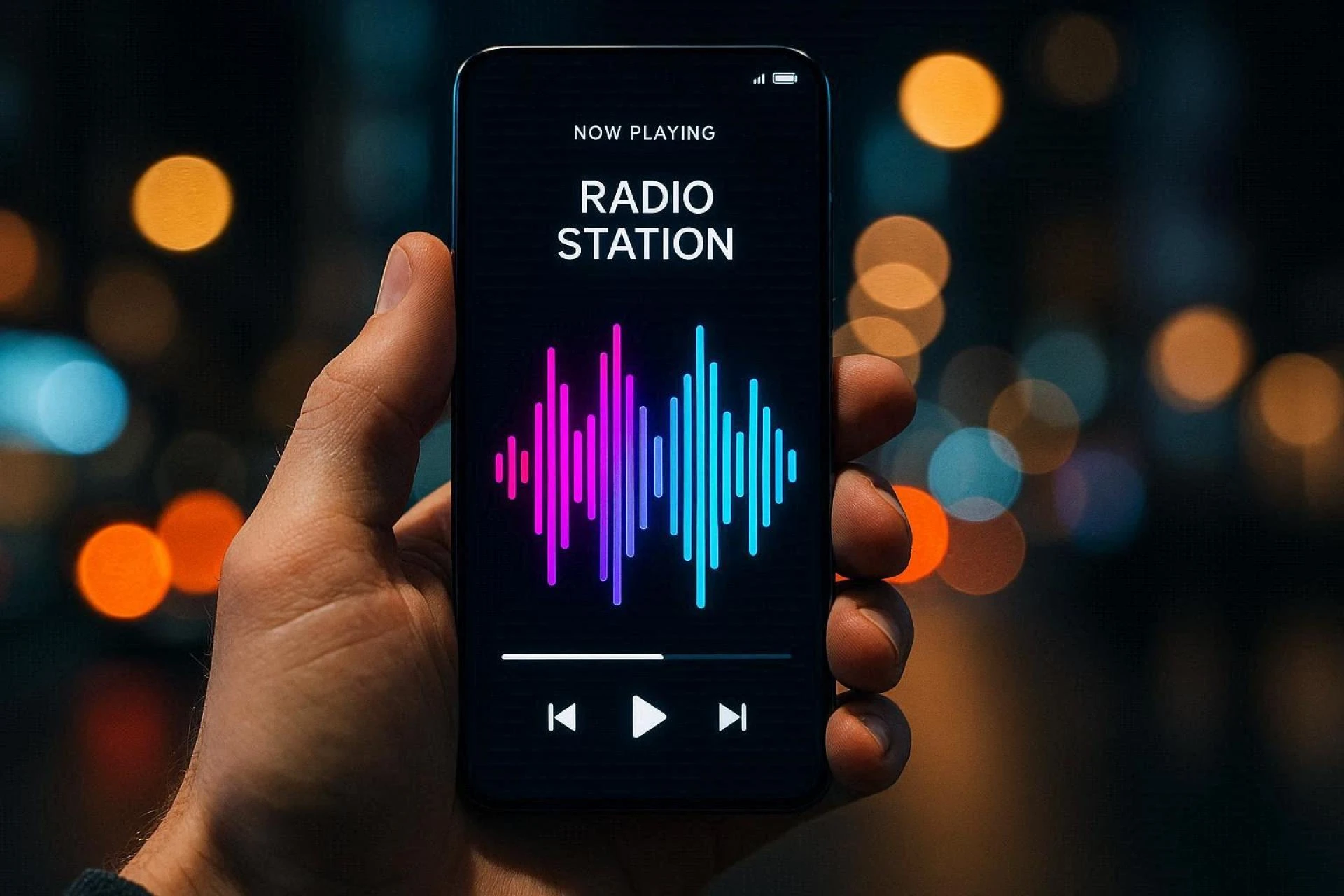

The smartphone has become the remote control for our lives. As we approach 2026, the way we consume media has shifted entirely to "on-the-go" experiences. We are listening while commuting, while working out, and even while working.
For broadcasters, religious organizations, and community leaders, this shift presents a stark reality: if you aren't on your listener's home screen, you don't exist.
Relying on aggregators like TuneIn or Spotify is no longer sufficient for serious growth. When you are just one of a million stations in a directory, you are fighting for attention against the entire world. To truly build loyalty, you need your own real estate. You need a dedicated audio live streaming app.
The Power of Direct Connection
Having your own application is about more than just vanity; it is about sovereignty. When a user downloads your app, they are making a commitment to your brand. In return, you get the ability to send push notifications directly to their pocket—alerting them exactly when a live show starts or when a new podcast episode drops.
Furthermore, 2026 is the year of direct monetization. A white-label app allows you to bypass the pennies paid by streaming giants. You can integrate your own subscription models, donation buttons, or ad networks, keeping 100% of the revenue you generate.
Quality in the Age of 5G and 6G
However, winning the download is only half the battle. You have to keep the listener. Modern audiences have zero patience for silence. If your audio buffers, skips, or sounds tinny, they will close the app and likely delete it.
Ensuring a broadcast-quality experience requires a robust backend. This is where the technology becomes invisible but essential. The infrastructure supporting your app must be capable of adapting to the listener's environment.
The Role of Compression Technology
Interestingly, the technology that guarantees crystal-clear audio is often shared with the visual world. The same sophisticated architecture used for high-end video encoding and transcoding is utilized to manage audio bandwidth.
This process involves taking your high-fidelity studio output and compressing it into various efficient formats (codecs) in real-time. This ensures that a listener on a high-speed Wi-Fi connection gets lossless quality, while a listener driving through a tunnel on a spotty 4G signal gets a lighter, compressed stream that doesn't cut out.
Final Thoughts
The future of radio isn't on a tower; it is in an app store. As we move forward, the brands that succeed will be the ones that offer a seamless, personalized mobile experience. Don't rent your audience from a third party. Build your own platform, and put your voice directly into the hands of your listeners.


























Sign in to leave a comment.