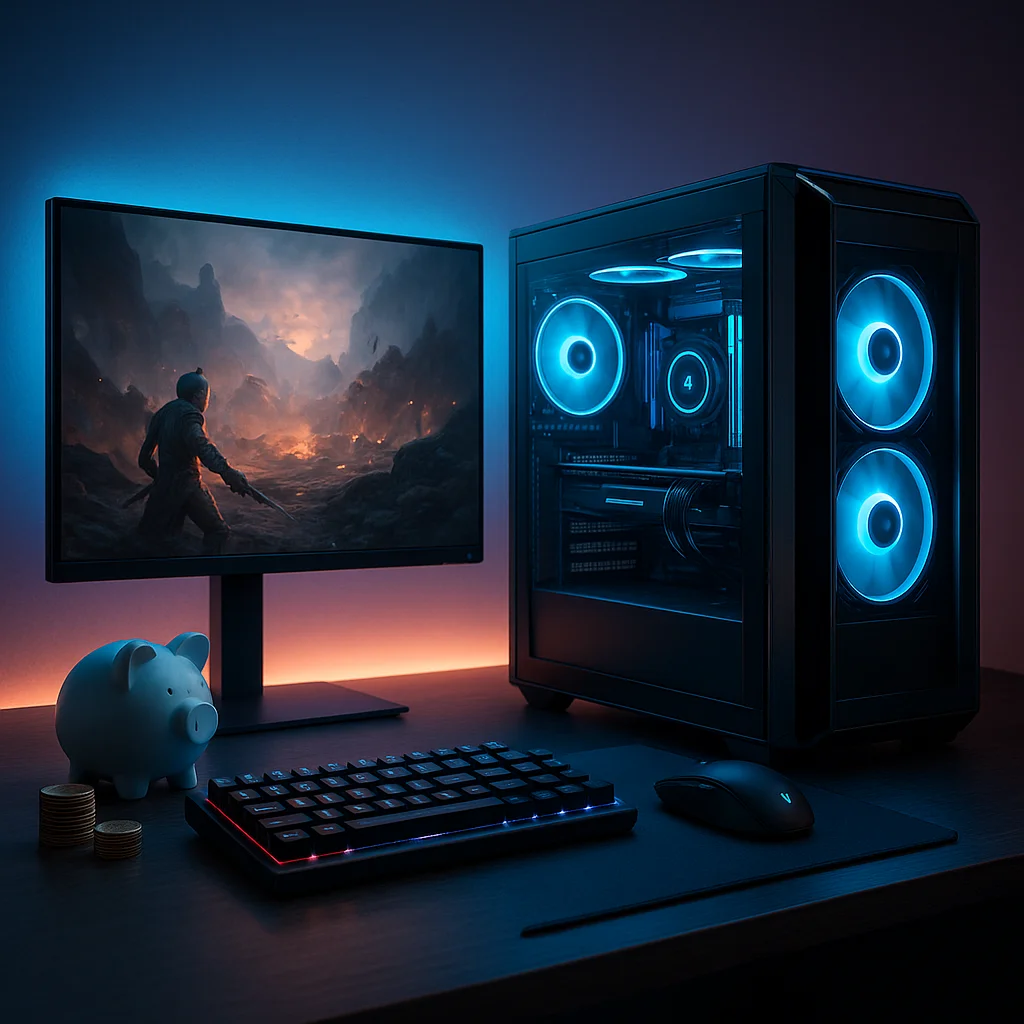

Starting Strong: The Thrill of Building Your Own Budget Gaming PC
Imagine the moment you press the power button for the first time on a gaming PC you assembled yourself. The hum of the fans, the glow of RGB LEDs, and the anticipation of launching your favorite game in crystal-clear 1080p or even 1440p resolution—this is the joy of PC building, made accessible even on a tight budget. For many gamers in Tokyo and beyond, building a custom gaming PC is more than just a hobby; it’s a rite of passage that combines technical skill, passion, and a dash of creativity.
With the rising costs of commercial consoles and pre-built systems, the appeal of building a gaming rig that delivers solid performance without breaking the bank has never been higher. According to reports from TechTimes, recent advances in mid-range hardware have made it possible to run popular esports titles and many AAA games smoothly at 1080p for under $600.
But assembling a budget build requires more than just picking the cheapest parts. It’s about understanding the balance between CPU power, GPU capability, RAM size, and storage speed, while also considering future upgrade paths. Let’s enjoy this detailed guide that unpacks how you can craft a gaming PC on a budget that still brings high tension moments during play!
Tracing the Roots: How Budget Gaming PCs Became Viable and Popular
Back in the early 2010s, building a gaming PC was often an expensive pursuit, with high price tags on graphics cards and processors limiting access. However, the past decade has seen dramatic shifts. The introduction of efficient, affordable processors like AMD’s Ryzen series and NVIDIA’s budget-friendly GPUs transformed the market.
Today, the ecosystem supports a wide range of options catering to different price points. The democratization of PC components and the rise of online marketplaces have empowered gamers worldwide, including Japan’s enthusiastic gaming community. The Tokyo Game Show often showcases innovative builds and affordable setups, inspiring many to try their hand at DIY gaming rigs.
Moreover, software optimizations and the growth of esports titles with modest hardware demands have kept budget builds relevant. Titles like "Valorant" and "League of Legends" continue to run smoothly on mid-tier machines, ensuring that even limited budgets can deliver competitive edge.
“The synergy of affordable CPUs like the Ryzen 5 5600 and GPUs such as the GTX 1650 has reshaped what gamers expect from budget builds,” explains hardware analyst Kenji Morimoto from Tokyo Tech Review.
This transformation is also reflected in content creation, where platforms like YouTube and Twitch have exploded, motivating gamers to invest in capable machines without overspending. The rise of mobile and online gaming platforms (explored in our article on Mobile Friendly Online Gaming Platforms for Gaming on the Go) is another factor influencing PC preferences, but a solid desktop build remains irreplaceable for immersive gaming experiences.
Breaking Down the Build: Key Components for Gaming PC on a Budget
Building a gaming PC on a budget is an exercise in strategic selection. Each component must be carefully chosen to maximize gaming performance without unnecessary costs. Here’s a detailed breakdown of the essential parts:
- Processor (CPU): The CPU handles game logic, physics, and AI. For budget builds, AMD Ryzen 5 5600 or Intel Core i5-12400F stand out for their balance of price and performance, delivering great 1080p gaming experience.
- Graphics Card (GPU): The GPU is the heart of gaming performance. In 2026, the NVIDIA GTX 1650 Super and AMD Radeon RX 6500 XT are commonly recommended for budget gamers targeting smooth 60fps at 1080p.
- Memory (RAM): 16GB DDR4 RAM is now the sweet spot for gaming, ensuring smooth multitasking and gameplay. Cheaper 8GB kits may suffice but limit future-proofing.
- Storage: A combination of a 500GB NVMe SSD for fast load times, paired with a 1TB HDD for extra storage, offers both speed and capacity without breaking the bank.
- Motherboard: Budget-friendly B550 or B660 chipset motherboards provide good features and upgrade paths for Ryzen and Intel CPUs respectively.
- Power Supply Unit (PSU): A reliable 550W 80+ Bronze certified PSU protects your investment and ensures stable power delivery.
- Case: Affordable mid-tower cases with good airflow and cable management options offer decent aesthetics and cooling.
According to Ars Technica’s 2025 guide, such configurations allow for a variety of gaming genres without sacrificing frame rates or visuals. The key is balance — overspending on CPU at the expense of GPU can bottleneck gaming, and vice versa.
“You don’t need the latest flagship parts to enjoy a fluid gaming experience—smartly chosen mid-range components often outperform unbalanced high-end builds,” notes hardware expert Yuto Nakamura.
2026 Updates: What Has Changed and How to Leverage New Tech for Budget Builds
This year, component availability and pricing have stabilized after previous disruptions caused by global supply chain issues and cryptocurrency mining demand. This has opened up exciting opportunities for budget builds.
Firstly, the arrival of Intel’s 13th-gen processors and AMD’s Ryzen 7000 series has pushed prices of previous generation CPUs down, making them perfect for cost-conscious gamers. For example, the Ryzen 5 5600, once a mid-tier chip, now serves as an excellent budget option with strong gaming performance.
On the GPU front, AMD’s RDNA3 architecture and NVIDIA’s RTX 40-series have introduced efficiency improvements, but their higher-end models remain pricey. That said, the refreshed entry-level cards like the RX 6500 XT and the GTX 1650 Super continue to dominate budget builds with good power consumption and solid performance.
Another notable trend in 2026 is the rise of DDR5 memory. While DDR5 is the future, it remains expensive, so most budget builds still rely on DDR4, which offers mature performance and affordability.
Additionally, NVMe SSDs have become more affordable, allowing budget gamers to enjoy reduced game load times and snappier overall system responsiveness.
- Prices of popular CPUs like Ryzen 5 5600 and Intel i5-12400F have dropped by 15–25% compared to last year.
- Entry-level GPUs have seen a 10–20% price decrease, making them more accessible.
- Motherboards with USB-C and PCIe 4.0 support have become standard even in budget segments.
For anyone looking to build a gaming PC on a budget today, these 2026 developments mean more bang for your buck than ever before. The landscape is ripe for gamers to pick up parts that were once out of reach, aligning perfectly with our earlier coverage in Build a Gaming PC on a Budget: Your 2026 Guide.
Industry Perspectives: What Experts Say About Budget Gaming Builds
Leading voices in the PC hardware industry emphasize that budget gaming builds are an excellent entry point for new gamers and a practical choice for those not needing ultra settings or 4K resolutions.
According to a recent interview with industry analyst Emi Fujimoto, budget builds encourage learning about PC components, fostering a deeper appreciation of gaming technology. She highlights how the rise of esports and indie games has shifted priorities towards smooth frame rates rather than graphical fidelity alone.
“For many gamers, especially in Japan, the joy lies in responsiveness and competitive play, which budget builds can provide without the financial burden of high-end rigs,” Fujimoto explains.
Meanwhile, component manufacturers are increasingly focusing on delivering value-oriented products. NVIDIA and AMD’s mid-range GPUs and efficient CPUs reflect this trend, as does the emergence of compact, affordable cases with excellent airflow.
Retailers and online platforms also support this ecosystem by offering bundled deals and promotions, making entry-level gaming PCs more accessible to students and young professionals. This dynamic mirrors the growing popularity of budget PC builds showcased at events like the Tokyo Game Show.
Experts also caution that while budget builds are fantastic for current gaming demands, users should be mindful of potential upgrade paths. Choosing a motherboard with future-proofing features like PCIe 4.0 and extra RAM slots can extend the lifespan of a budget rig.
Looking Ahead: Future Trends and How to Maximize Your Budget Build’s Lifespan
As we look forward to the next few years, the PC gaming landscape promises exciting changes that any budget builder should watch closely. Technologies like AI-assisted game rendering and more efficient ray tracing are filtering down into mid-range hardware, enhancing visual quality without massive performance penalties.
Additionally, the gradual adoption of DDR5 and PCIe 5.0 will provide speed boosts, though their full impact on budget segments may take a couple of years to realize. Meanwhile, cloud gaming services are improving but still cannot fully replace the tactile satisfaction of a locally built PC.
To maximize the value of your budget gaming PC, consider these actionable tips:
- Invest in a quality motherboard with upgrade features.
- Prioritize a balanced CPU-GPU combo rather than chasing the latest flagship.
- Regularly update drivers and optimize game settings for best performance.
- Consider second-hand or refurbished parts from reputable sources to stretch your budget.
- Keep an eye on sales events like Japan’s Golden Week for discounts on components.
In summary, budget gaming PCs are not only viable but also rewarding projects that offer excellent performance for their price. With smart choices and a little patience, you can craft a machine that fuels your gaming passion while keeping wallet-friendly.
For more tips and detailed builds, check out the comprehensive gaming PC build guide on WriteUpCafe and explore how to complement your rig with mobile-friendly gaming platforms in our related article.























Sign in to leave a comment.