

The first time I lined up for a major VR demo at Tokyo Game Show, the queue felt like a small festival by itself. People were not just waiting to try a headset. They were waiting to test a promise! A promise that games could stop being framed by a rectangle and start wrapping around your whole body. In 2026, that promise looks more mature, more practical, and still wonderfully strange. Virtual reality gaming is no longer a side attraction for only the most dedicated hardware fans. It now sits in a more serious place between console gaming, PC gaming, social play, fitness, simulation, and mixed reality computing.
That shift matters because the conversation has changed. A few years ago, the question was whether VR would survive the hype cycle. Now the better question is which kind of VR setup makes sense for your habits, budget, room space, and favorite genres. Standalone headsets have improved convenience. PC-connected devices still chase the highest fidelity. Mixed reality features are pulling in new users who may not think of themselves as “VR people” at all. According to coverage from TechTimes’ roundup of the best VR headsets in 2026 and MSN’s 2026 guide to VR headsets, the market is now defined less by fantasy and more by trade-offs: comfort, software libraries, passthrough quality, display sharpness, tracking, and ecosystem lock-in.
That is why a complete guide matters. If you are choosing your first headset, upgrading from an older device, or trying to understand where VR gaming is heading next, you need more than a shopping list. You need context. You need to know why some headsets feel magical for rhythm games but awkward for long RPG sessions, why mixed reality may become as important as pure VR, and why the future of this medium may depend as much on software discipline as on flashy hardware. Let’s enjoy the full picture.
How VR gaming reached this more serious stage
Modern consumer VR has had at least three distinct eras. The first was the revival era, when early Oculus development kits and enthusiast PC headsets proved that low-latency head tracking could create a convincing sense of presence. The second was the premium experimentation era, when devices from Meta, HTC, Valve, and Sony chased different ideas: room-scale precision, inside-out tracking, console convenience, and high-end PC immersion. The third era, which defines 2026, is the practicality era. Hardware is still improving, but the bigger story is that companies now understand they cannot sell headsets on spectacle alone.
Several lessons shaped this moment. First, friction kills momentum. If a headset takes too long to set up, requires too many cables, or feels heavy after thirty minutes, many players simply stop using it. Second, software libraries matter more than launch buzz. A beautiful headset without regular game support becomes a shelf ornament very quickly. Third, the audience for VR is broader than core shooter fans. Fitness apps, social worlds, puzzle games, cockpit simulators, horror, rhythm games, and mixed reality experiences all pull different users into the category.
There is also a business lesson here. The old “metaverse” narrative has cooled, and that may actually help VR gaming. The Conversation’s analysis of Mark Zuckerberg’s metaverse U-turn argues that the retreat from grandiose branding reflects a more grounded reality for virtual reality itself. Instead of pretending one platform will replace the internet, companies are now focusing on specific use cases where immersion genuinely adds value. Gaming remains the clearest and most emotionally compelling use case.
VR succeeds when it solves a real play problem: presence, motion, scale, or physicality that flat-screen games cannot easily reproduce.
That grounding is healthy. It means headset makers are competing on comfort, optics, battery life, hand tracking, and game support rather than on slogans. It also means players can make smarter decisions. If you want a social, portable, low-friction device, your best choice may look very different from the ideal headset for sim racing or modded PC VR. The market is no longer one-size-fits-all, and that is a sign of maturity rather than fragmentation.
Readers who want a broad companion perspective can compare this analysis with WriteUpCafe’s Virtual Reality Gaming: The Future and Best Headsets to Watch, which also tracks how buyer priorities have shifted from novelty toward ecosystem value.
What defines a great VR headset in 2026
When people ask for the “best” VR headset, I usually answer with another question: best for what? A headset can be brilliant in one scenario and disappointing in another. In 2026, the buying criteria are much clearer than they were even two or three years ago. Raw specification sheets still matter, but the experience between those numbers matters more.
The most important factors now include display clarity, lens quality, tracking reliability, comfort, software ecosystem, and whether the headset supports standalone use, PC VR, or both. Mixed reality passthrough has also become a major differentiator. A headset that can cleanly blend your room with digital objects expands your use cases beyond pure isolation. That matters for shorter daily sessions, social play, and practical comfort. If you can quickly jump into a tabletop strategy experience on your living room table, you are more likely to use the device often.
- Display and optics: Higher resolution reduces screen-door effect and improves text readability. Pancake lenses have become especially valuable because they allow slimmer headset designs and clearer edge-to-edge viewing.
- Comfort and weight balance: A powerful headset means little if facial pressure or poor strap design ends your session early.
- Tracking: Inside-out tracking is now standard for convenience, but controller precision still varies by ecosystem and lighting conditions.
- Software library: Exclusive games, backward compatibility, fitness apps, and social platforms can outweigh a small hardware advantage.
- PC connectivity: Wired or wireless PC support remains crucial for players who want access to advanced sims and mod-heavy titles.
- Battery and heat: Standalone devices need enough endurance for real sessions, not just short demos.
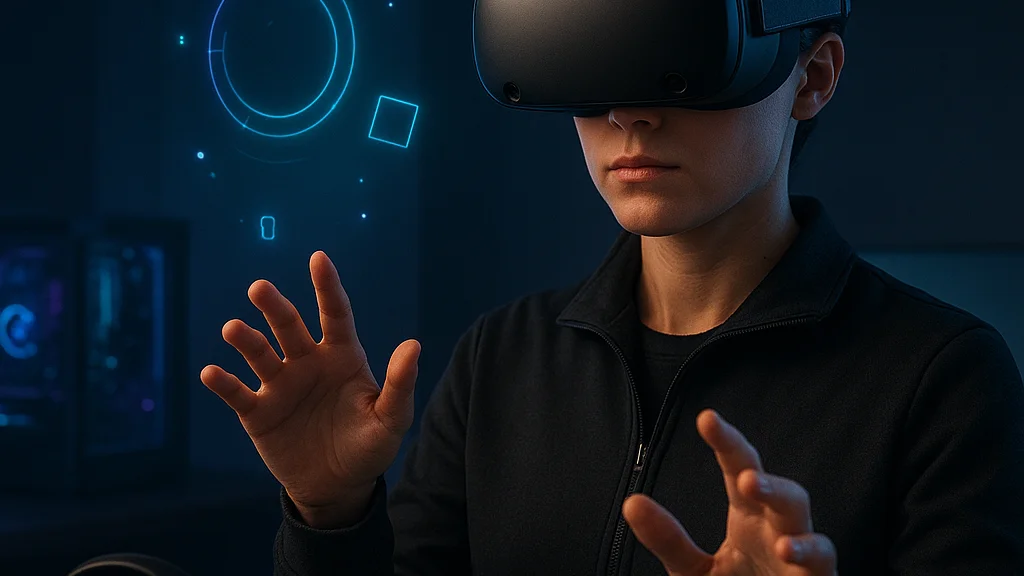
Another major factor is input. Hand tracking has improved, but for many genres, controllers still deliver the most reliable and satisfying interaction. Swordplay, shooting, rhythm, and sports mechanics benefit from tactile consistency. Eye tracking, where available, can also improve foveated rendering and user interface responsiveness, though implementation remains uneven across software.
Finally, there is the “return-to-headset” test. A great headset is not just impressive on day one. It makes you want to put it back on next week. That depends on startup speed, easy guardian setup, stable software updates, and enough content variety to avoid fatigue. This is where many buyers make mistakes. They compare only headline specs and ignore the daily rhythm of ownership.
The best VR headset is the one that matches your real gaming life, not the one with the loudest spec sheet.
For an additional buyer-oriented angle, WriteUpCafe’s Expert Tips for the Future of Virtual Reality Gaming and Best Headsets usefully emphasizes comfort, room setup, and software fit over pure marketing claims.
The best headset categories right now and who they suit
Rather than naming a single universal winner, it is more useful to divide the market into categories. By mid-2026, the headset field is shaped by a few recognizable lanes: mainstream standalone, premium mixed reality, console VR, enthusiast PC VR, and budget entry-level devices. Coverage from TechTimes and MSN points to this same basic structure, even when their exact rankings differ.
Mainstream standalone headsets remain the easiest recommendation for most players. They remove the need for an expensive gaming PC, reduce setup friction, and offer the broadest path into VR fitness, rhythm games, action titles, and social experiences. This category tends to win on convenience and value. If your goal is to play often rather than chase maximum fidelity, standalone is usually the sweet spot.
Premium mixed reality headsets target users who want stronger passthrough, sharper displays, and more flexible use beyond gaming. These devices often cost more, but they are pushing the category’s future. They are especially appealing for players interested in room-aware puzzle games, productivity crossover, and immersive media as well as traditional VR titles.
Console VR remains important because it gives players a more controlled ecosystem. The strongest example is Sony’s PlayStation VR2, which brought high-end features such as eye tracking and advanced haptics into a console environment. Its challenge has never been hardware ambition. It has been software cadence and platform commitment. For PlayStation users who want polished, seated or room-scale experiences without entering the PC ecosystem, it still occupies a valuable lane.
Enthusiast PC VR is where simulation fans and high-end tinkerers still find their home. If you care about flight sims, racing rigs, modded experiences, and the absolute ceiling for visual complexity, PC-connected headsets remain unmatched. The trade-off is obvious: higher cost, more setup complexity, and a need for a capable GPU. But for the right player, the payoff is enormous. Cockpit games in particular still feel like the purest argument for VR’s long-term importance.
- Choose standalone if you want low friction, fitness, social games, and broad accessibility.
- Choose console VR if you already live in the PlayStation ecosystem and value curated experiences.
- Choose PC VR if sims, mods, and top-tier fidelity matter more than convenience.
- Choose mixed reality premium devices if you want the clearest glimpse of where the medium is heading.
One more point often gets missed: content style matters as much as budget. Horror players may prioritize black levels and spatial audio. Rhythm players may care more about controller tracking and comfort. Sim racers may accept a heavier headset if clarity and stable PC support are excellent. There is no shame in buying for one killer use case. In VR, one unforgettable use case can justify the whole machine.
What changed recently in 2026
The biggest story in 2026 is not that VR suddenly exploded into the mainstream. It is that the market became more disciplined. Headset coverage this year has focused on practical buying advice rather than inflated cultural prophecy, and that is a meaningful shift. According to MSN’s 2026 roundup, buyers are weighing gaming, movies, and mixed-use entertainment together, which shows how the category is broadening. TechTimes similarly frames headset selection around immersion and device fit rather than fantasy narratives.
Mixed reality is now central to the conversation. Passthrough cameras used to be treated as a bonus feature. In 2026, they increasingly function as a bridge that lowers the psychological barrier of putting on a headset. You can keep awareness of your room, interact more casually, and transition between apps without the same sense of total separation. For many households, that makes a headset easier to share and less intimidating for newcomers.
Content curation has improved too. Developers are getting better at designing around comfort options, snap turning, seated modes, and shorter session structures that respect how people actually use VR. There is also more emphasis on “sticky” software: games and apps that reward repeat use rather than one-time spectacle. Fitness and social titles continue to benefit from this model, but story-driven and strategy experiences are also learning from it.
Another visible change is the cooling of metaverse branding. As The Conversation notes, the retreat from that framing does not mean VR is failing. It may mean the opposite. It suggests the industry is moving from ideology to product discipline. That is usually where durable markets are built. Players care less about grand digital citizenship and more about whether a headset is comfortable, whether the game library is alive, and whether updates improve the experience.
Meanwhile, media and enthusiast lists such as Digit’s VR bucket list for defining 2026 experiences show another healthy trend: the conversation is returning to software magic. Memorable experiences still sell the medium. Hardware can open the door, but unforgettable games make people stay.
That is why 2026 feels important. It is not a year of naïve hype. It is a year of refinement. The category is still niche compared with consoles and mobile gaming, yes, but it is a stronger niche than before. The people buying in now are finding better devices, clearer use cases, and a more honest market.
The software question: why games still decide everything
Every VR cycle eventually returns to software. A headset can be lighter, sharper, and smarter, but if the library feels thin, the momentum fades. This remains the central truth of VR gaming’s future. The best hardware in the world cannot compensate for a weak release cadence. That is why platform health should be part of every buying decision.
VR software succeeds when it understands embodiment. The player is not just pressing buttons. They are reaching, ducking, aiming, leaning, and occupying volume. That changes design at every level. Menus must be legible and comfortable in 3D space. Locomotion must balance freedom with motion comfort. Combat must feel responsive without exhausting the user. The strongest VR games are rarely direct copies of flat-screen design. They are built around presence from the start.
Several genres continue to prove especially resilient:
- Rhythm and fitness: Easy to understand, highly replayable, and physically engaging.
- Horror: Presence amplifies tension in ways traditional screens struggle to match.
- Simulation: Racing and flight remain among VR’s most convincing long-session formats.
- Social and party experiences: Shared presence gives VR a unique emotional texture.
- Puzzle and interaction-driven adventures: Hand presence makes object manipulation inherently satisfying.
Japanese developers and creators have also helped shape VR’s expressive side, from stylized rhythm aesthetics to anime-influenced social spaces and character performance. That influence matters to me personally. VR does not need to imitate realism all the time. Some of its best moments come from exaggerated, theatrical worlds where movement and color carry emotion. A headset can feel like stepping into an opening sequence with high tension energy!
Still, software fragmentation remains a risk. Some titles are trapped in specific storefronts or optimized unevenly across devices. Players considering a headset should audit the library first. Make a list of ten games or apps you genuinely want to use. Then check platform availability, performance expectations, and whether PC streaming or cross-buy support fills the gaps. This simple step prevents buyer regret more effectively than obsessing over one extra display feature.
If you want a broader survey of category trends, WriteUpCafe’s Virtual Reality Gaming Future and the Best Headsets complements this point by mapping hardware choices against software priorities.
Where VR gaming is heading next
The future of VR gaming will likely be shaped by convergence rather than one dramatic breakthrough. Headsets are becoming lighter. Mixed reality is becoming more usable. Eye tracking and smarter rendering techniques are making better use of limited processing power. Wireless PC streaming continues to improve. None of these changes alone will transform the industry overnight, but together they make VR easier to live with. That matters more than flashy demos.
Over the next few years, I expect five trends to define the market. First, mixed reality will normalize headset use. People are more willing to wear a device that does not fully cut them off from their surroundings. Second, cross-platform development will become more important, because studios need larger audiences to justify ambitious projects. Third, social and creator-driven spaces will keep evolving, though likely in more grounded forms than the old metaverse pitch. Fourth, simulation and premium enthusiast niches will remain crucial, because they continue to produce some of VR’s most convincing value. Fifth, comfort engineering may become the real battlefield. A thinner, cooler, better-balanced headset can change usage patterns more than another spec bump.
There are also strategic questions for major companies. Can platform holders sustain first-party investment? Can they court enough third-party developers? Can they avoid confusing consumers with too many overlapping product identities? These are not glamorous questions, but they will decide who leads. VR history is full of technically impressive devices that lacked long-term software confidence.
For buyers, the actionable takeaway is simple:
- Decide whether you want standalone convenience or PC-powered depth.
- Prioritize comfort and software library over marketing hype.
- Consider mixed reality features if you want frequent, casual use.
- Check long-term ecosystem support, not just launch reviews.
- Buy for your favorite genres, not for abstract future promises.
My own view, after years of demos, awkward headset hair, and too many late-night rhythm sessions, is optimistic. VR gaming is not replacing every other form of play. It does not need to. Its future is stronger when it embraces what only it can do: scale, presence, motion, intimacy, and the thrill of stepping inside a world rather than merely observing it. That is enough. More than enough, actually. If headset makers keep reducing friction and developers keep building software around embodied play, VR’s next chapter will be less noisy than the last one and much more durable. For players willing to choose carefully, this is already a very good time to enter the space.


























Sign in to leave a comment.