
A Practical Way to Protect Soil During Construction
Construction can leave large areas of soil exposed to rain, surface runoff, and changing site conditions. Without proper protection, water can wash away soil, damage slopes, and create costly repairs. Geocell erosion control for construction sites provides a way to confine soil or aggregate within a structured cellular system, helping stabilize exposed areas while allowing water to move through the surface.
Why Erosion Is a Serious Construction-Site Problem
Soil erosion may seem like a small issue at the beginning of a project, but it can become much more serious after heavy rainfall.
When vegetation is removed and the ground is disturbed, rainwater can flow across exposed soil. Fast-moving runoff can carry soil particles downhill, create small channels, and gradually remove more material.
On slopes, the problem can be even greater. Water flowing down an unprotected slope can create rills and gullies, weaken the surface, and contribute to larger areas of soil movement.
Erosion can also affect nearby roads, drainage systems, foundations, and other completed work. That is why erosion protection should be considered during site planning rather than after major damage occurs.
What Is Geocell Erosion Control?
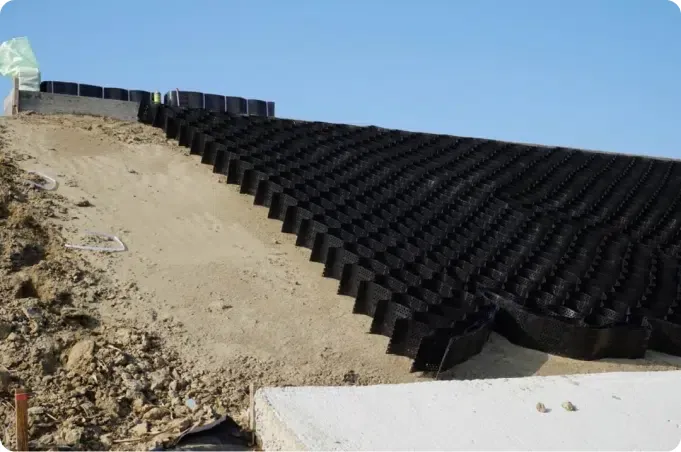
Geocell is a three-dimensional cellular confinement system. The panels are expanded across the prepared ground and secured in place before the individual cells are filled with an appropriate material.
The honeycomb-like structure helps keep the infill from moving laterally. Instead of allowing loose soil or aggregate to shift freely when water passes over the surface, the cells hold the material in place.
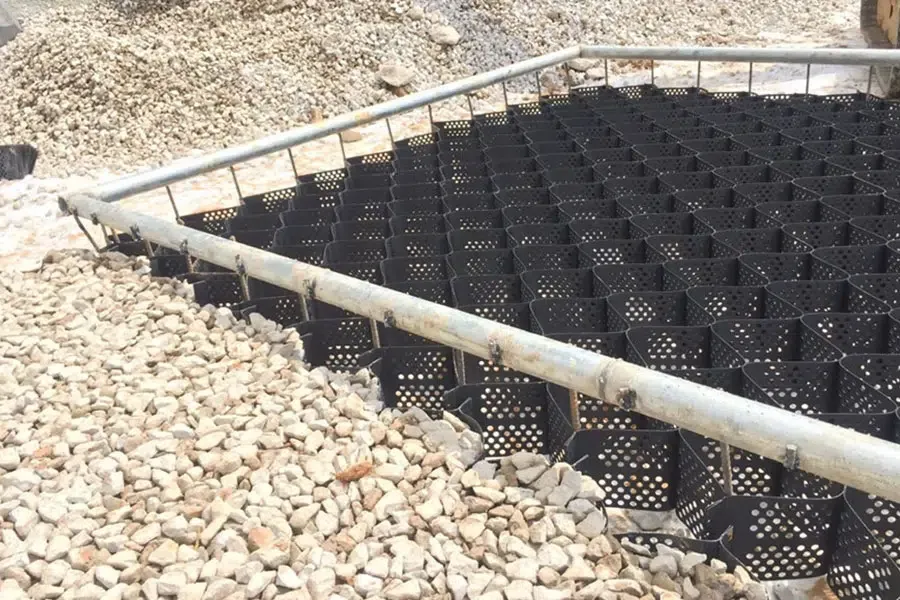
BaseCore describes its geocell as a lightweight, flexible HDPE system with perforated walls that allow water to drain while helping create an erosion barrier.
This makes geocell useful for slopes, embankments, drainage areas, and other locations where erosion and surface movement are concerns.
How Geocell Helps Manage Runoff
Runoff is not always the enemy. The goal is to control where water travels and reduce its ability to carry soil away.
A properly designed geocell surface can help stabilize the soil or aggregate while allowing water to pass through the system. Perforated cells can also support drainage and reduce the chance of water becoming trapped within the structure.
For vegetation-based applications, cells can be filled with topsoil and seeded. Once vegetation becomes established, plant roots can provide another layer of surface protection.
BaseCore notes that perforations between cells can support drainage and plant growth on vegetation slopes.
Where Can Geocell Be Used on Construction Sites?
One advantage of geocell is its flexibility. It can be used in several areas of a construction project depending on the site design.
Sloped Areas
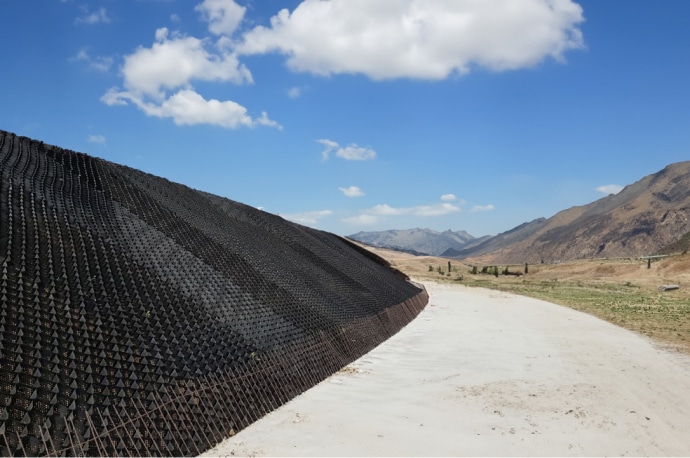
Slopes are especially vulnerable to runoff because gravity naturally moves water downward. Geocell can follow the shape of the terrain while confining the selected infill.
Embankments
Road and site embankments can experience surface erosion when exposed to repeated rainfall. A cellular confinement layer can help hold the surface material in place.
Drainage Channels
Areas designed to carry concentrated water flow need suitable protection against erosion. Geocell can be used with appropriate infill as part of a drainage-control system.
Bare Construction Ground
Newly cleared areas can remain exposed before permanent landscaping or construction is completed. Temporary erosion-control measures can help protect these areas during the project.
Vegetated Slopes
Geocell does not have to mean a concrete-looking surface. Depending on the project, cells can be filled with soil and planted with vegetation. This allows roots to become part of the overall stabilization system.
Important Factors to Consider Before Installation
Geocell is not a one-size-fits-all solution. The system should be selected according to actual site conditions.
Before installation, consider:
- Slope angle and length
- Soil type and strength
- Expected rainfall and runoff
- Water flow direction
- Drainage requirements
- Type of infill material
- Required cell depth
- Whether vegetation will be established
- Expected traffic or equipment loads
- Temporary or permanent project requirements
For example, a gently sloped landscape area may need a different design than a steep embankment exposed to concentrated water flow.
BaseCore states that its panels can be selected according to factors such as slope angle and required strength, with engineering support available for project-specific conditions.
Basic Steps for Installing Geocell for Erosion Control
Good preparation is one of the most important parts of a successful installation.
1. Prepare the Ground
Clear vegetation, debris, and unsuitable material. Shape the surface to the required grade and make sure drainage issues are addressed before placing the panels.
2. Add Geotextile When Needed
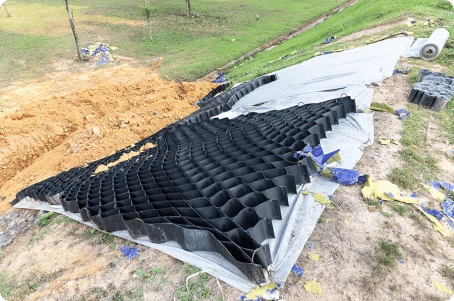
Depending on soil conditions, a geotextile layer may be placed beneath the geocell. It can help separate the soil from the infill while allowing water to pass through.
3. Position and Secure the Panels
Expand the geocell panels across the prepared area and secure them with appropriate anchors. Steeper slopes may require additional anchoring.
4. Fill the Cells
Place the selected infill into the cells. Depending on the design, this may include topsoil, gravel, aggregate, or other suitable materials.
5. Compact and Finish the Surface
Compact the infill according to the project requirements and finish the surface to the desired grade. For vegetated areas, seeds or plants can be added as part of the final surface treatment.
BaseCore's published slope installation guide follows this general process, including subgrade preparation, optional geotextile placement, anchoring, panel connection, infilling, and compaction.
Practical Tips for Better Erosion Control
A few planning decisions can make a major difference.
Control water before installing the system. Temporary drainage routes can prevent water from flowing across the work area during installation.
Choose the infill carefully. The right material depends on the slope, expected water flow, vegetation requirements, and project design.
Do not ignore the slope itself. Steeper slopes generally require more attention to anchoring and installation details.
Plan for maintenance. Inspect the protected area after major storms and look for damaged anchors, exposed infill, concentrated flow paths, or areas where vegetation has failed.
Use project-specific engineering when needed. Large commercial slopes, high-flow channels, and critical infrastructure should be designed according to the site's actual conditions rather than relying on a standard installation.
Why Proper Erosion Planning Saves Time
Fixing erosion after construction damage occurs can involve replacing soil, repairing slopes, cleaning drainage systems, and repeating other site work.
Planning erosion control early can reduce these problems and help protect completed construction. A properly designed geocell system can also work alongside vegetation and drainage measures instead of treating erosion as a problem that can be solved by one material alone.
The best result comes from looking at the entire site: soil, water, slope, drainage, vegetation, and expected use.
Conclusion
Geocell erosion control for construction sites can help protect exposed soil, stabilize slopes, and manage surface runoff when properly designed and installed. By combining cellular confinement with suitable infill, drainage, anchoring, and vegetation where appropriate, contractors can create a more stable surface. For project-specific guidance, contact BaseCore in Scottsdale, Arizona, for a free project evaluation and discuss your erosion-control requirements with its team.
Frequently Asked Questions
How does geocell help control erosion?
Geocell confines soil or aggregate inside interconnected cells, limiting lateral movement and helping the surface resist erosion caused by runoff. The system can also be paired with vegetation for additional surface protection.
Can geocell be used on construction slopes?
Yes. Geocell is commonly considered for slope protection and stabilization. The appropriate system depends on the slope angle, soil conditions, water flow, infill, and anchoring requirements.
Does geocell allow water to drain?
Perforated geocell systems can allow water to move through the structure. Proper drainage design is still important because concentrated or uncontrolled water flow can create erosion even when a stabilization system is present.
What materials can fill geocell?
The appropriate infill depends on the application. Options can include topsoil, gravel, aggregate, or other materials selected for the project's requirements. BaseCore's slope guidance describes topsoil, soil/grass, gravel, and concrete as possible infill options for different applications.
Can plants grow in geocell?
Yes. Geocell can be used with topsoil and vegetation. Plants and their root systems can provide additional surface protection while the cellular structure helps hold the soil in place.
Is geocell suitable for temporary construction projects?
It can be used for temporary as well as permanent applications, depending on the project design. Construction access, slopes, staging areas, and other disturbed surfaces may benefit from ground stabilization when site conditions require it.





















Sign in to leave a comment.