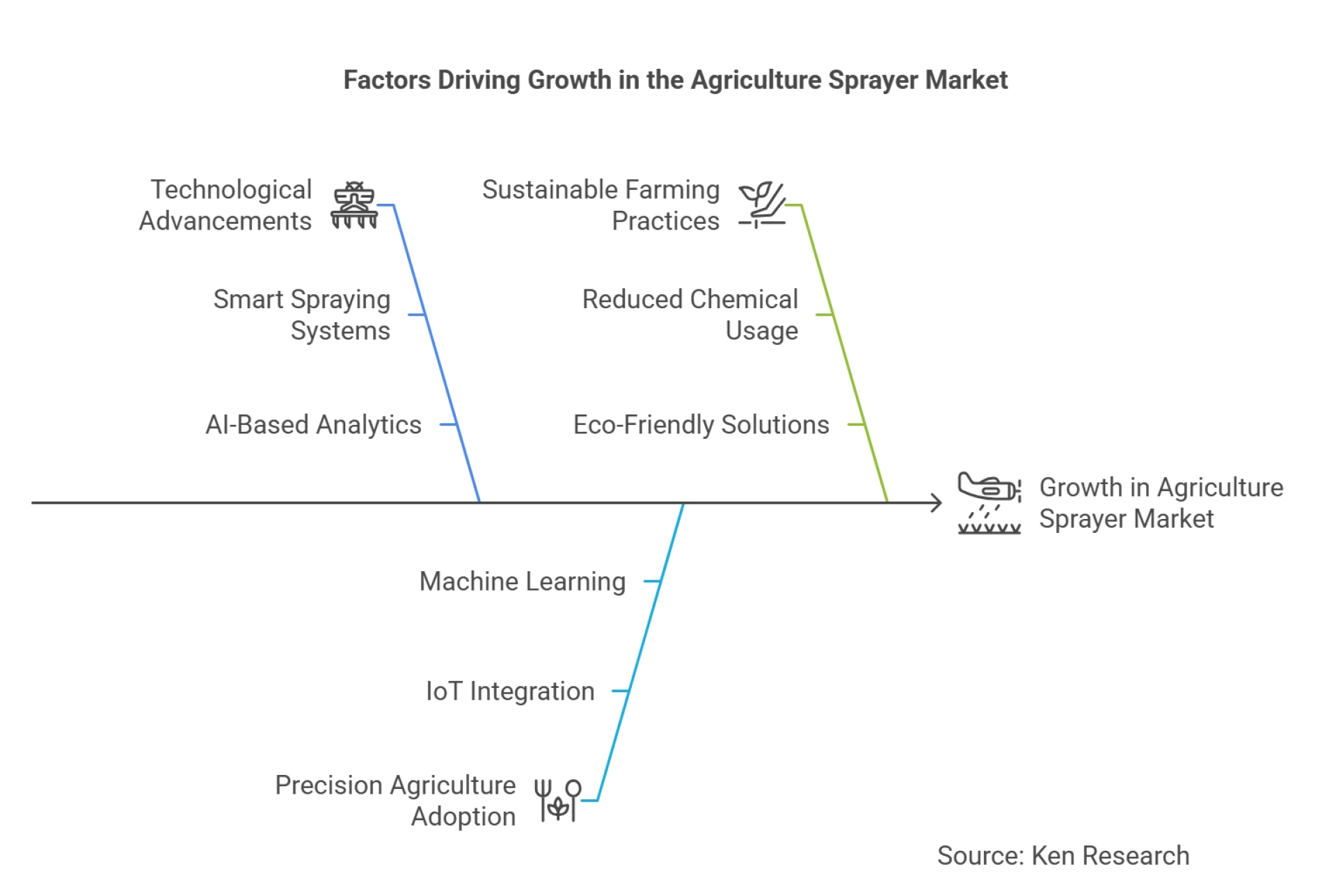

The Global Agriculture Sprayer Market, valued at USD 2.7 billion in 2023, is rapidly evolving as advancements in spraying technologies and the adoption of precision agriculture drive demand for more efficient and sustainable farming practices. The growing use of automated and smart spraying systems highlights a significant shift toward reducing chemical usage, enhancing crop yields, and optimizing resource utilization.
This blog explores the key drivers, market segmentation, challenges, and future trends shaping the global agriculture sprayer industry while emphasizing its role in transforming modern agriculture.
Key Growth Drivers in the Agriculture Sprayer Market
Technological Advancements in Spraying Equipment
The integration of smart spraying systems equipped with sensors, GPS technology, and AI-based analytics is a game-changer for farmers. These innovations:
- Ensure precise application of chemicals.
- Reduce input costs.
- Increase crop yields by minimizing wastage and overapplication.
For example, John Deere’s See & Spray Ultimate uses AI to differentiate between crops and weeds, reducing herbicide usage by over 70%.
Growing Adoption of Precision Agriculture
Precision agriculture is becoming a cornerstone of modern farming, with IoT and machine learning driving advancements in pest and weed management. These technologies allow:
- Real-time monitoring of field conditions.
- Customized application of pesticides and fertilizers.
In 2023, 85% of chemicals in some regions were applied using self-propelled sprayers, showcasing the growing reliance on advanced technologies.
Rising Demand for Sustainable Farming Practices
As environmental concerns grow, farmers are turning to sustainable solutions that minimize their ecological footprint. Smart sprayers capable of reducing chemical usage and promoting eco-friendly practices are in high demand, aligning with global sustainability goals.
Market Segmentation: Exploring Key Segments
By Product Type
- Self-Propelled Sprayers: Dominated the market in 2023 due to their high efficiency in large-scale farming operations.
- Tractor-Mounted Sprayers: Widely used for medium-sized farms due to their versatility.
- Handheld Sprayers: Preferred for small-scale farming and precision tasks.
- Aerial Sprayers (Drones): Rapidly growing due to their ability to cover vast areas efficiently, especially in rugged terrains.
By Application
- Field Crops: Represent the largest segment, driven by extensive use in cereal, grain, and oilseed cultivation.
- Horticulture and Orchard Spraying: Gaining traction with specialized sprayers for fruits and vegetables.
- Viticulture: Emerging as a niche segment with tailored solutions for vineyards.
By Region
- North America: Leads the market with advanced agricultural technologies and widespread adoption of precision farming.
- Asia-Pacific: Poised for significant growth due to rising mechanization in countries like India and China.
- Europe: Witnessing increased investments in smart farming solutions driven by stringent environmental regulations.
Innovations and Key Players in the Market
John Deere
- Introduced the R4060 Sprayer in 2023, featuring ExactApply nozzle control technology for precise droplet size and consistent coverage, boosting efficiency by up to 20 acres per hour.
AGCO Corporation
- Launched the RoGator 900 Series with an advanced liquid logic system, enhancing application accuracy and reducing costs.
Kubota Corporation
- Developed compact sprayers with IoT integration, catering to small-scale farmers and emerging markets.
Other key players include:
- CNH Industrial
- Mahindra & Mahindra
- Hardi International
- Yamaha Motor Corporation
These companies are investing in R&D and strategic partnerships to develop innovative solutions and expand their global presence.
Challenges in the Agriculture Sprayer Market
High Initial Costs
Advanced precision sprayers often cost upwards of $100,000, making them inaccessible to small-scale farmers. Traditional sprayers, priced between $10,000 and $30,000, remain a more affordable option but lack the efficiency of modern systems.
Technical Complexity
Farmers often face challenges in adopting advanced technologies due to a lack of technical expertise. About 60% of farmers express the need for training to operate and maintain these systems effectively.
Future Trends Shaping the Agriculture Sprayer Market
Integration with Autonomous Systems
By 2028, autonomous sprayers are expected to become mainstream, leveraging AI and machine learning to optimize spraying schedules and coverage. These systems will:
- Reduce labor dependency.
- Enhance operational efficiency.
Eco-Friendly Spraying Solutions
The demand for sustainable farming technologies is driving the development of sprayers that reduce chemical usage. Manufacturers are focusing on innovations that support organic farming and align with global environmental standards.
Rise of Drone Technology
The use of aerial sprayers (drones) is projected to increase significantly, especially in regions with challenging terrains. Drones enable:
- High-precision application in less accessible areas.
- Reduced operational time.
Competitive Landscape: Leaders in Agricultural Innovation
The global agriculture sprayer market features prominent players leading the industry with innovative technologies:
- John Deere
- AGCO Corporation
- CNH Industrial
- Kubota Corporation
- Mahindra & Mahindra
These companies are driving the shift toward smart farming by integrating AI, IoT, and sustainability-focused solutions into their product offerings.
Conclusion
The Global Agriculture Sprayer Market is at the forefront of transforming farming practices, combining technological advancements with a growing focus on sustainability. As farmers adopt precision agriculture and eco-friendly solutions, the market is poised for robust growth.
With innovations like autonomous systems, AI-driven sprayers, and aerial technologies, the future of agriculture is becoming more efficient, sustainable, and resilient. Manufacturers and stakeholders must continue to invest in affordable, user-friendly solutions to ensure the benefits of these advancements reach farmers worldwide.
























Sign in to leave a comment.