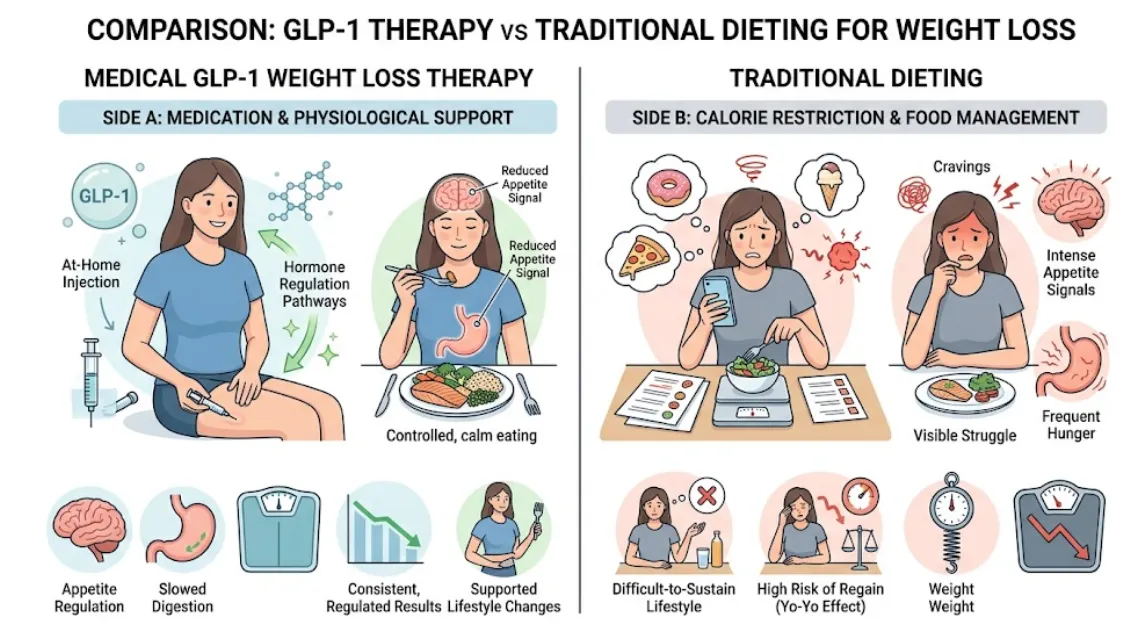

GLP-1 Weight Loss service is transforming how people approach fat loss, offering a medically guided alternative to traditional dieting methods that often rely on willpower alone.
What Is GLP-1 and How Does It Work?
GLP-1 (Glucagon-Like Peptide-1) is a hormone that helps regulate blood sugar, appetite, and digestion. GLP-1 medications mimic this hormone to:
- Reduce hunger
- Slow gastric emptying
- Improve insulin response
- Promote a feeling of fullness
This makes it easier to maintain a calorie deficit without constant hunger.
What Is Traditional Dieting?
Traditional dieting focuses on controlling calorie intake through food choices and portion sizes. Common approaches include:
- Calorie counting
- Low-carb or keto diets
- Intermittent fasting
- Low-fat diets
Success largely depends on consistency, discipline, and lifestyle habits.
Key Differences Between GLP-1 and Dieting
| Factor | GLP-1 Therapy | Traditional Dieting |
|---|---|---|
| Appetite Control | Strong (hormonal support) | Limited (willpower-based) |
| Weight Loss Speed | Faster | Gradual |
| Hunger Levels | Reduced | Often increased |
| Medical Supervision | Yes | Usually no |
Effectiveness: Which Delivers Better Results?
GLP-1 Therapy
- Clinically proven to support significant weight loss
- Helps maintain consistency by reducing cravings
- Works well for individuals struggling with obesity
Traditional Dieting
- Effective when followed consistently
- Slower but sustainable for disciplined individuals
- No medical intervention required
Conclusion: GLP-1 often produces faster and more consistent results, especially for those who have struggled with dieting alone.
Appetite Control and Cravings
One of the biggest challenges in weight loss is managing hunger.
- GLP-1: Reduces appetite at a hormonal level
- Dieting: Requires resisting cravings mentally
This is why many people find GLP-1 easier to stick to.
Sustainability and Long-Term Success
GLP-1
- Helps build better eating habits
- May require ongoing treatment or transition plan
Dieting
- Sustainable if habits are realistic
- High dropout rate due to hunger and restrictions
The best results often come from combining medical support with lifestyle changes.
Health Benefits Beyond Weight Loss
GLP-1 Benefits:
- Improved blood sugar control
- Reduced risk of type 2 diabetes
- Better metabolic health
Dieting Benefits:
- Improved nutrition awareness
- Lower cholesterol (depending on diet type)
- Better overall lifestyle habits
Risks and Considerations
GLP-1 Therapy
- Possible side effects (nausea, digestive discomfort)
- Requires prescription and medical supervision
- Cost may be higher
Traditional Dieting
- Risk of nutrient deficiencies if poorly planned
- Yo-yo dieting cycles
- Slower results can reduce motivation
Who Should Choose GLP-1 vs Dieting?
Choose GLP-1 if you:
- Struggle with hunger and cravings
- Have significant weight to lose
- Have metabolic or insulin-related issues
Choose Dieting if you:
- Prefer a natural approach
- Have mild to moderate weight loss goals
- Can maintain consistency
Combining Both Approaches
The most effective strategy is often a hybrid approach:
- Use GLP-1 to control appetite and kickstart weight loss
- Build sustainable eating and exercise habits
- Transition to long-term lifestyle maintenance
Conclusion
Both GLP-1 therapy and traditional dieting have their place in weight management. While dieting builds discipline and long-term habits, GLP-1 offers a powerful tool to overcome biological barriers to fat loss. Choosing the right approach depends on your goals, health status, and lifestyle. With the rise of GLP-1 Weight Loss service, more people now have access to personalized, effective solutions that make sustainable weight loss more achievable than ever.





























Sign in to leave a comment.