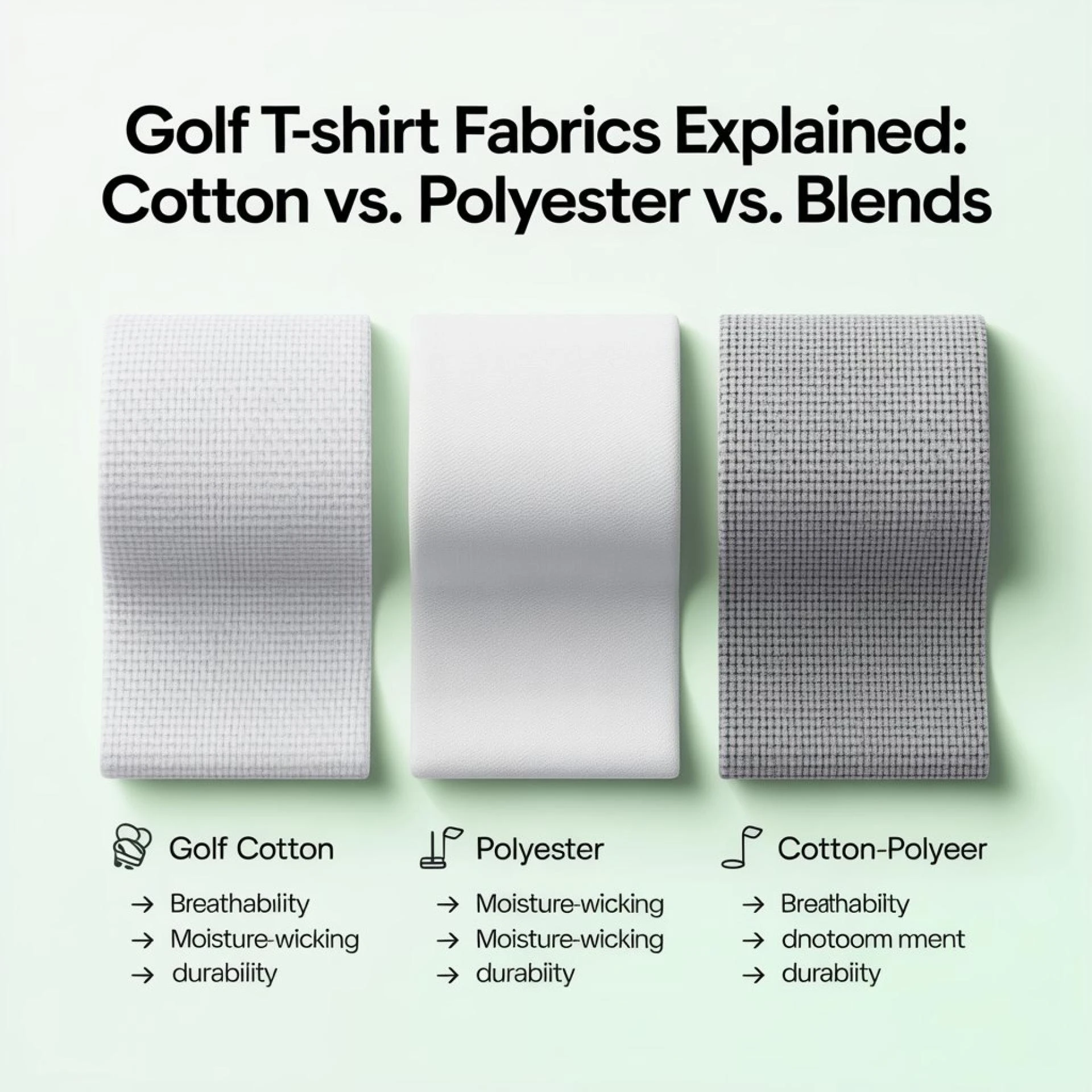

Golf is an outdoors sport of patience, precision — and long hours in the sun. The right golf t-shirt affects comfort, performance, and even how confident you feel over the 18th green. But with so many fabric claims on tags — “moisture-wicking,” “performance,” “breathable,” “anti-odor” — how do you pick the best option? This deep, data-supported guide breaks down cotton vs. polyester vs. blends specifically for Golf T-shirts for men, so you can choose shirts that look great, feel better, and actually perform on the course.
Quick takeaway: Which fabric is best for golf?
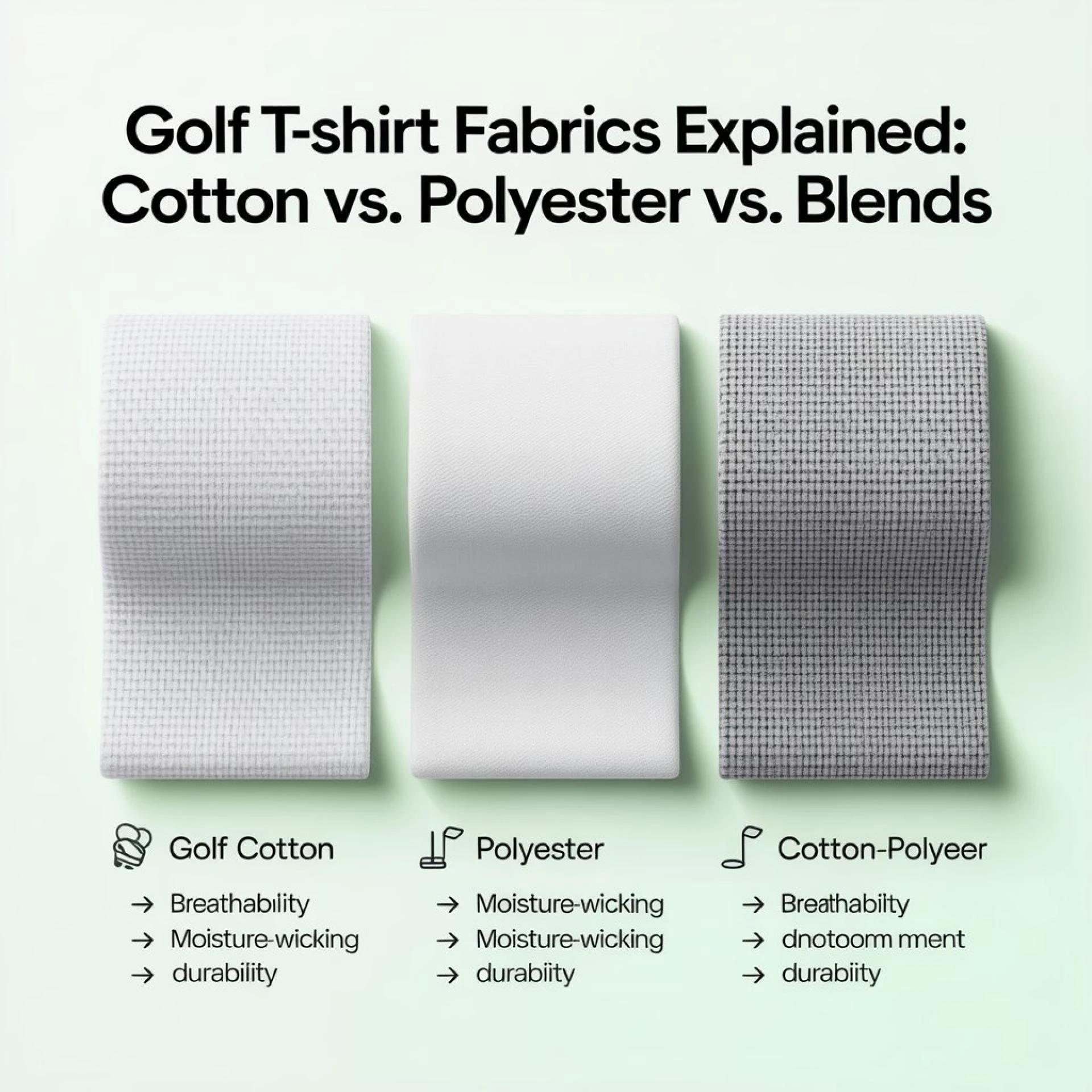
- Cotton — soft, comfortable, highly breathable, good for cool, dry days or casual club play; less effective at wicking and slow to dry when drenched.
- Polyester (and synthetic performance fabrics) — excellent moisture wicking, fast drying, durable, holds color and shape; may trap odors and feel less “natural.”
- Blends (cotton/polyester/spandex, etc.) — aim to combine the best of both: comfort of cotton, performance of synthetics, with stretch and durability. Often the best practical choice for everyday golfers.
Now let’s unpack the science, data, and real-world pros/cons of each fabric, with tips on fit, care, and what to look for when shopping.
Why fabric matters on the golf course
A four-hour round can mean long exposure to sun, repeated swings, and plenty of walking. Fabric impacts:
- Thermal comfort — how hot or cool you feel.
- Moisture management — how sweat is moved away and evaporated.
- Sun protection — how much UV the shirt blocks (UPF).
- Range of motion & fit — stretch and recovery for a full golf swing.
- Odor — how likely the shirt is to trap smells.
- Durability & care — how it stands up to washing and fading.
Small differences in fabric can mean fewer distractions, fewer trips to the pro shop to buy another polo mid-season, and more consistent focus on your swing.
Cotton: the classic — comfort first
What cotton brings to the fairway
Cotton is the established “comfort” fiber: soft, breathable, and gentle on the skin. Natural cotton fibers absorb moisture — which is why that cotton tee can feel cool when slightly damp. The material drapes well and tends to be hypoallergenic for many wearers. Cotton’s fiber properties include appreciable moisture absorbency (raw fibers contain moisture around 8.5% and much higher when conditioned), and good dimensional stability depending on yarn and construction.
Real advantages
- Comfort & feel: Cotton feels soft against the skin and is less likely to irritate.
- Breathability: Woven and knitted cotton allow air to move through the fabric, helping evaporative cooling in mild conditions.
- Biodegradability: Being natural, cotton is biodegradable under appropriate conditions.
Limitations for golfers
- Moisture retention & drying: Cotton absorbs sweat but holds it — it takes longer to dry than many synthetics. This can make shirts feel heavy and clingy during hot, humid rounds.
- Shrinkage & wrinkling: Untreated cotton can shrink in wash and wrinkle easily.
- Sun protection: Ordinary cotton garments often have low UPF values (everyday cotton tees commonly have UPF around 5–10 unless tightly woven or specially treated). For serious sun exposure, look for shirts rated or treated for UPF.
Best use-case
Casual rounds, cool-weather play, or golfers who prioritize next-to-skin comfort and don’t sweat heavily. Consider cotton shirts treated with quick-dry finishes or blended with synthetics for improved performance.
Polyester & synthetic performance fabrics: engineered for the game
What polyester does well
Polyester is a synthetic fiber commonly used in performance polos. Because of its low moisture absorbency and hydrophobic nature, polyester can be engineered into yarns and weaves that wick moisture from the skin and dry quickly. Many modern golf polos use polyester or polyester blends for stretch, shape retention, and technical finishes such as odor control or UV treatments.
Real advantages
- Moisture-wicking & fast drying: Synthetics draw sweat away and allow quick evaporation, keeping your body temperature regulated during long, hot rounds.
- Durability & colorfastness: Polyester resists shrinkage and holds color washes after wash.
- Lightweight & structure: Can be made into smooth, thin fabrics that maintain a professional look (important for dress codes).
- UPF potential: Dense engineered poly fabrics can offer higher UPF ratings without chemical treatment.
Limitations for golfers
- Odor retention: Synthetics can harbor odor-causing bacteria, and some polyester garments retain smells more than natural fibers; laundering and anti-odor treatments matter. Research reviews show body odor generation and retention is a complex interaction of sweat chemistry, textile properties, and microbiome; polyester’s lower moisture uptake means it can retain volatile odor compounds differently than cotton.
- Feel: Some wearers find pure polyester less “natural” or soft compared to cotton; modern finishes and brushed microfibers minimize this.
- Environmental concerns: Polyester is petroleum-derived; microplastic shedding in washing and lifecycle impacts are considerations for eco-conscious golfers.
Best use-case
Hot, humid conditions, competitive play, and golfers who need fast-drying, shape-retaining polos. Also ideal for golfers who wear shirts multiple days between washes (paired with anti-odor tech).
Blends (Cotton/Polyester/Spandex): the practical middle ground
Blends are the most common solution for golf polos today: cotton/polyester for comfort + performance, with a dash of spandex (elastane) for stretch. Well-designed blends can deliver soft handfeel, moisture management, and full swing mobility.
What blends aim to achieve
- Comfort of cotton with the wicking & strength of polyester.
- Stretch from spandex for unrestrictive swing motion and better fit retention.
- Balanced odor performance if manufacturers add antimicrobial or odor-control finishes.
Typical constructions
- 60/40 cotton/polyester or 50/50 — looks and feels like cotton but with faster drying and less shrinkage.
- Performance blends (e.g., 90% polyester/10% spandex) — often used in tour-level polos for maximum moisture control and stretch.
Real advantages
- Versatility: Works well across weather conditions.
- Easy care: Less shrinkage and better dimensional stability than pure cotton.
- Fit & mobility: Small percentages of spandex create a highly mobile garment ideal for golf.
Drawbacks to be aware of
- Quality variance: A poor blend can feel like cheap polyester; check fabric weight, knit type, and hand feel.
- Treatment reliance: Some blends depend on chemical finishes (e.g., odor inhibitors) that lose effectiveness over time.
Performance metrics that actually matter
- Moisture wicking: Measured by how quickly moisture moves through the fabric and evaporates. Studies and textile testing assess wicking speed and drying rate; polyesters engineered with capillary yarns usually outperform untreated cotton on drying time.
- UPF (Ultraviolet Protection Factor): UPF is to fabrics what SPF is to sunscreens. A UPF 30 fabric allows about 3% UV transmission; UPF 50 allows ~2% or less. Organizations like the Skin Cancer Foundation and REI recommend UPF 30+ for very good protection, with UPF 50+ considered excellent. Ordinary cotton T-shirts often have low UPF values unless tightly woven or treated.
- Odor control: Research shows odor generation is linked to sweat composition and fabric microenvironment; microbe activity and adsorption of volatile compounds differ by fiber type. Anti-odor finishes and frequent laundering reduce odor risk.
Practical buying tips: choosing the best golf t-shirt for men
- Check the fabric composition: If you want comfort plus performance, start with blends (e.g., 60% polyester / 40% cotton or cotton/poly/spandex mixes). For pure comfort in cooler conditions, choose 100% cotton. For hot, sweaty rounds, go for high-performance polyester or polyester blends.
- Look for performance features: “Moisture-wicking,” “quick-dry,” “anti-odor,” and “UPF” are useful but check specifics—UPF rating or claims about treated finishes. Trusted brands often list test results.
- Fit matters as much as fabric: Athletic cut with enough shoulder mobility (or added spandex) keeps the shirt from tugging during your swing. Consider raglan sleeves or stretch panels for full range of motion.
- Check density/weight: Lightweight polyesters are breathable but thin; a slightly higher fabric weight often lasts longer and provides better UV protection.
- Care & washability: Performance synthetics generally require less tumble drying and won’t shrink; cotton needs more careful care to avoid shrinkage and loss of shape.
- Smell test: If possible, smell a garment. Some polyester garments retain factory odors or finish smells; high-quality finishes avoid this.
- Sustainability: If eco impact matters, look for organic cotton, recycled polyester (rPET) used by many brands, or certifications (e.g., GRS). Keep in mind trade-offs: cotton uses significant water in production; polyester uses fossil fuels and sheds microfibers in wash.
Care & maintenance: make your polo last
- Wash inside out to preserve coatings and color.
- Use gentle detergent for anti-odor finishes; avoid fabric softeners (they can reduce moisture-wicking efficiency).
- Air dry when possible; high heat can degrade elastane and finishes.
- Treat stains quickly; sweat and sunscreen can discolor collars and underarms.
- For odor problems, soak in a mix of water and white vinegar or enzyme detergent before washing — these help break down organic residues.
Real examples: What the pros wear
Tour pros and serious golfers typically wear performance polos found in 90–100% polyester or polyester blends. These garments prioritize moisture management, lightweight construction, UPF, and stretch so nothing interferes with the swing. Off-tour, many club players choose blends that balance feel and performance for all-around comfort.
Sustainability snapshot — cotton vs polyester
- Cotton: Natural and biodegradable, but conventional cotton production can be water-intensive and pesticide-heavy depending on region and farming practices. Organic cotton reduces chemical use but may still require high water use in some climates.
- Polyester: Derived from petroleum; recycling (rPET) reduces virgin-material demand but microplastic shedding in washing remains a concern. Many brands now use recycled polyester to lower lifecycle impact.
If sustainability is a priority, consider garments with recycled polyester, organic cotton, or transparency (brand lifecycle reporting/certifications) to make an informed choice.
Shopping checklist — what to look for on the label
- Fabric % (Cotton / Polyester / Elastane)
- UPF rating (if sun protection is important)
- Performance claims with specifics (e.g., “antimicrobial finish lasts 25 washes”)
- Care instructions (machine wash cold/dry low)
- Fit type (athletic, classic, slim) and stretch components
- Brand transparency on materials and sustainability
Final verdict — best choices depending on playing style
- Everyday recreational golfer, mild climates: Cotton or cotton-rich blends for comfort and casual style.
- Competitive or hot-weather golfers: High-performance polyester or polyester blends with stretch, quick-dry and anti-odor features.
- All-rounders who want comfort + performance: Cotton/polyester blends with a small percentage of elastane (e.g., 60/35/5 cotton/poly/spandex) often deliver the best compromise.
Wrap up — pick with purpose
Choosing the right Golf T-shirts for men is more than vanity — it’s about comfort, performance, and protection. If you want classic softness and casual comfort, cotton delivers. If you demand moisture control and form for long, hot rounds, polyester or a high-quality blend will be your ally. For most golfers, a well-made blend (comfort + performance + stretch) is the smartest buy — and checking for UPF and anti-odor features will keep you comfortable and playing your best.
Want me to recommend specific shirts (budget, premium, eco-friendly) based on your typical weather and playing frequency? Tell me where you play and your style preference and I’ll suggest tailored picks.



























Sign in to leave a comment.