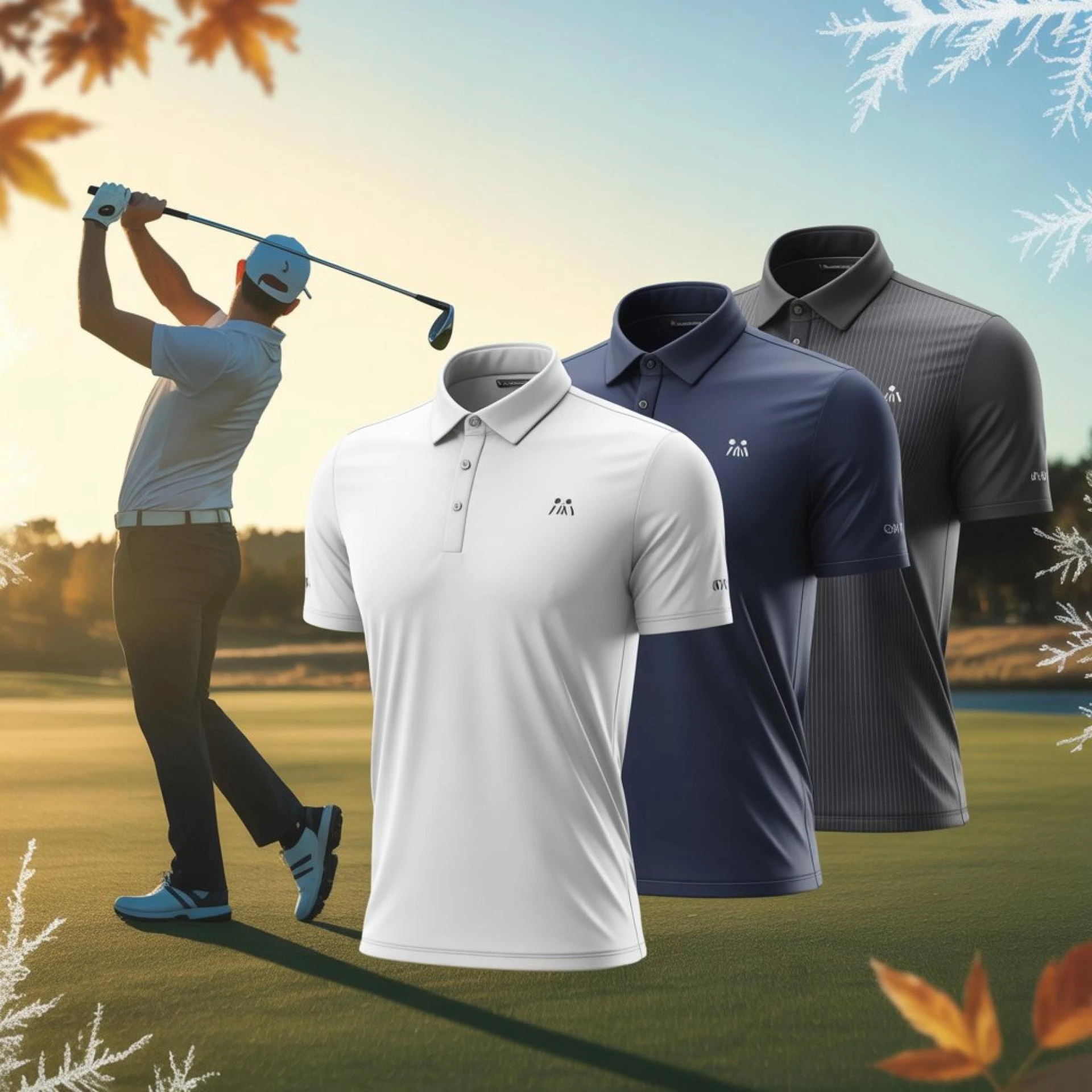

The game of golf, with its elegant swings and strategic play, has always been inextricably linked to the outdoors. And with the outdoors comes the unpredictable whims of weather. From scorching summer sun to crisp autumn mornings and surprisingly chilly spring afternoons, golfers are constantly battling the elements to maintain their comfort and, more importantly, their performance. For decades, the solution involved an arsenal of different garments – heavy sweaters for winter, lightweight polos for summer, and various layers in between. But what if there was a better way? What if a single garment, or at least a specialized collection, could intelligently adapt to the changing temperatures, offering optimal comfort and performance no matter the season?
Enter the age of temperature-adaptive golf shirts. This revolutionary category of apparel is swiftly changing the landscape of golf wear, promising a new era of comfort, focus, and improved play. Gone are the days of feeling overheated on the back nine or shivering through a crucial putt. With advancements in fabric technology, designers are now crafting garments that actively regulate your body temperature, allowing you to stay in the zone, season after season. This in-depth article will delve into the science behind these innovative shirts, explore their myriad benefits, and highlight why they've become an indispensable part of any serious golfer's wardrobe. We'll also specifically focus on the impact of these technologies on Men's Golf T-shirts, a staple for every male golfer.
The Problem: Why Traditional Golf Attire Falls Short
Before we dive into the solutions, let's understand the challenges posed by traditional golf apparel. For years, golfers have grappled with a fundamental dilemma: how to dress appropriately for a sport played outdoors over several hours, often with significant temperature fluctuations.
- Summer Heat: Cotton, while breathable, can absorb moisture and become heavy, sticky, and slow to dry, leading to discomfort and chafing. Synthetic blends offered some improvements, but often lacked the sophisticated temperature regulation needed for peak performance. The average golfer can sweat between 0.8 to 1.4 liters per hour during moderate exercise in warm conditions, making moisture-wicking paramount.
- Winter Chill: Layering was the traditional answer, but too many layers restrict movement, impacting the crucial fluidity of a golf swing. Bulky sweaters and jackets might keep you warm, but they often come at the cost of flexibility and a clean, unhindered stroke. Studies show that even a 5-degree Celsius drop in core body temperature can lead to a significant decrease in fine motor skills and decision-making, highlighting the need for effective thermal regulation.
- Transitional Seasons: Spring and autumn present their own unique challenges, with mornings that start cold and afternoons that warm up considerably. This often means golfers are either overdressed for the latter half of their round or underdressed for the beginning.
These limitations not only impact comfort but also directly affect a golfer's concentration and physical performance. A golfer constantly distracted by being too hot, too cold, or clammy is less likely to execute precise shots and maintain their focus through 18 holes.
The Science of Comfort: How Temperature-Adaptive Fabrics Work
The magic behind temperature-adaptive golf shirts lies in cutting-edge fabric technology. These aren't just "wicking" fabrics; they represent a significant leap forward in smart textiles. The primary mechanisms employed generally fall into a few key categories:
1. Phase Change Materials (PCMs)
Perhaps the most fascinating innovation, Phase Change Materials (PCMs), are substances that absorb, store, and release latent heat during the process of melting and freezing. Imagine tiny microcapsules embedded within the fabric fibers. When your body temperature rises, these PCMs melt, absorbing excess heat and creating a cooling sensation. Conversely, when your body temperature drops, the PCMs solidify, releasing the stored heat back to your body, providing warmth.
- Real-world application: Brands like Outlast (originally developed for NASA) have pioneered this technology, integrating PCMs into golf apparel. Data from Outlast shows that their technology can proactively manage heat, reducing overheating by up to 48% and reducing chilling by up to 17% compared to conventional materials.
- Mechanism: These materials undergo a reversible physical change (solid to liquid and vice versa) at a specific temperature range, typically around human body temperature, making them ideal for personal climate control.
2. Advanced Moisture Management Systems
While not new, moisture-wicking technology has evolved significantly. Modern temperature-adaptive shirts employ highly engineered fibers and fabric constructions that go beyond simply pulling sweat away from the skin.
- Capillary Action: Fabrics are designed with microscopic channels that use capillary action to draw moisture from the skin to the outer surface of the fabric, where it can evaporate quickly.
- Hydrophobic and Hydrophilic Zones: Some fabrics feature a combination of hydrophobic (water-repelling) and hydrophilic (water-attracting) zones. The hydrophilic inner layer draws sweat from the skin, while the hydrophobic outer layer spreads it out for rapid evaporation, preventing the fabric from feeling saturated.
- Evaporative Cooling: The rapid evaporation of sweat from the fabric's surface creates a significant cooling effect, essential in hot conditions. This process can reduce skin temperature by several degrees.
- Fiber Blends: Often, a blend of synthetic fibers like polyester, nylon, and spandex is used. Polyester is excellent for wicking and durability, nylon adds strength and a smooth feel, and spandex provides crucial stretch for freedom of movement during a swing.
3. Thermoregulating Yarns and Structures
Beyond PCMs and wicking, some fabrics are engineered at the yarn level to provide inherent thermoregulation.
- Hollow Fibers: Similar to how polar bear fur works, some synthetic fibers are designed with hollow cores. These hollow spaces trap air, creating an insulating layer that helps retain warmth in cold conditions without adding bulk.
- Ceramic Infusion: Certain fabrics are infused with ceramic particles that can reflect far-infrared rays, helping to radiate heat away from the body in warm conditions or reflect body heat back to the body in cooler conditions.
- Smart Vents and Perforations: Strategic placement of laser-cut perforations or mesh panels allows for targeted airflow in high-heat areas (like the back or underarms) to enhance ventilation and cooling.
- Knit Structures: Different knitting patterns can create varying levels of breathability and insulation within the same garment. For instance, open-knit structures promote airflow, while denser knits provide more warmth.
The Unrivaled Benefits for Golfers
The integration of these advanced technologies translates into a host of tangible benefits for golfers, significantly enhancing their experience on the course.
1. Unparalleled Comfort, All Day Long
This is arguably the most immediate and appreciated benefit. Imagine stepping onto the first tee in the morning chill, feeling comfortably warm, and as the sun rises and temperatures climb, your shirt adapts, preventing you from overheating. This consistent comfort allows you to focus entirely on your game, not on adjusting your layers or wiping sweat from your brow. A survey by Golf Datatech revealed that comfort is one of the top three factors influencing a golfer's apparel purchase decision.
2. Enhanced Performance and Focus
When your body temperature is optimally regulated, your mental and physical performance improves.
- Reduced Fatigue: Overheating or shivering drains energy. By maintaining a stable core temperature, these shirts help delay the onset of fatigue, allowing for stronger finishes.
- Improved Concentration: Distractions from discomfort are eliminated, freeing up mental energy to focus on course management, swing mechanics, and shot execution.
- Unrestricted Movement: Lightweight, stretchy, and non-bulky fabrics ensure a full range of motion for your golf swing, which is crucial for power and accuracy. The average golf swing generates forces equivalent to lifting over 200 pounds, requiring maximum flexibility from apparel.
3. Versatility and Reduced Wardrobe Clutter
One of the most practical advantages is the sheer versatility of these shirts. A well-designed temperature-adaptive shirt can effectively cover a broader range of temperatures than traditional golf polos. This means:
- Fewer Clothes to Buy: While you might still have dedicated cold-weather outer layers, your core shirt collection can be streamlined.
- Easier Packing: For golf trips, packing becomes simpler when one or two shirts can handle varying conditions.
- Ready for Anything: You're better prepared for unexpected weather changes during a single round.
4. Odor Control and Hygiene
Many advanced moisture-wicking fabrics are also treated with antimicrobial finishes or incorporate silver ions directly into the fibers. This helps to inhibit the growth of odor-causing bacteria, keeping you feeling fresh even after a long, strenuous round. This is a significant improvement over traditional cotton, which can harbor bacteria and retain odors.
5. Durability and Easy Care
Modern synthetic blends are not only high-performing but also remarkably durable and easy to care for. They resist shrinking, fading, and wrinkling, and often dry much faster than natural fibers. This means your investment in a quality temperature-adaptive golf shirt will last for many rounds to come.
Men's Golf T-shirts: The Core of Adaptive Apparel
While the technology extends to various golf apparel, the Men's Golf T-shirt is arguably where these innovations make the most significant impact. The polo shirt, or golf T-shirt, is the foundational garment for male golfers, worn closest to the skin and therefore most critical for direct temperature regulation.
For summer, Men's Golf T-shirts featuring advanced evaporative cooling and ultra-lightweight designs are paramount. These often incorporate laser-cut ventilation, mesh panels, and fabrics with a cool-to-the-touch feel. Imagine a feather-light polo that actively cools your skin as you sweat, preventing that clammy sensation.
In transitional seasons, the focus shifts to Men's Golf T-shirts that offer dynamic thermoregulation – a balance of warmth when needed and breathability as temperatures rise. These might use lighter PCMs or strategically placed insulation.
For cooler weather, adaptive Men's Golf T-shirts serve as an essential base layer. They provide a foundational layer of warmth without bulk, often with slightly thicker, brushed-back fabrics that still wick moisture away effectively. Paired with a mid-layer and an outer shell, they form an intelligent layering system.
The evolution of the Men's Golf T-shirt from a simple cotton polo to a high-tech performance garment is a testament to the industry's commitment to enhancing the golfer's experience.
Key Features to Look for in Temperature-Adaptive Golf Shirts
When investing in these advanced garments, understanding what features to prioritize will ensure you get the most out of your purchase.
- Fabric Composition: Look for blends of polyester, nylon, and spandex. For PCMs, brands will often explicitly state their use (e.g., "Outlast technology"). Some premium brands also incorporate Tencel or Merino wool blends for natural temperature regulation and softness, though synthetic blends typically offer superior wicking for high-intensity activity.
- Moisture-Wicking and Quick-Drying: This is non-negotiable. The fabric should clearly state its ability to wick moisture away from the skin and dry rapidly. Look for terms like "Dri-FIT," "HEATGEAR," "Puma dryCELL," or similar proprietary technologies.
- Stretch and Flexibility: Golf requires a full range of motion. Ensure the shirt has at least 4-way stretch to allow for an unhindered swing. Spandex content (typically 5-10%) contributes significantly to this.
- Ventilation: Look for strategically placed mesh panels (underarms, back, collar) or laser-cut perforations that enhance airflow and targeted cooling.
- UV Protection: Many performance golf shirts also offer UPF (Ultraviolet Protection Factor) ratings, usually UPF 30+ or 50+. This is crucial for sun protection during long hours on the course.
- Anti-Odor Properties: Treatments like antimicrobial finishes or silver ion technology help keep the shirt fresh, even after multiple wears between washes.
- Fit: While personal preference plays a role, a "performance fit" or "athletic fit" is generally preferred for golf. It should be close enough to the body to facilitate wicking but not so tight as to restrict movement.
- Seam Construction: Flatlock seams are superior as they reduce chafing and irritation, especially important during repetitive movements like a golf swing.
Leading Brands and Their Innovations
Many sportswear giants and specialized golf apparel brands are at the forefront of this technological revolution. Here are a few examples of brands making significant strides in temperature-adaptive golf shirts, particularly within Men's Golf T-shirts:
- Under Armour: Known for its "HEATGEAR" (for hot weather) and "COLDGEAR" (for cold weather) lines, Under Armour has been a pioneer in performance apparel. Their latest iterations often combine advanced wicking with strategic ventilation and innovative fiber structures to provide comprehensive thermoregulation. Their Iso-Chill fabric is specifically designed to feel cool to the touch and disperse body heat.
- Nike Golf: With its "Dri-FIT" technology, Nike Golf consistently delivers high-performance polos. Their newer lines often incorporate advanced knit patterns, engineered mesh, and fabrics with unique textures that enhance airflow and reduce cling.
- Adidas Golf: Adidas utilizes its "ClimaCool" and "HEAT.RDY" technologies for warm weather, focusing on breathable fabrics and ventilation. For cooler conditions, their "ClimaWarm" and "COLD.RDY" lines offer insulation without bulk, making their Men's Golf T-shirts adaptable.
- Puma Golf: Puma's "dryCELL" technology is a staple for moisture-wicking. They often integrate stretch fabrics and ergonomic designs tailored for the golf swing, with an emphasis on lightweight construction.
- TravisMathew: While known for their style, TravisMathew's performance polos incorporate advanced fabric technologies to offer excellent moisture-wicking, stretch, and often a cool-to-the-touch feel, making them adaptable for various conditions.
- FootJoy: A golf-specific brand, FootJoy's performance polos often feature ProDry fabric technology, designed for superior moisture management and thermal regulation across different climates.
These brands continually invest in research and development, pushing the boundaries of what golf apparel can achieve. Their commitment to innovation ensures that golfers always have access to the best possible gear.
Real-World Data and Expert Insights
The impact of advanced apparel on athletic performance is not just anecdotal; it's backed by science.
- Physiological Benefits: A study published in the Journal of Sports Sciences highlighted that effective thermoregulation through apparel can reduce physiological strain (e.g., lower heart rate, core temperature) during exercise in heat. This translates directly to better endurance and less physical stress on the golf course.
- Subjective Comfort: Beyond physiological markers, subjective comfort is paramount. Surveys consistently show that golfers who wear advanced moisture-wicking and temperature-adaptive apparel report significantly higher levels of comfort and satisfaction during their rounds, directly impacting their enjoyment of the game.
- Market Growth: The global sports apparel market, including golf apparel, is experiencing significant growth, driven in part by technological innovations in fabric. Mordor Intelligence reports that the global sports apparel market is projected to reach USD 270.28 billion by 2029, with performance fabrics being a key growth driver. This indicates a strong consumer demand for high-tech clothing solutions like temperature-adaptive golf shirts.
The Future is Adaptive: What's Next?
The evolution of temperature-adaptive golf shirts is far from over. We can anticipate even more sophisticated developments in the coming years:
- Even Smarter Materials: Imagine fabrics that can actively change their structure or pore size in response to temperature or humidity, offering a more dynamic and precise level of climate control.
- Integrated Biometrics: While already present in some wearables, integrating biometric sensors directly into golf shirts could provide real-time data on body temperature, heart rate, and sweat levels, allowing for personalized feedback and performance optimization.
- Sustainable Innovation: A major focus will be on developing these high-performance fabrics using more sustainable and environmentally friendly processes and materials.
- Hyper-Targeted Zoning: Further refinement of body-mapping technology will allow for even more precise placement of different fabric structures and technologies, optimizing cooling, warming, and support exactly where needed.
The trajectory is clear: golf apparel, particularly Men's Golf T-shirts, will continue to become more intelligent, more responsive, and more integrated into the golfer's overall performance strategy.
Conclusion: Your All-Season Advantage
The rise of temperature-adaptive golf shirts marks a significant milestone in golf apparel. They are more than just stylish garments; they are sophisticated tools designed to enhance comfort, improve performance, and allow golfers to play their best, regardless of the weather conditions. By embracing the science of smart textiles, these shirts effectively address the age-old challenge of playing golf outdoors, offering an unprecedented level of climate control.
For every golfer, from the casual weekend player to the serious competitor, investing in high-quality temperature-adaptive Men's Golf T-shirts and other apparel is no longer a luxury but a strategic advantage. It means less time worrying about being too hot or too cold, and more time focusing on that perfect swing, the strategic putt, and the sheer enjoyment of the game. As the technology continues to advance, we can expect even greater innovations, cementing the position of these intelligent garments as indispensable elements of modern golf.
Embrace the future of golf apparel – your game will thank you for it.


























Sign in to leave a comment.