

Businesses allocating advertising budgets need to understand how different Google ad formats perform. Search ads and display ads serve distinct purposes, reach audiences at different stages, and deliver varying results. Knowing which format suits specific marketing goals prevents wasted spend and improves campaign outcomes.
How Each Ad Type Functions
Search ads appear when users actively look for something. Someone types "plumber near me" or "best running shoes," and text ads show up alongside organic search results. These users have clear intent. They're looking for solutions right now.
Display ads work differently. They appear on websites, apps, and YouTube as banners, images, or video content. Users aren't searching for anything specific when they see these ads. They're reading articles, watching videos, or browsing content. Display advertising interrupts rather than responds to immediate need.
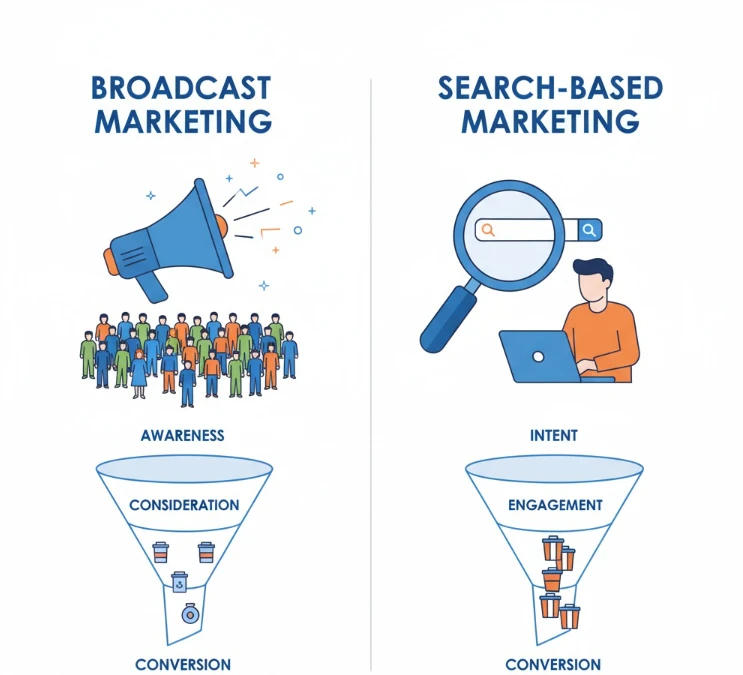
This fundamental difference affects everything else about how these formats perform. Search captures existing demand. Display creates awareness and consideration where none previously existed.
Conversion Rate Differences
Search ads typically convert better than display ads. The numbers vary by industry, but search ads often achieve conversion rates between 3-5% for most sectors. Display ads usually fall below 1%, with many campaigns seeing rates around 0.5%.
These differences make sense given user intent. Someone searching "buy mens winter jacket" is ready to purchase. They're comparing options and making decisions. An ad that appears for this query reaches someone at the bottom of the sales funnel.
Display ads reach people earlier in their buying process. Someone reading an article about winter fashion trends might see a jacket ad. They're not ready to buy yet. They might not have even realized they need a new jacket. Getting them to convert immediately is harder, which shows in the metrics.
However, conversion rate alone doesn't tell the complete story. Display ads serve different purposes that raw conversion numbers don't capture fully.
Cost Considerations
Cost per click varies significantly when comparing Google display ads vs search ads. Search ads cost more per click because competition is higher and intent is stronger. Competitive keywords in industries like legal services or insurance can exceed several dollars per click. Less competitive terms still typically cost more than display clicks.
Display ads offer cheaper clicks, often costing a fraction of search ad rates. Lower click costs mean advertisers can reach more people with the same budget. However, cheaper clicks that don't convert still waste money.
Cost per acquisition matters more than cost per click. If search ads cost three times more per click but convert at five times the rate, they're more efficient. Calculating actual acquisition costs requires looking at the full funnel, not just click prices.
Some businesses find display ads deliver better ROI despite lower conversion rates. Others see search ads as more cost-effective. Industry, product type, and campaign objectives all influence which format provides better value.
Click-Through Rate Patterns
Search ads generate higher click-through rates than display ads. Users searching specific terms are more likely to click relevant ads because those ads directly address their queries. Average CTRs for search ads hover around 2-3% across industries, though this varies considerably based on position, ad quality, and competition.
Display ad CTRs are substantially lower, often below 0.5%. This isn't necessarily a failure of the format. Display ads prioritize impressions and awareness over immediate clicks. Millions of people might see a display ad campaign, and even low CTRs can generate significant traffic volume.
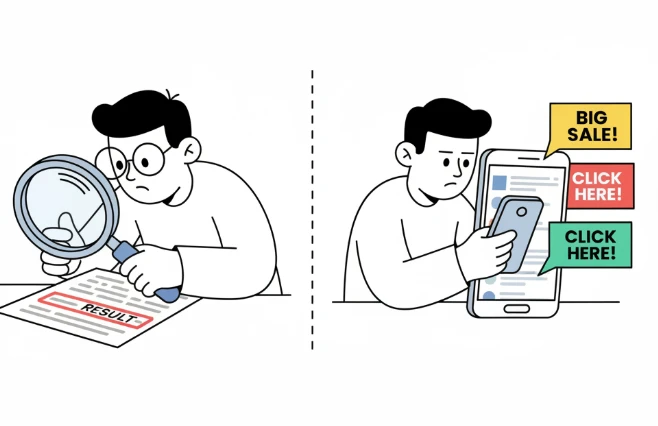
Banner blindness affects display performance. Internet users have learned to ignore banner ad placements. They scroll past standard ad positions without consciously registering the content. Effective display creative needs to break through this automatic filtering, which requires strong design and compelling messaging.
Audience Targeting Capabilities
Both formats offer targeting options, but they work differently. Search ads target based on keywords and search queries. Advertisers bid on terms their potential customers use. This self-selecting audience comes with built-in intent signals.
Display ads provide more varied targeting methods:
- Demographic targeting by age, gender, income, and parental status
- Interest-based targeting reaching people based on their browsing history
- In-market audiences actively researching specific product categories
- Remarketing to people who previously visited the advertiser's website
- Placement targeting on specific websites or content types
These options let advertisers reach people who haven't explicitly searched for their products. A new brand with little search volume can still reach relevant audiences through display targeting. Established brands can maintain visibility between searches.
Search targeting is simpler but more limited. Advertisers can refine by location, device, and time of day, but the core targeting mechanism remains keyword-based. This works well for capturing demand but does little to create it.
Brand Awareness vs. Direct Response
Display ads excel at building brand recognition. Repeated exposure to display ads increases brand recall even when users don't click. Someone might see a company's display ads multiple times over weeks, then later search directly for that brand when they're ready to buy.
Measuring this indirect impact is challenging. Attribution models attempt to credit display ads for conversions that happen through other channels later. Someone exposed to display ads might eventually convert via organic search or direct traffic. Standard last-click attribution gives no credit to the display ads that created initial awareness.
Search ads function primarily as direct response tools. They capture users ready to take action immediately. The path from search ad click to conversion is typically shorter and more straightforward. This makes ROI calculation simpler and more immediate.
Businesses focused on immediate sales often prefer search ads. Companies building long-term brand equity incorporate display advertising despite lower direct conversion rates. The choice depends on whether the priority is harvesting existing demand or cultivating future demand.
Performance Across the Sales Funnel
The sales funnel concept helps explain when each ad type works best. Top-of-funnel prospects need awareness. Middle-funnel prospects require consideration and comparison. Bottom-funnel prospects are ready to convert.
Display ads work well at the top of the funnel. They introduce brands to new audiences and create initial awareness. Video display ads on YouTube can demonstrate products to people who haven't started actively shopping yet.
Search ads dominate the bottom of the funnel. When someone searches "buy [product] online" or "[service] near me," they're ready to convert. Search ads capture this high-intent traffic effectively.
The middle of the funnel benefits from both formats. Remarketing display ads keep brands visible to people who visited but didn't convert. Search ads catch those same people when they return to research mode with new queries.
Understanding where prospects are in their buying process helps determine which format to prioritize. Complex B2B sales with long consideration periods might need sustained display advertising. Simple e-commerce transactions might convert efficiently through search ads alone.
Testing and Optimization Requirements
Search ad optimization focuses on keyword selection, ad copy testing, and bid management. Advertisers refine which terms trigger their ads and adjust bids based on performance. Quality Score — Google's measure of ad relevance — affects both ad position and cost.
Display ad optimization involves more variables:
- Creative testing across different visual formats and messages
- Placement analysis to identify which sites or content types perform best
- Audience refinement to focus budget on segments that respond
- Frequency capping to prevent showing the same ads too often to the same people
Display campaigns require more ongoing creative production. Fresh designs prevent ad fatigue. Search ads can run with the same text copy for longer periods without declining performance.

Making the Strategic Choice
The Google display ads vs search ads decision isn't binary. Most comprehensive advertising strategies use both formats in complementary ways. Search ads capture existing demand while display ads generate future demand.
Budget allocation depends on business maturity and objectives. New businesses with limited budgets often start with search ads for immediate returns. Established brands allocate more to display for sustained visibility and market share protection.
Product complexity influences the decision too. Simple products with short sales cycles convert well through search ads. Complex solutions requiring education and trust-building benefit from display advertising that provides repeated exposure over time.
The most effective approach tests both formats with clear success metrics for each. Expecting display ads to match search conversion rates misses their actual purpose. Evaluating each format against appropriate goals reveals their true value within an overall marketing strategy.





























Sign in to leave a comment.