
Let’s start with a scene.
A delivery van is winding its way through rush-hour traffic. One tire is a little soft. The driver took a longer route. A customer just called, asking where their package is.
Meanwhile, at HQ?
You’re staring at a spreadsheet, wishing for a teleportation device. Or at least a crystal ball.
Sound familiar?
That’s exactly the mess a GPS fleet tracking system was built to untangle. But this blog isn’t just a boring checklist of features. Oh no. We’re here to decode the tech and explain why, if you run any kind of logistics, delivery, or service fleet, you’re already late to the GPS party.
First, What Exactly Is a GPS Fleet Tracking System?
It’s not magic. But it’s close.
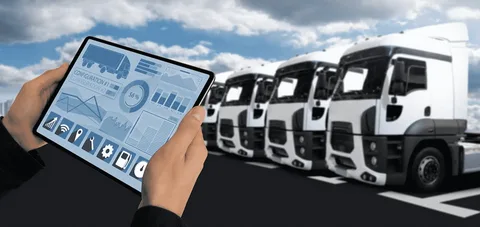
A GPS fleet vehicle tracking system is a digital solution that connects your vehicles, drivers, and control room through live satellite tracking.
In real-world speak:
You see where each vehicle is, how it’s performing, what the driver’s doing—and whether your operations are running smoothly or not.
Think of it like the central nervous system of your fleet.
You’re not just tracking location—you’re syncing people, time, fuel, and tasks into one powerful dashboard.
Okay, But... How Does It Actually Work?
Fair question. Let’s geek out for a minute:
- Each vehicle has a GPS tracking device installed (usually small, durable, and practically invisible).
- These devices communicate with satellites to calculate precise locations.
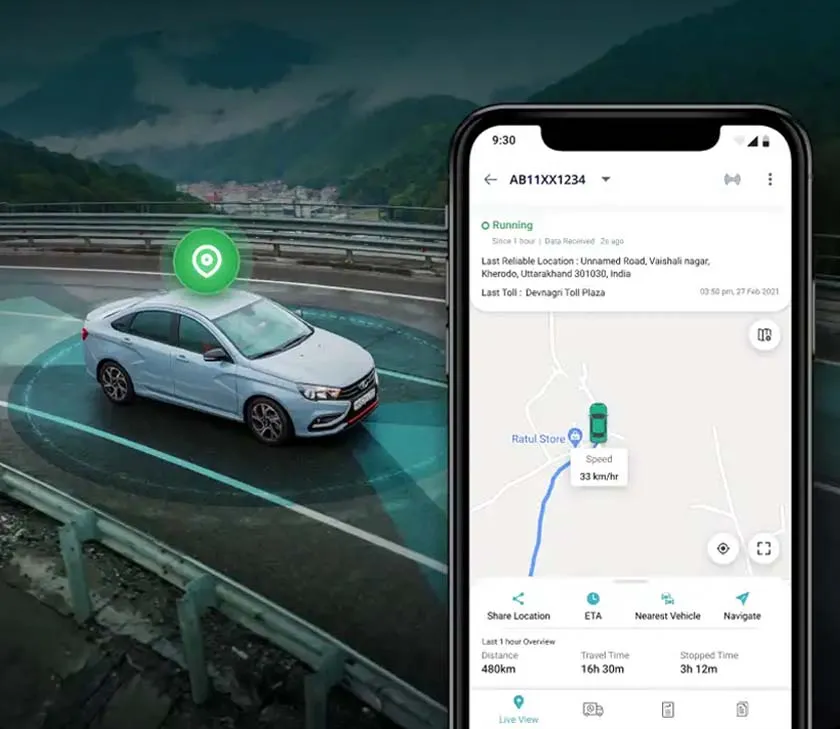
- That location (along with data like speed, engine status, and idle time) is sent back to a cloud platform.
- You access all this in real-time through a dashboard or mobile app.
Still with me? Cool. Because this is where it gets exciting.
Fleet Track Solutions Aren’t Just Trackers. They’re Decision-Making Machines.
Let’s zoom in.
You’re managing 15 delivery trucks. Without a GPS system, you’re flying blind—no clue if a vehicle’s taking a detour, stuck in traffic, or standing still with the AC on and the engine running.
But with a GPS-based fleet tracking solution?
- You spot inefficiencies before they cost you money.
- You reroute drivers based on traffic or weather.
- You automate attendance, fuel logs, and vehicle performance history.
- You get alerts if a vehicle enters or leaves a pre-defined zone.
It’s not just about knowing where your fleet is. It’s about knowing what to do next.
A Day in the Life: From Chaos to Control
Let’s pretend you run a cold-chain pharma delivery company. Timing and temperature? Absolutely everything.
7:00 AM – Drivers clock in via mobile app.
7:30 AM – Fleet status check. Three vehicles are ready. One has a low battery alert.
9:00 AM – You receive a live notification: Driver 2 is idling for 10+ minutes in a no-go zone.
11:00 AM – Route 5 shows a traffic bottleneck. The system suggests a faster route.
1:00 PM – A customer asks where their order is. You send them a live tracking link.
3:00 PM – Fleet reports for the day generated automatically—fuel usage, route performance, driver efficiency.
Notice what’s missing?
Panic. Confusion. Blind spots.
But Isn’t This Stuff Only for the “Big Companies”?
Nope. That’s old thinking.
In fact, fleet tracking systems are increasingly adopted by mid-sized Indian businesses in logistics, construction, distribution, and even last-mile delivery.
Why?
- Cloud-based platforms have made setup fast and affordable
- Devices are rugged, compact, and scalable
- GPS fleet tracking systems now integrate easily with other business tools (HRMS, billing, etc.)
Today, the question isn’t whether you’re “big enough.”
It’s whether you’re future-ready.
Can It Actually Save You Money?
Let’s not dance around it: YES.
From fuel optimization to vehicle health monitoring, fleet track solutions directly impact your operating costs.
But beyond rupees and litres, there’s something deeper: time saved, mistakes avoided, and customers who keep coming back because you deliver on point.
The Final Turn: Why 2025 Is the Year of Smart Fleets
The world’s moving faster.
Customer expectations are sharper.
Margins are tighter.
And the difference between growing and gasping?
Operational clarity.
That’s exactly what GPS fleet tracking delivers.
It’s not about tech for tech’s sake.
It’s about knowing what’s happening, when it’s happening, and why it matters—without the guesswork.
Final Word?
If your logistics still rely on old-school methods, it’s time for an upgrade.
GPS-based fleet tracking solutions aren’t a luxury anymore. They’re your survival gear.
Time to track like a pro. Or get left behind.
























Sign in to leave a comment.