

Market Overview
The Hawaii real estate market operates within a structurally constrained environment defined by limited land supply, strict zoning, high construction costs, and strong global demand. These fundamentals historically produce elevated home prices, low inventory, and cyclical sensitivity to interest rates and tourism-driven economic activity. The current forecast reflects stabilization following the post-pandemic price surge and the interest-rate shock of 2022–2024.
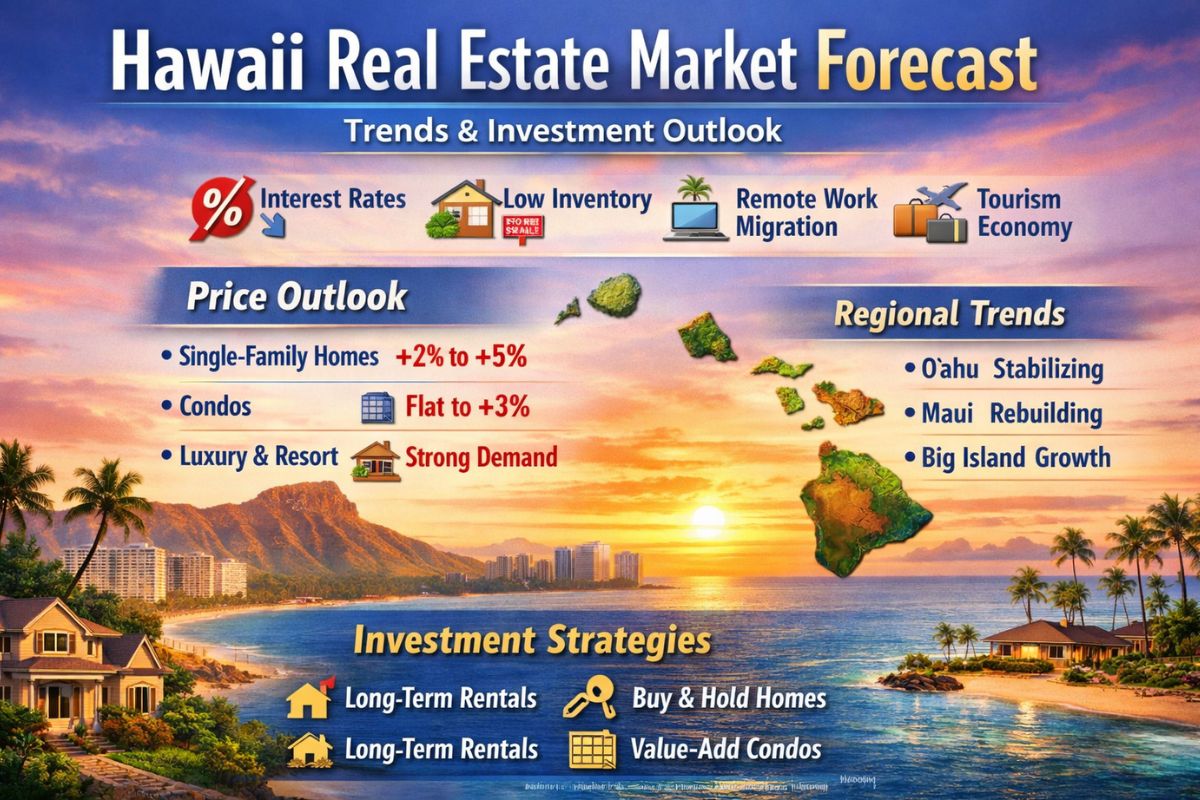
Key Drivers Shaping the Forecast
1. Interest Rates and Financing Conditions
Mortgage rates remain the primary short-term demand lever. Elevated borrowing costs reduced transaction volume across Oʻahu, Maui, and Hawaiʻi Island. As rates gradually normalize over the next 12–24 months, pent-up buyer demand—especially from mainland U.S. households—should return.
Forecast impact:
- Modest recovery in sales volume
- Gradual price firming rather than rapid appreciation
- Increased activity in mid-tier single-family homes
2. Inventory Constraints
Hawaii’s inventory remains structurally tight due to:
- Limited developable land
- Lengthy permitting timelines
- High labor and material costs
- Strong homeowner retention (low turnover)
New construction pipelines are insufficient to materially alter supply levels in the near term.
Forecast impact:
- Continued seller leverage in desirable neighborhoods
- Price resilience despite demand fluctuations
- Competitive conditions in entry-level segments
3. Migration and Remote Work
Remote and hybrid work trends continue to influence buyer inflow from California, Washington, and other high-cost mainland markets. While the pandemic surge has cooled, lifestyle-driven relocation remains a consistent demand source.
Forecast impact:
- Sustained demand for single-family homes
- Increased interest in outer-island markets
- Growth in luxury and second-home segments
4. Tourism and Economic Health
Tourism remains a foundational economic driver. Hotel performance, visitor arrivals, and airline capacity directly affect employment and housing demand.
Forecast impact:
- Stable tourism supports long-term housing demand
- Vacation rental regulation will shape investor behavior
- Resort-adjacent property values remain relatively strong
Price Forecast by Property Type
Single-Family Homes
Single-family homes continue to command the highest demand. Price growth is expected to be moderate rather than explosive.
Outlook (12–24 months):
- Price change: +2% to +5% annually
- Strongest markets: Oʻahu suburbs, Maui Upcountry, Hawaiʻi Island
- Entry-level inventory remains highly competitive
Condominiums
The condo segment is more sensitive to interest rates and investor activity. Rising maintenance fees and insurance costs have tempered growth in some buildings.
Outlook:
- Price change: flat to +3%
- Increased demand if mortgage rates decline
- Urban Honolulu condos likely to stabilize before appreciating
Luxury and Resort Markets
Luxury real estate is influenced by global wealth trends and stock market performance rather than local wages.
Outlook:
- Stable demand from international and mainland buyers
- Price appreciation tied to financial market conditions
- Limited supply supports long-term value retention
Regional Forecast Breakdown
Oʻahu
The most liquid and diversified market.
- Stabilizing prices
- Gradual volume recovery
- Strong rental demand
Maui
Post-wildfire rebuilding and regulatory shifts will shape the medium-term outlook.
- Short-term volatility
- Long-term supply constraints likely to support prices
Hawaiʻi Island (Big Island)
Attractive relative affordability draws both retirees and remote workers.
- Moderate price growth
- Increased development activity
- Growing long-term investment interest
Kauaʻi
Small inventory and high desirability maintain premium pricing.
- Low turnover
- Strong second-home demand
- Gradual appreciation expected
Rental Market Forecast
Rental demand remains strong due to high home prices and limited supply.
Trends:
- Elevated long-term rents
- Tight vacancy rates
- Investor focus shifting from short-term rentals to long-term leases where regulations tighten
Risks to the Forecast
- Interest Rate Volatility – Sustained high rates could suppress sales volume.
- Insurance and Climate Costs – Rising premiums may impact affordability.
- Regulatory Changes – Vacation rental restrictions can alter investor demand.
- Economic Slowdown – Tourism decline would weaken housing demand.
Investment Outlook
Short-term (1–2 years):
- Market stabilization phase
- Opportunities in condos and secondary locations
- Negotiation leverage improving for buyers
Mid-term (3–5 years):
- Gradual appreciation expected
- Supply constraints will reassert upward price pressure
- Long-term holds remain attractive
Best strategies:
- Long-term rental investments
- Buy-and-hold single-family homes
- Value-add condo acquisitions in prime locations
Conclusion
The Hawaii real estate market is transitioning from rapid pandemic-era appreciation to a period of normalization and measured growth. Structural supply limitations, lifestyle-driven migration, and global demand for island property continue to support long-term value. While short-term fluctuations may occur due to financing conditions and regulatory shifts, the overall forecast points toward stability followed by gradual appreciation across most property types, including houses for sale in Honolulu.
For buyers and investors, the next 12–24 months present a window of opportunity as inventory improves slightly and pricing stabilizes before the next growth cycle gains momentum.



























Sign in to leave a comment.