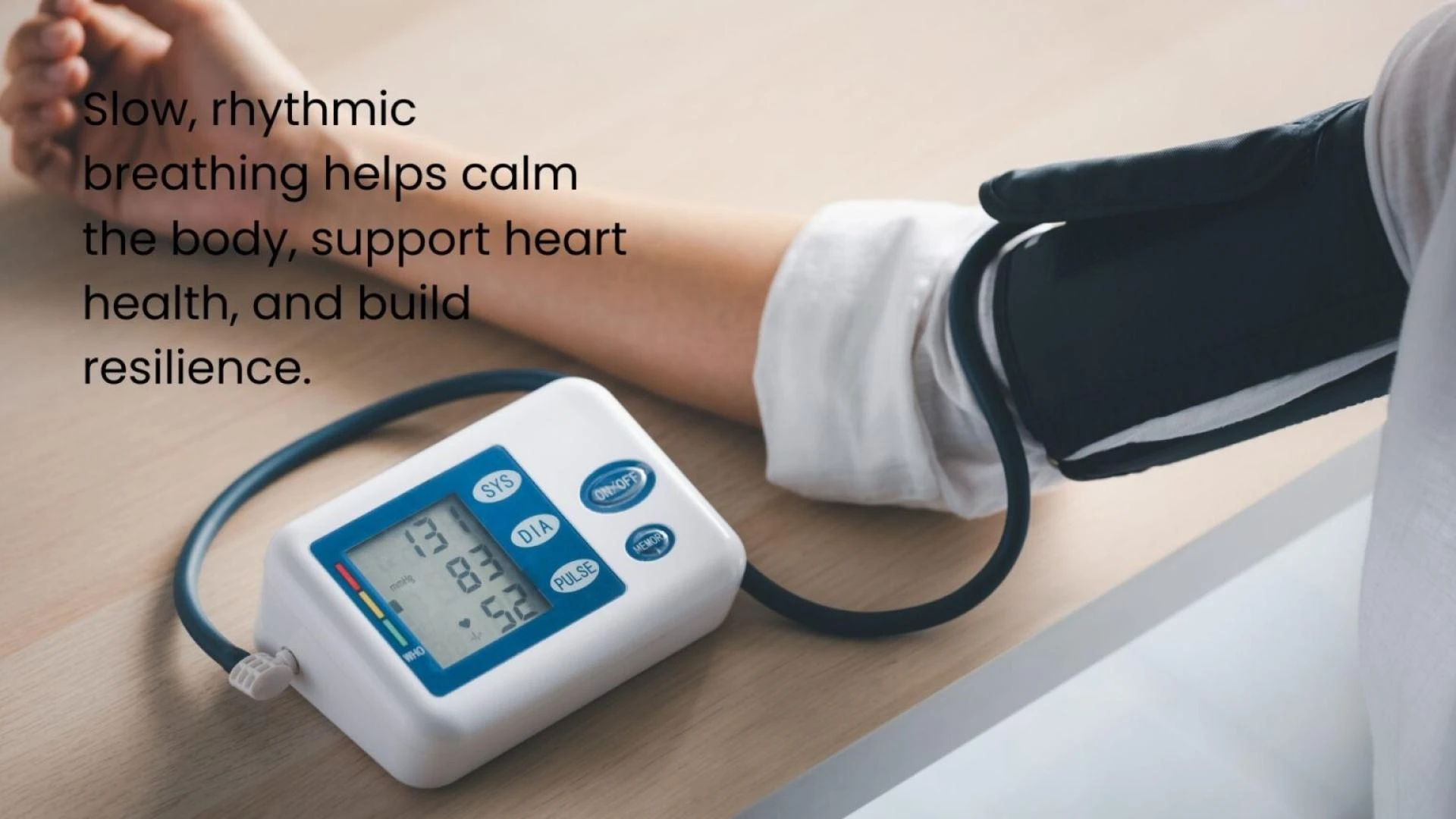

What Makes Heart Rate Variability So Important?
Your heart isn’t just a pump—it’s a messenger. Every heartbeat communicates vital information about your physical and emotional state. The space between each beat, known as Heart Rate Variability (HRV), tells us how adaptable our body is to stress, recovery, and change.
High HRV indicates a balanced and flexible nervous system, able to respond quickly to life’s demands and return to a state of calm when the challenge is over. Low HRV, on the other hand, can signal chronic stress, fatigue, or even poor emotional regulation.
So how can you take control of something as subtle as the rhythm between your heartbeats? The answer lies in Heart Rate Variability Breathing, a powerful, research-backed practice that can help restore balance, resilience, and focus—naturally.
Understanding Heart Rate Variability Breathing
Heart Rate Variability Breathing is a rhythmic breathing method that synchronizes your breath with your heart’s natural rhythm. It’s more than just deep breathing—it’s about creating harmony between your cardiovascular, respiratory, and nervous systems.
This technique helps bring your body into “coherence,” a state where physiological processes operate in smooth alignment. In this state, your heart, mind, and body work together efficiently, reducing stress and improving emotional clarity.
Dr. Alisha explains this beautifully on her page about Heart Rate Variability Breathing, where she details how this practice empowers people to take control of their inner rhythm and health.
How Your Breath Shapes Your Nervous System
Breathing might seem simple, but it’s one of the most direct ways to influence your autonomic nervous system—the system that controls heart rate, digestion, and stress response.
This system has two primary components:
- Sympathetic Nervous System (SNS): Activates the “fight or flight” response when you face stress.
- Parasympathetic Nervous System (PNS): Triggers “rest and digest” functions to help you recover and heal.
When stress dominates, your SNS stays active, keeping you alert but also drained. HRV breathing helps activate the PNS, signaling safety to your body and restoring a sense of calm. Through slow, consistent breathing, you can literally tell your heart—and your brain—that it’s safe to relax.
The Science Behind HRV Breathing
During each breath cycle, your heart rate naturally fluctuates. When you inhale, your heart rate speeds up slightly. When you exhale, it slows down. This natural rhythm is called respiratory sinus arrhythmia, and it’s the foundation of HRV training.
By consciously controlling your breath—typically at a pace of around 5 to 6 breaths per minute—you can strengthen the connection between your heart and your brain. This rhythm brings your HRV into a coherent pattern, promoting optimal nervous system function.
Studies have shown that regular HRV breathing can improve cardiovascular health, lower blood pressure, and enhance emotional regulation. It’s a scientifically validated way to influence your physiology for better health outcomes.
Benefits of Practicing Heart Rate Variability Breathing
The benefits of HRV breathing are both immediate and long-lasting. Here’s what consistent practice can bring:
1. Stress Reduction and Emotional Regulation
By activating the parasympathetic response, HRV breathing lowers cortisol levels and helps you manage emotional responses more effectively. You’ll find it easier to stay calm during conflict, focus under pressure, and recover from anxiety.
2. Improved Focus and Mental Clarity
When your body is in coherence, your brain receives better oxygen flow, improving focus, creativity, and decision-making. It’s why many professionals and athletes use HRV breathing before high-stakes events.
3. Enhanced Physical Health
Regular practice can improve heart rhythm stability, lower resting heart rate, and support better blood circulation. These benefits collectively enhance cardiovascular resilience and energy levels.
4. Better Sleep and Recovery
By calming the nervous system before bed, HRV breathing helps you fall asleep faster and achieve deeper, more restorative sleep.
5. Resilience Against Stress
With time, your body learns to maintain balance even under challenging situations. This adaptive strength is what gives HRV breathing its lasting impact on both physical and emotional well-being.
How to Practice HRV Breathing
You don’t need complex tools to begin—just your breath, focus, and a few minutes of quiet. Follow this simple guide:
- Find Your Space: Sit comfortably in a calm environment.
- Close Your Eyes: Focus your attention inward and relax your body.
- Inhale Slowly: Breathe in through your nose for 5 seconds.
- Exhale Gently: Breathe out for 5 seconds through your mouth.
- Maintain the Rhythm: Continue this cycle for 5–10 minutes daily.
As you become more experienced, you can extend your practice or pair it with mindfulness meditation for deeper effects.
The Emotional Heart: Where Science Meets Spirit
Beyond its physiological effects, HRV breathing also taps into something profoundly emotional. The heart and brain are in constant communication, and this dialogue shapes your thoughts, emotions, and behaviors.
When your heart rhythm is erratic (as during stress or anger), your brain receives chaotic signals, amplifying anxiety and confusion. When it’s coherent (as during gratitude or calm), your brain operates more clearly, leading to peace and confidence.
HRV breathing helps you consciously create coherence—transforming not just how you feel, but how you think and respond to the world.
HRV Breathing in Everyday Life
You can integrate HRV breathing into daily routines easily:
- Morning grounding: Begin your day with 5 minutes of HRV breathing to center your energy and focus.
- Before challenging tasks: Use it before work meetings, exams, or workouts to calm nerves and boost performance.
- During stressful moments: When you feel overwhelmed, pause and take 10 slow breaths—resetting your nervous system.
- Evening relaxation: End your day with HRV breathing to prepare your body for deep rest.
Over time, your body learns to enter coherence naturally, even during stressful situations.
HRV Breathing for Athletes and High Performers
Elite athletes, executives, and even military personnel are turning to HRV breathing to enhance resilience and mental sharpness. By improving the body’s ability to adapt to stress, HRV breathing becomes a competitive advantage.
Athletes report better recovery times, reduced performance anxiety, and improved endurance. Meanwhile, professionals find they can think more clearly and respond with composure during high-pressure situations.
It’s no surprise that HRV training is now integrated into peak performance programs across the world—it’s a proven path to sustainable excellence.
Measuring Progress: What to Expect
You don’t have to be perfect from day one. HRV breathing is a journey of awareness and consistency. Many people begin noticing results within a few days—feeling calmer, more focused, and more in control of their emotions.
Over weeks or months, improvements in HRV can be measured through wearable devices that track heart rhythm variability. But even without technology, you’ll feel the difference in your energy levels, sleep quality, and overall sense of balance.
The Long-Term Impact on Well-Being
Unlike quick fixes or stress management fads, HRV breathing builds lasting resilience. By restoring balance to your nervous system, it helps your body operate from a place of calm alertness instead of constant tension.
This shift has ripple effects—improved relationships, better decision-making, and more consistent moods. When your internal systems are in harmony, every area of your life benefits.
Why HRV Breathing Matters More Than Ever
In today’s fast-paced world, chronic stress has become the norm. People are constantly reacting, rarely resetting. HRV breathing offers a way back—a natural, evidence-based practice that reconnects you with your body’s innate wisdom.
It’s not about escaping stress but mastering your response to it. Through intentional breathing, you train your heart and mind to move together, even amid chaos.
Reclaiming Control Through Breath
Your breath is the gateway to your heart’s rhythm, and your heart’s rhythm is the key to resilience. When you practice HRV breathing, you’re not just managing stress—you’re transforming how your body and mind experience life.
This practice reminds us that true calm isn’t found outside of us—it’s created within, one breath, one heartbeat at a time.
































Sign in to leave a comment.