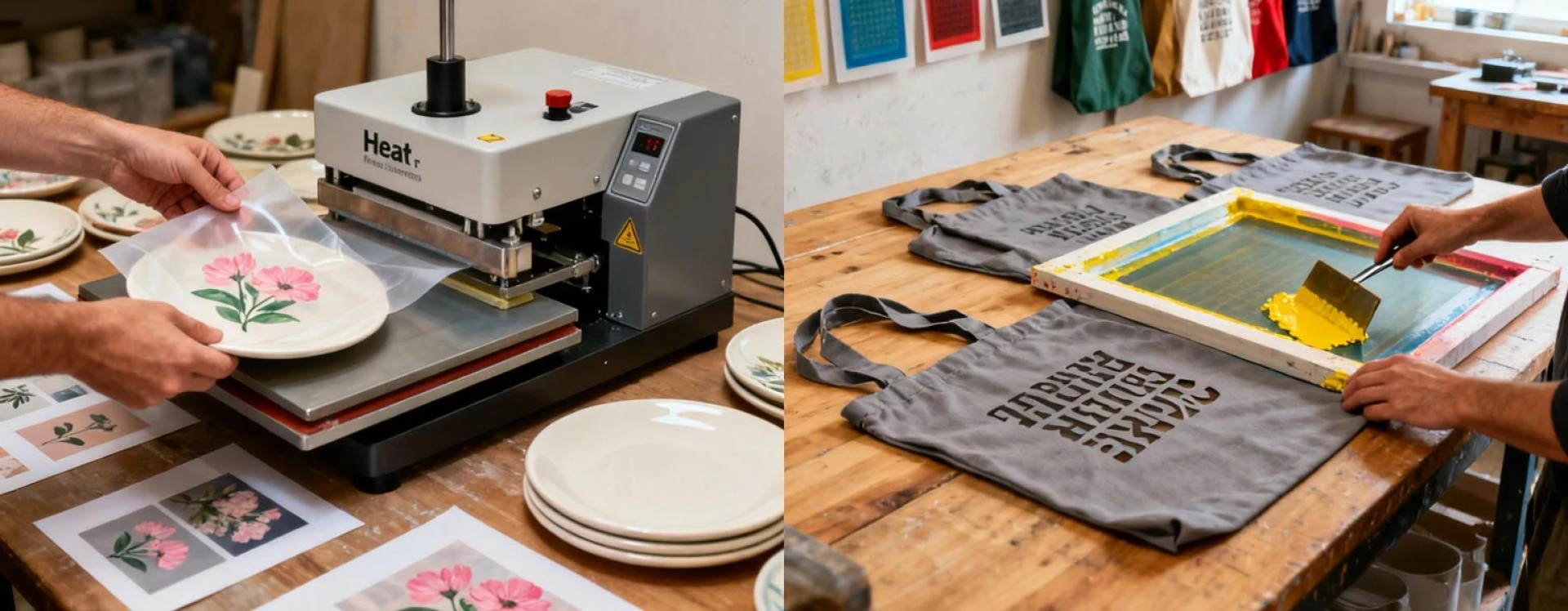

If you’ve ever thought about printing designs on T-shirts, tote bags, sportswear, or even mugs and glassware, two techniques are always at the centre of the discussion: heat press and screen printing. Both are reliable ways of transferring artwork onto fabrics and hard surfaces—but they work very differently, and each metod has its own pros and cons.
In this guide, we’ll walk you through the two processes, highlight their strengths and limitations, and help you decide which is the better fit for your projects.
Heat Press Printing
How it works:
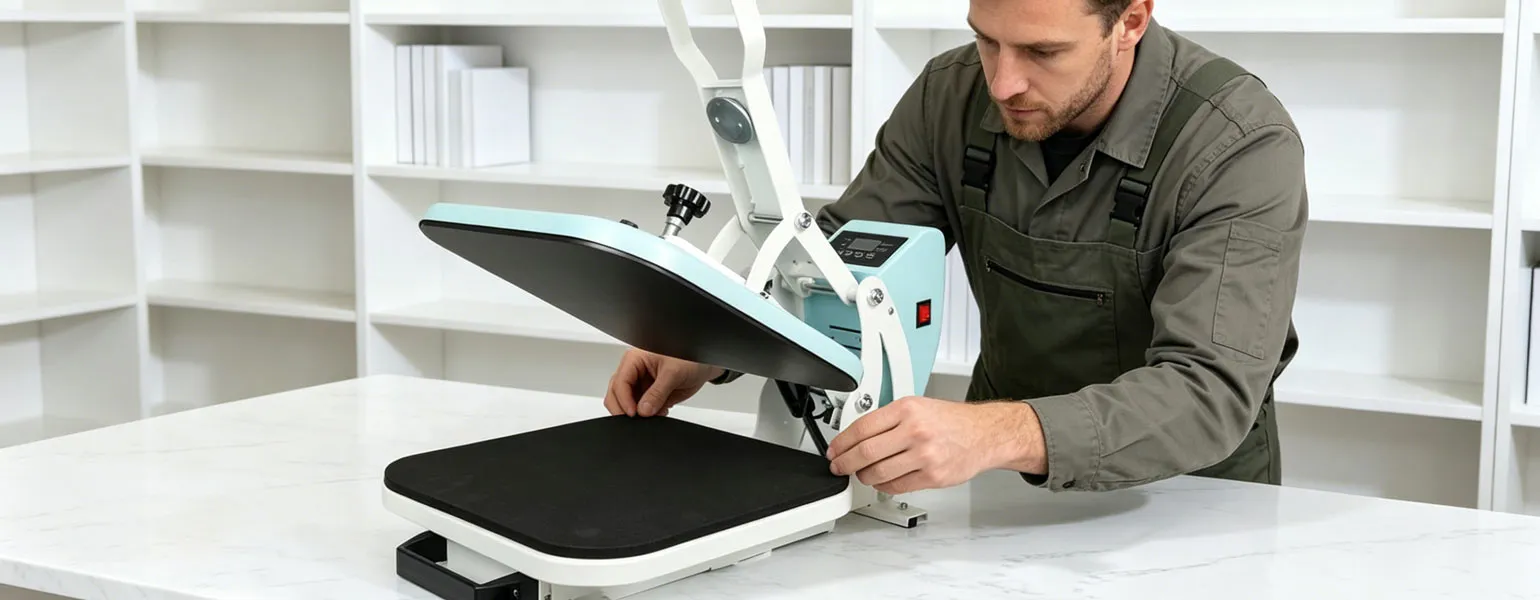
A heat press machine applies high temperature and pressure to transfer a design (usually from transfer paper or vinyl) directly onto fabric or coated surfaces.
Advantages:
- Affordable equipment and low running costs.
- Beginner-friendly—ideal for newcomers and hobbyists.
- Excellent for small orders and personalised printing.
- Can produce vibrant, photo-quality images with gradients and fine detail.
- Flexible—suitable for one-off gifts or short-run custom items.
Disadvantages:
- Durability is average; designs may fade or crack after repeated washing.
- Slower for bulk production since each item must be pressed individually.
- Prints, especially vinyl transfers, can feel slightly heavy or plastic-like.
Best materials: Cotton, polyester, blends, ceramics (like mugs), coated metals, and more.
Screen Printing
How it works:
Screen printing uses a stencil (a fine mesh screen) and a squeegee to push ink directly onto fabric. Each colour in the design requires its own separate screen.
Advantages:
- Produces bold, vibrant colours with strong coverage.
- Extremely durable—ink sinks into the fabric fibres.
- Very cost-effective for bulk orders, as screens can be reused many times.
- Great for solid, simple graphics and logos.
Disadvantages:
- Higher set-up costs because of screen preparation.
- Not cost-effective for small runs (under 10 pieces).
- Less suited to detailed, photographic, or gradient designs.
Best materials: Cotton, polyester, nylon, wood, glass, metals, and more.
Which Printing Method Is Best?
- Choose heat press if you’re working with small batches, want detailed or photographic prints, or are offering custom and personalised items.
- Choose screen printing if you need bulk production, long-lasting prints, or bold and simple designs.
Signzworld’s Recommendation
Here at Signzworld, we work with creators, small businesses, and growing brands every day. For most people starting out, we recommend a heat press machine. It strikes the perfect balance between affordability, flexibility, and professional-quality results.
With Signzworld, you’ll find everything you need to get started:
- Professional-grade heat press machines
- A wide range of blank products ready for printing
- Accessories and consumables to support your workflow
Our one-stop solution makes it easy to launch your printing journey with confidence.
FAQs
Q1: Which lasts longer—heat press or screen printing?
Screen printing is generally more durable, as the ink penetrates the fabric fibres. Heat press designs sit on the surface, so they may fade sooner with frequent washing.
Q2: Do I need training to use a heat press?
Not at all. One of the biggest advantages of heat press printing is its simplicity. With a quality machine from Signzworld, you can start producing professional results after a very short learning curve.
👉 Whether you’re a hobbyist or a business owner, understanding the difference between heat press and screen printing will help you choose the right technique—and with Signzworld by your side, you’ll have the tools you need to succeed.






















Sign in to leave a comment.