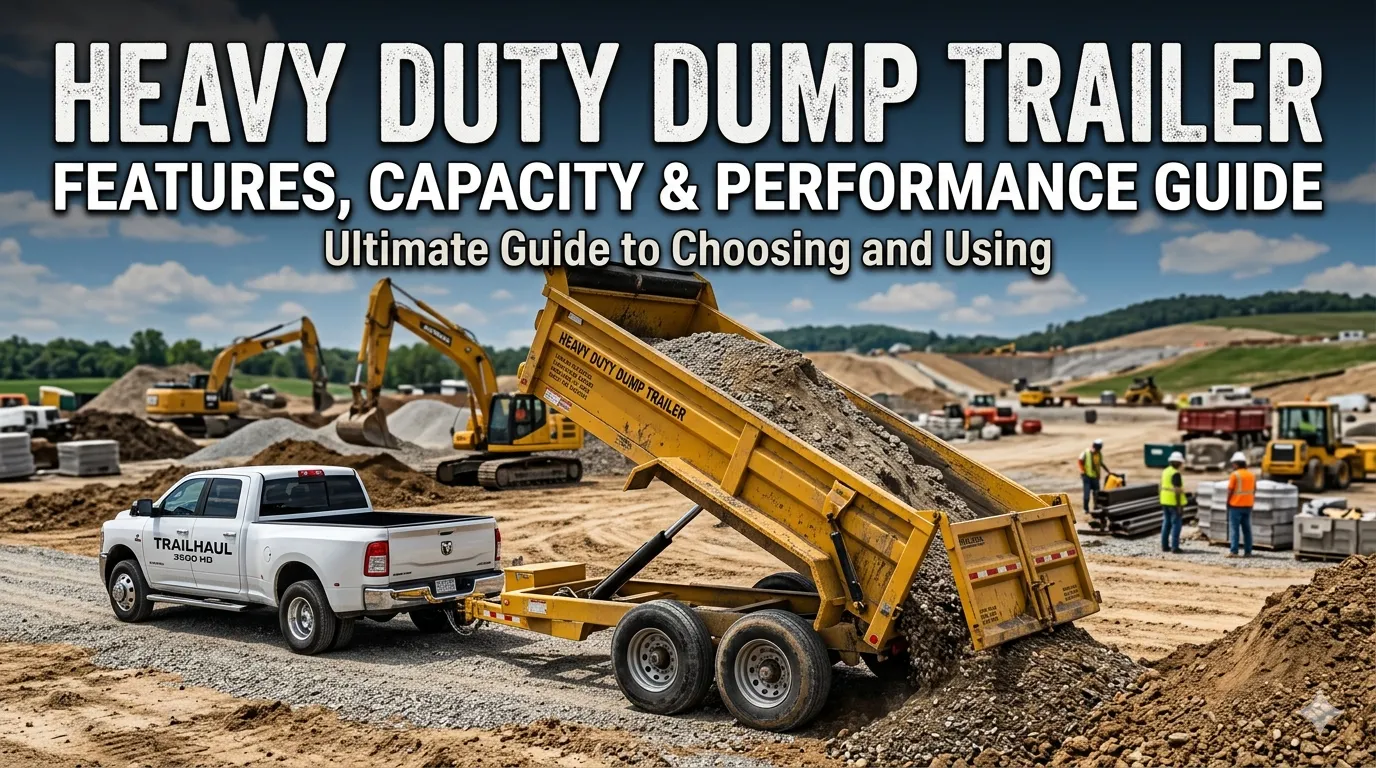

I still remember the first time I watched a dump trailer tip a full load of gravel… slow at first, then that sudden shift where everything slides out at once. Kind of satisfying, honestly. If you’re dealing with hauling—construction debris, dirt, scrap—you already know how much time and back pain the right trailer can save. Somewhere in that decision process, the phrase heavy duty dump trailer starts popping up. A lot.
And yeah, not all dump trailers are built the same. Some look tough but feel… not so much once you load them.
What Makes a Dump Trailer “Heavy Duty”?
Built for Real Work, Not Light Loads
A heavy duty dump trailer usually means thicker steel, stronger frame rails, and better welds. You can kinda tell just by looking at one in person—the walls don’t flex when you push them, the gate shuts with a solid clunk, not a rattle.
Most models in this category use reinforced floors (often 10–7 gauge steel) and heavy crossmembers. That matters when you're dropping chunks of concrete or hauling uneven loads that shift around.
Axles, Suspension, and Frame Strength
You’ll often see tandem or even triple axle dump trailers here. Think 10,000 lb axles, sometimes more. Leaf spring suspension is common, though some setups feel smoother than others… depends on how they’re built.
The frame is where things get serious. I’ve seen cheaper trailers twist slightly under load. Not ideal. A proper heavy duty dump trailer keeps its shape even when it’s pushed near capacity.
Understanding Dump Trailer Capacity
Payload vs GVWR (Yeah, It Confuses People)
Payload capacity is what you can actually carry. GVWR (Gross Vehicle Weight Rating) includes the trailer itself.
Quick example—if a trailer has a GVWR of 14,000 lbs and weighs 4,000 lbs empty, your payload is around 10,000 lbs. Simple math, but easy to overlook.
Common Sizes and Load Limits
- 5x10 dump trailer → smaller jobs, landscaping
- 6x12 or 7x14 dump trailer → more common for contractors
- 7x16 or bigger → serious hauling, demolition, bulk material
Some folks go bigger thinking “more space = better,” but honestly… if your truck can’t handle it, it turns into a headache real quick.
Key Features Worth Paying Attention To
Hydraulic Lift System
This is the heart of the whole thing. Single ram vs scissor lift—both work, but scissor lifts feel more stable with uneven loads.
And battery setup matters more than people think. A weak battery mid-job? Yeah… you’ll remember that day.
Dump Trailer Tarp System
Loose material like sand or gravel? You’ll want a tarp system. Not just for safety, but also to avoid stuff blowing out on the highway.
Manual tarps are fine. Electric ones are nicer, but also another thing that can break.
Dump Trailer Gate Options
- Barn doors: swing open, good for large debris
- Spreader gate: lets you control flow (nice for gravel)
- Combo gate: kind of a middle ground
I’ve seen people regret not choosing the right gate. It sounds minor… until you’re unloading.
Performance in Real Conditions
Stability While Dumping
Ever dumped on uneven ground? It’s… a bit tense. A good heavy duty dump trailer stays balanced, even when the load shifts suddenly.
Wider stance and proper weight distribution help a lot here.
Towing Experience
You feel the difference between a well-built trailer and a cheap one pretty fast. Less sway, smoother tracking. Still, you need the right truck—no getting around that.
Brakes matter too. Electric brakes are standard, but make sure they’re actually adjusted right.
Durability Over Time
Paint chips. Steel rusts. That’s just how it goes.
But better trailers slow that process down—powder coating, sealed wiring, decent tires. I’ve seen trailers last years with rough use, and others fall apart way too soon. Usually comes down to build quality and, honestly, a bit of maintenance.
Common Use Cases (Where These Trailers Shine)
Construction and Demolition
Concrete chunks, bricks, scrap metal… this is where heavy duty dump trailers earn their keep. You need something that won’t complain under weight.
Landscaping and Yard Work
Mulch, soil, rocks. Lighter loads compared to construction, but still messy and uneven. A dump trailer makes unloading quick, no shoveling for hours.
Farming and Agricultural Work
Feed, manure, tools—farmers tend to use whatever works. Dump trailers fit right in, especially for moving bulk materials across short distances.
Things People Sometimes Overlook
Tire Quality
Cheap tires wear out fast. Or worse… blow out under load. Not fun. Upgrading tires early can save trouble later.
Wiring and Lights
It’s not exciting, I know. But bad wiring leads to constant issues—lights flickering, brakes acting weird. Seen it happen more than once.
Maintenance (Yeah, It Matters)
Grease the hinges. Check hydraulic fluid. Keep the battery charged. Small stuff, but skipping it adds up.
Choosing the Right Heavy Duty Dump Trailer
Match It to Your Work
If you're hauling heavy debris daily, go bigger and stronger. Occasional use? You might not need the top-end model.
Think About Your Tow Vehicle
This one gets ignored a lot. Your truck’s towing capacity sets the limit. No point buying a 16,000 lb trailer if your truck struggles at 10,000.
Budget vs Long-Term Value
Cheaper trailers save money upfront… but repairs and downtime creep in later. Not always, but often enough to think twice.
A Few Real-World Thoughts
I’ve talked to people who swear by their dump trailers, and others who regret rushing the purchase. Funny thing is, the regrets usually sound similar—wrong size, weak build, or just not thinking through how they’d actually use it.
If you’re on the fence, try to see one in person. Load it, if possible. Even just standing next to it, you can feel the difference between something solid and something… questionable.
And yeah, once you get the right one, it changes how you work. Faster jobs, less manual effort. Fewer “why did I do this by hand?” moments.






















Sign in to leave a comment.