


Spring is one of the most important seasons for commercial building maintenance across Massachusetts, Boston, and Cambridge. While winter weather may leave visible signs of wear at ground level, the most significant damage often develops in areas that are difficult to reach. Upper façades, recessed sections, structural joints, and other elevated surfaces experience continuous exposure to freeze-thaw cycles, moisture intrusion, and strong winds throughout the winter months.
This is where high-access equipment becomes an essential part of an effective maintenance strategy. Without proper access, inspections remain incomplete, repairs are delayed, and hidden deterioration continues to spread. By using high-access equipment during spring preparation, property owners and facility managers can inspect, clean, repair, and restore every part of the building envelope before small issues become costly structural problems.
Why Access Becomes Critical After Winter
Winter conditions rarely affect every section of a commercial building equally. Lower levels may appear to be in good condition, while upper elevations and transition points often experience the greatest level of stress.
After months of exposure, technicians commonly identify:
- Undetected façade cracks
- Weakened or failed sealants
- Trapped moisture
- Salt and contaminant buildup
- Surface deterioration around masonry joints
Many of these issues remain hidden from ground-level inspections. If maintenance teams cannot safely reach these areas, problems continue to develop unnoticed until they require larger and more expensive repairs.
Across New England, delayed access remains one of the leading reasons post-winter maintenance costs continue to increase. When access is limited, maintenance becomes reactive rather than preventive, allowing deterioration to progress throughout the spring and summer seasons.
How High-Access Equipment Supports Complete Spring Maintenance
The primary advantage of high-access equipment is the ability to perform maintenance across the entire building rather than only the areas that are easy to reach.
Instead of focusing on visible sections, technicians can safely inspect every elevation, including:
- Upper façades
- Recessed architectural features
- Structural transitions
- Roofline connections
- Expansion joints
- Exterior building systems
This complete accessibility allows property managers to make informed maintenance decisions based on the actual condition of the building rather than what can be seen from the ground.
Full-Building Façade Visibility
A successful spring maintenance program begins with a detailed exterior inspection.
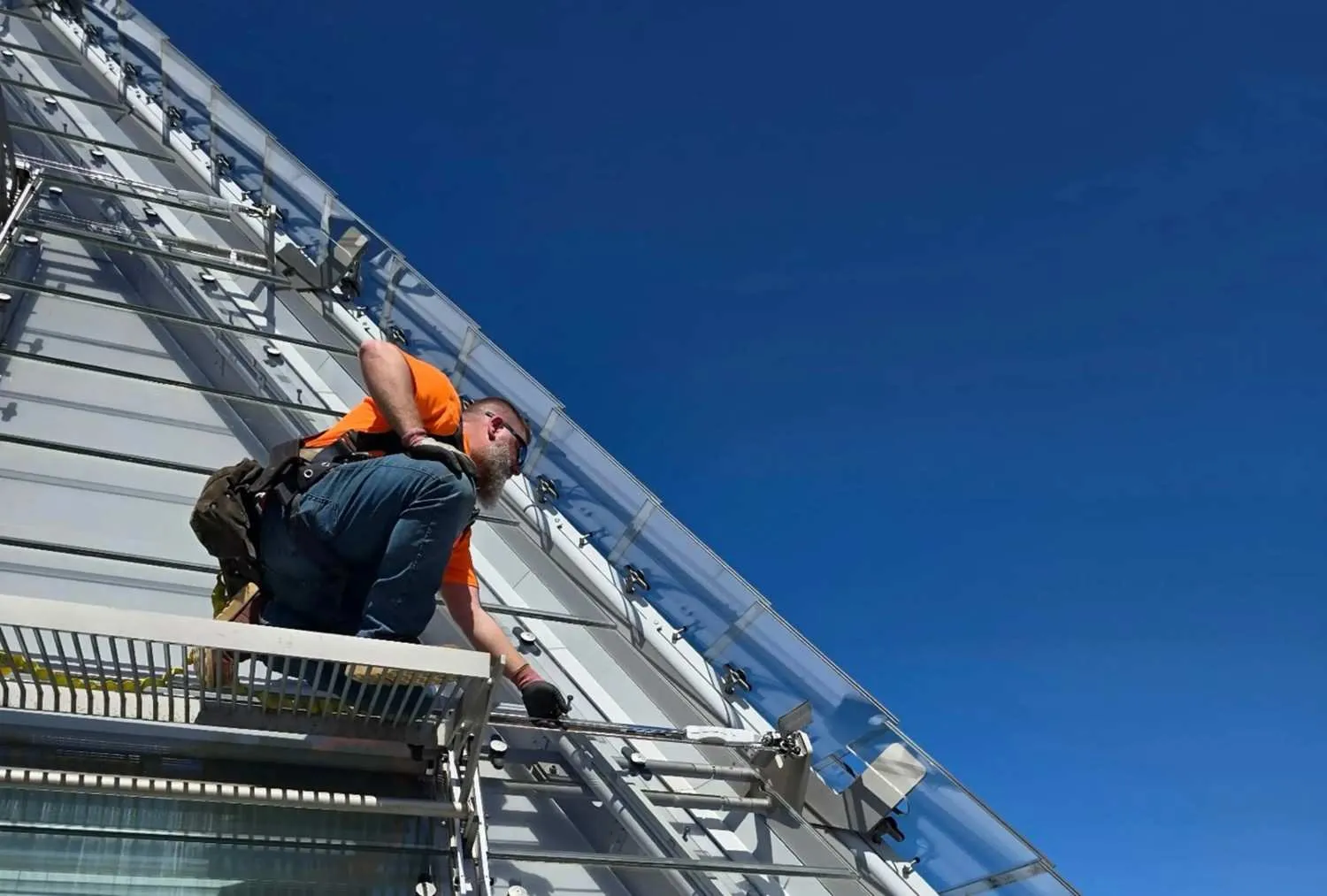
Using high-access equipment, technicians gain close access to upper façades, recessed sections, and structural transitions where winter damage often develops first. This detailed inspection process identifies early-stage deterioration before it becomes visible from street level.
Close-range inspections make it easier to detect:
- Hairline masonry cracks
- Failed sealants
- Moisture intrusion
- Surface movement
- Deteriorating expansion joints
- Areas requiring waterproofing attention
Finding these issues early allows repairs to be completed before they affect larger sections of the building envelope.
Faster Execution During Peak Spring Maintenance Season
Spring is the busiest period for exterior maintenance across Massachusetts. Building owners often schedule façade inspections, masonry repairs, waterproofing, window cleaning, pressure washing, and other seasonal services during a relatively short timeframe.
Service providers that depend on rented equipment frequently encounter scheduling delays because boom lifts and spider lifts are in high demand.
Above The Rest Building Services eliminates these challenges by operating a fully owned fleet of high-access equipment, including:
- 45ft–135ft JLG boom lifts
- 80ft & 100ft JLG spider lifts
- Two scissor lifts for lower elevations
Because this equipment is owned and maintained in-house, projects can begin without waiting for rental availability. Immediate mobilization supports flexible scheduling, efficient project planning, and steady progress throughout the busy spring maintenance season.
Precision Masonry Repair and Waterproofing
Freeze-thaw cycles place significant stress on masonry surfaces, especially around upper elevations, expansion joints, parapets, and structural edges.
High-access equipment allows technicians to position themselves precisely where repairs are needed, making it possible to complete:
- Masonry repair
- Sealant replacement
- Waterproofing applications
- Joint restoration
- Preventive exterior repairs
Addressing these vulnerabilities at their source reduces moisture intrusion and protects surrounding building materials from continued deterioration.
Complete Exterior Cleaning and Restoration
Winter leaves behind more than visible dirt. Salt residue, airborne pollutants, moisture, and environmental contaminants accumulate across upper elevations, ledges, and other hard-to-reach surfaces. If these materials remain in place, they can accelerate surface deterioration and affect the appearance of the building.
Using high-access equipment, maintenance teams can complete comprehensive exterior cleaning across the entire building envelope rather than only the areas accessible from the ground.
Spring cleaning services commonly include:
- Window cleaning
- Pressure washing
- Façade cleaning
- Removal of salt and contaminant buildup
- Cleaning around architectural details and ledges
A complete cleaning also prepares exterior surfaces for inspections, masonry repair, and waterproofing by exposing areas that may have been hidden beneath accumulated debris.
Safe Access to Exterior Building Systems
Many critical building components are located above ground level and require specialized access for regular maintenance.
These include:
- Dryer vents
- Façade joints
- Exterior mechanical systems
- Roofline transitions
- Elevated architectural features
High-access equipment allows technicians to safely access these systems without causing unnecessary disruption to tenants, employees, or daily building operations. Proper access also supports more efficient inspections and maintenance while reducing the challenges associated with working at height.
The Real Advantage: Equipment Readiness
Many spring maintenance projects experience delays because access equipment must be rented during one of the busiest construction and maintenance seasons of the year.
Limited equipment availability can postpone inspections and repairs, allowing minor problems to worsen while waiting for equipment to become available.
Owning a diverse fleet of high-access equipment changes that process entirely.
Instead of relying on third-party rental schedules, maintenance teams can respond quickly when issues are identified, adjust project timelines as conditions change, and complete work without unnecessary interruptions.
For property owners and facility managers, equipment readiness provides more than operational efficiency. It reduces project uncertainty and allows maintenance to be completed when buildings need attention most.
Safety Standards Behind High-Access Maintenance
Working at height requires experienced personnel, specialized equipment, and well-established safety procedures.
Professional high-access maintenance includes:
- SPRAT and IRATA certified rope access technicians
- Certified boom lift and aerial platform operators
- Roof anchor inspections before project start
- Site-specific safety planning and reporting
- Full PPE compliance
These safety standards support consistent project execution while protecting technicians, occupants, and the surrounding property throughout every phase of the work.
High-Access Maintenance in New England
Commercial buildings throughout Massachusetts, Boston, Cambridge, and New England often present unique access challenges. Dense urban environments, limited staging areas, narrow streets, and high pedestrian traffic can make traditional access methods difficult.
Solutions such as rope access systems, JLG boom lifts, and JLG spider lifts allow maintenance teams to work safely within restricted spaces while minimizing disruption to building occupants and nearby businesses.
This flexibility makes high-access equipment an essential resource for maintaining tall commercial buildings across the region.
Where High-Access Equipment Fits in Your Spring Maintenance Plan
Spring maintenance is most effective when every section of the building can be inspected and serviced.
High-access equipment supports a wide range of exterior services, including:
- Façade inspections
- Window cleaning
- Masonry repair
- Waterproofing
- Pressure washing
- Dryer vent cleaning
Without proper access, these services are often limited to visible areas, leaving elevated sections vulnerable to continued deterioration. Complete access allows maintenance teams to identify developing issues early and perform thorough repairs before they become larger structural concerns.
Frequently Asked Questions
1. Why is high-access equipment important during spring maintenance?
Winter damage frequently develops in elevated and hard-to-reach areas. High-access equipment allows technicians to inspect, clean, and repair these locations before deterioration spreads.
2. Can tall commercial buildings be maintained without high-access equipment?
Only partially. Ground-level inspections cannot provide complete visibility of upper façades, structural joints, and recessed sections. Full exterior maintenance requires safe access to the entire building envelope.
3. Is rope access safe for commercial building maintenance?
Yes. When performed by SPRAT and IRATA certified rope access technicians, rope access is a safe, efficient, and highly effective solution for inspecting and maintaining complex commercial buildings.
Why Above The Rest Building Services?
Maintaining tall commercial buildings requires more than specialized equipment. It requires experienced professionals, proper planning, and the ability to respond without delay.
Above The Rest Building Services performs exterior maintenance across Massachusetts using a fully owned fleet of 45ft–135ft JLG boom lifts, 80ft & 100ft JLG spider lifts, rope access systems, and certified technicians. Combined with structured safety procedures and coordinated project management, this approach allows projects to move forward without delays caused by equipment availability.
Prepare Before the Spring Season Peaks
Spring demand for exterior maintenance increases quickly across Massachusetts and New England. Buildings scheduled early benefit from greater flexibility, timely inspections, and proactive repairs before seasonal workloads become more demanding.
High-access equipment makes it possible to inspect, clean, restore, and maintain every part of a tall commercial building before hidden damage develops into larger maintenance challenges.
If your property has completed another New England winter, now is the right time to evaluate the areas that cannot be seen from the ground.
Above The Rest Building Services provides exterior maintenance across Massachusetts using owned high-access equipment, certified rope access technicians, and industry-leading safety standards. Scheduling a spring building assessment early allows hidden issues to be identified, maintenance to be completed efficiently, and your commercial property to remain protected throughout the year.


























Sign in to leave a comment.