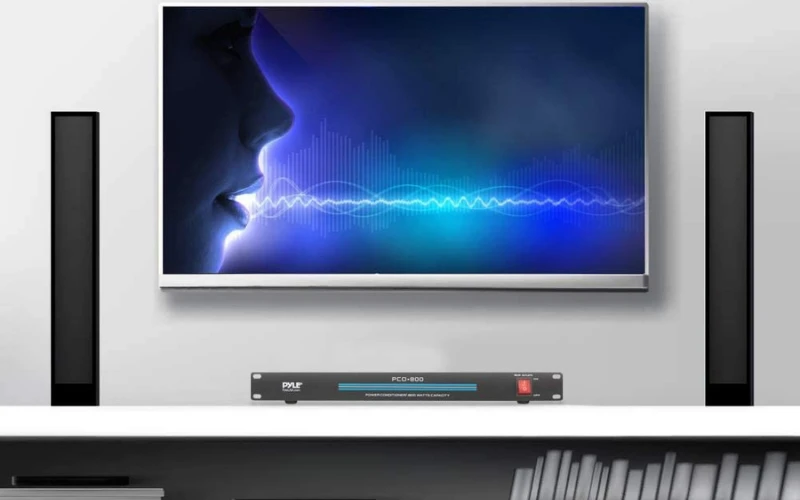

This is a challenging query. How is it possible that someone would not suggest a particular item that safeguards other electrical devices? Let's look at the typical cost of a home theatre power manager before providing an answer. Popular brands such as Panamax and Furman have a wide range of Power Conditioners that start at $200 and go up to $5,000 or more.
Protect from Dirty Electricity
Returning to the original query, the majority of users often do not require a power manager. You can avoid using a power conditioner if your home has a high-quality electrical installation with all high-quality parts and appliances.
However, if you reside in a location that frequently experiences power surges, power fluctuations, or lightning strikes, a good home theatre power manager is highly advised. The power conditioner then ceases to be a luxury and turns into a basic necessity.
Surge Protector vs Power Conditioner
Can Surge Protector replace Power Manager or Conditioner effectively? As the name implies, a surge protector guards against abrupt voltage surges, which are typically caused by lightning strikes, on equipment. It does not guard against other forms of "dirty" electricity, such as routine overvoltages, under voltages, EMI noise, etc.
All of the aforementioned abnormalities can be protected against with a power conditioner. The main distinction between a Power Manager and a Surge Protector is this.
Effect on Speakers
If you experience noise, hum, or interference coming from the speakers in your home theatre, you might also want to think about adding a home theatre power manager. Electronics used in the audio are exceedingly delicate. Any low-level noise that passes through the power lines can be detected by the amplifier, which can then emit it through speakers for you to hear as interference.
Power management can in these circumstances filter out all the background noise and deliver pure power to speakers and amplifiers. However, there is a drawback to this strategy. Power conditioners occasionally filter too much noise, which lowers speaker performance. Confused? After installing power managers, many users noticed that the dynamic range of their speakers had decreased.
What about Computers and other Electronics?
It's likely that you already utilize a multi-protection UPS with your computer. Additionally, the majority of contemporary computers' power supplies have advanced voltage control, noise reduction, and power filtering functions.
As a result, computers typically don't require a power conditioner.
The best home theatre power manager helps protect your expensive pieces of equipment and make them last longer than usual. If you are worried that a power outage might cause harm to your Home theater or other equipment then having a power manager is the best option.
Conclusion
For many people, creating a dedicated home theatre is a goal. To set up the room with a top-notch sound system, projector, AV receiver, Blu-ray and streaming players, TV, and several other pieces of equipment, they invest a lot of money, time, and effort. With such a setup, you may relax with friends and family while watching movies, playing sports, or playing video games.
Up until lightning strikes near your home or when your electricity experiences frequent voltage fluctuations, everything is fine. This is definitely not a good thing for the electronics in your home theatre room. A unique tool called a "Home Theatre Power Manager" transforms "dirty" electricity into quiet, clean power. Learn more






















Sign in to leave a comment.