In defense operations, readiness is everything. Whether it’s an aircraft preparing for deployment, a naval vessel operating far from shore, or ground units in remote environments, equipment needs to be functional, reliable, and available at all times.
But in reality, maintaining that level of readiness isn’t easy. Delays in spare parts, complex supply chains, and aging equipment often slow things down. This is where 3D printing, also known as additive manufacturing, is making a real difference.
The Problem with Traditional Systems
For decades, defense manufacturing has relied on centralized production and long supply chains. While this approach ensures consistency, it often struggles with speed and flexibility.
A single missing component can:
- Ground an aircraft
- Delay a repair at sea
- Impact operations in remote locations
And sourcing that part can take days - or even weeks.
A Shift Toward On-Demand Manufacturing
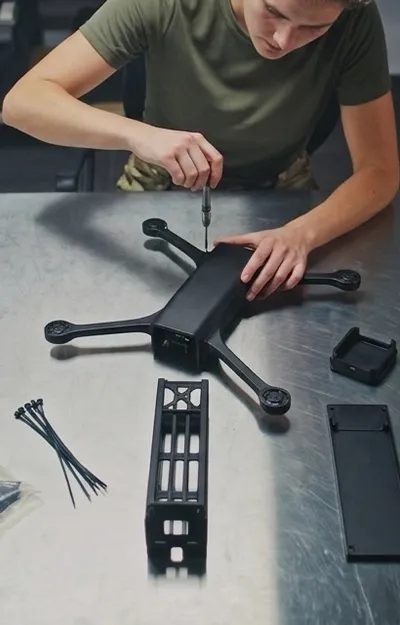
3D printing changes the equation completely. Instead of waiting for parts to arrive, defense teams can now produce components when and where they’re needed.
This shift toward on-demand manufacturing allows:
- Faster repairs
- Reduced dependency on global supply chains
- Better response in time-sensitive situations
It’s not just about convenience - it’s about keeping operations running without interruption.
Impact Across Military Branches
Air Force: Lighter Parts, Better Performance
In aerospace applications, weight directly affects performance. 3D printing enables the creation of lightweight, optimized components without compromising strength.
From brackets to airframe structures, parts can be designed to use material only where necessary. The result? Improved fuel efficiency, better performance, and faster production cycles.
Navy: Manufacturing at Sea
For naval operations, distance is a major challenge. Ships operating far from base cannot afford long delays waiting for replacement parts.
With onboard 3D printing capabilities:
- Critical components can be produced at sea
- Downtime is significantly reduced
- Missions continue without disruption
This level of independence is transforming how naval logistics work.
Army & Marine Corps: Readiness in the Field
Ground forces often operate in environments where access to supply chains is limited. Equipment failure in such conditions can be a serious setback.
3D printing allows teams to:
- Produce parts directly in the field
- Repair equipment faster
- Adapt quickly to changing needs
This flexibility enhances mobility and ensures that operations stay on track even in demanding situations.
Supporting Legacy Systems
Many defense systems remain in service for decades. Over time, sourcing spare parts for these systems becomes increasingly difficult.
Additive manufacturing helps bridge that gap by:
- Recreating obsolete components
- Producing small batches economically
- Eliminating the need for expensive tooling
This ensures that older systems remain operational without major redesign efforts.
Strengthening Supply Chain Resilience
Global supply chains are vulnerable to disruptions—whether due to geopolitical issues, transportation delays, or unexpected demand.
By enabling decentralized production, 3D printing:
- Reduces reliance on single suppliers
- Allows parts to be manufactured closer to the point of use
- Improves overall supply chain resilience
Organizations like Vexma are supporting this transition by delivering precision 3D printed components tailored for demanding engineering and defense applications.
Beyond Speed: Smarter Design and Efficiency
Another advantage of 3D printing is design freedom. Engineers are no longer restricted by traditional manufacturing limitations.
This allows for:
- Part consolidation (fewer components, less assembly)
- Optimized geometries for strength and weight
- Improved overall system efficiency
These improvements may seem small individually, but together they significantly enhance operational performance.
The Road Ahead
3D printing is no longer just a prototyping tool - it’s becoming an essential part of defense manufacturing strategies worldwide.
As materials, processes, and certifications continue to evolve, its role will only expand. Companies like Vexma are already working at the intersection of design and manufacturing to support this shift toward faster, more adaptive production.
Conclusion
Operational readiness depends on speed, reliability, and adaptability. By enabling on-demand production, reducing downtime, and strengthening supply chains, 3D printing is helping defense forces meet these demands more effectively.
Across air, land, and sea, additive manufacturing is not just improving how parts are made—it’s changing how missions are supported.























Sign in to leave a comment.