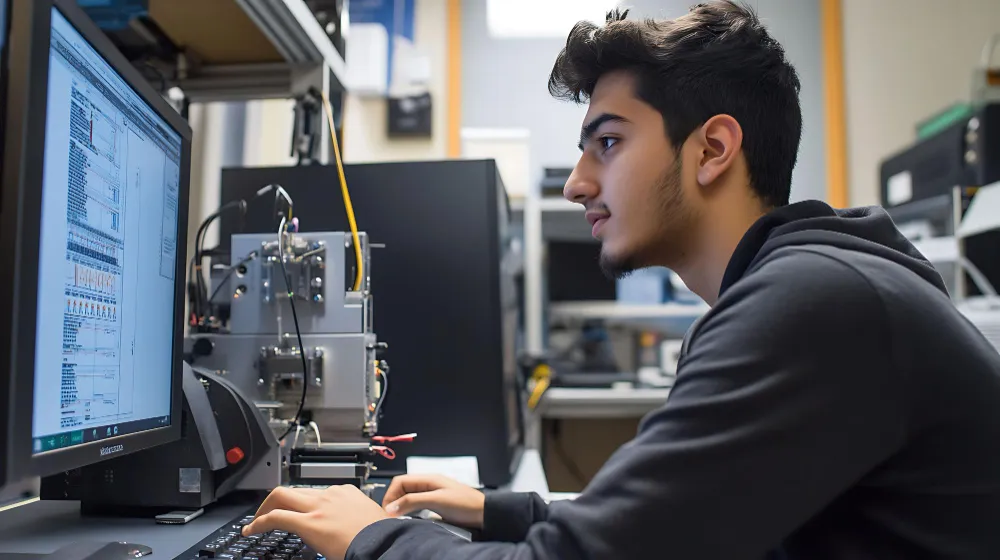

Canada's manufacturing sector is growing fast. And skilled workers are in high demand.
If you're thinking about a trade career, CNC machining is one of the smartest paths you can take right now. It blends technology, problem-solving, and hands-on work in a way that few other careers do.
Here's how the journey from student to professional looks in Canada.
What Does a CNC Program/Machinist’s Job Involve?
A lot of people don't know what CNC machinists do day to day. In simple terms, they operate and program computer-controlled machines that cut, shape, and drill metal or other materials with extreme precision.
But at the higher end of the field, becoming a skilled CNC computer programmer means you're writing the code that tells machines exactly what to do. You're not just operating equipment. You're controlling it.
This distinction matters because programmers earn more, hold more responsibility, and are harder to replace.
Where Do You Start as a Student?
Most people enter this field through one of three routes:
- High school co-op or trades programs that introduce machining basics
- College diploma programs in machining, manufacturing technology, or precision engineering
- Apprenticeship programs that combine paid on-the-job training with technical instruction
None of these routes is better than another. It depends on how you learn best and how quickly you want to start earning.
Community colleges across Canada offer strong programs. Schools in Ontario, Alberta, and British Columbia have particularly well-developed manufacturing tracks. Many students graduate with job offers already lined up.
The Role of CNC Classes in Shaping Your Skills
Classroom learning and real-world machining are two different things. That's why hands-on training matters so much in this field.
Enrolling in structured CNC classes that include live machine operation, G-code programming, and CAD/CAM software training gives students a practical edge. Employers notice the difference between someone who studied theory and someone who has actually run a machine.
Look for programs that cover:
- G-code and M-code fundamentals
- CAD/CAM software like Mastercam or Fusion 360
- Blueprint reading and geometric tolerancing
- Quality control and measurement tools
- Machine setup and tooling
The more time you spend on actual equipment during training, the faster you'll adapt on the job.
What Does the Career Path Look Like?
The typical progression in CNC machining goes like this:
- Machine Operator - You run pre-programmed machines, load materials, and check finished parts.
- CNC Machinist - You set up machines, make adjustments, and start handling some basic programming.
- CNC Programmer - You write full programs, optimize cutting paths, and work directly from engineering drawings.
- Senior Programmer or Manufacturing Engineer - You lead projects, train junior staff, and work closely with product development teams.
This progression can happen in as little as four to six years for someone focused and proactive. Some people move faster depending on the employer and the industry.
Why Canada Is a Strong Market for CNC Career
Canadian manufacturing is not shrinking. Aerospace, automotive, medical devices, and energy sectors all rely on precision machining. Companies like Bombardier, Magna International, and dozens of mid-size manufacturers are actively hiring.
There's also a retirement wave happening. A large portion of experienced machinists in Canada are nearing retirement age. That's creating genuine openings at every level of the field.
For anyone entering the trades right now, this is a buyer's market for your skills.
What about the pay? This is where things get interesting. CNC machining consistently ranks among the best paying skilled trade jobs in Canada, especially at the programmer level. Entry-level operators typically start around $20 to $25 per hour. Experienced programmers in high-demand sectors can earn $35 to $55 per hour or more.
Some senior programmers in aerospace or medical manufacturing report total compensation well above $80,000 annually. And that number keeps climbing with experience and specialization.
This career rewards people who take initiative. The students who do best are the ones who ask questions on the shop floor, practice programming outside of class, and treat every machine as a learning opportunity.
Canada needs skilled machinists right now. The path from student to professional is clear, the pay is solid, and the long-term outlook is strong.
If you're willing to put in the work, the door is wide open.































Sign in to leave a comment.