
You’re Tracking Everything—Except the One Thing That Matters Most
Parents today track everything—steps, calories, sleep. But when it comes to their child’s growth and health, most rely on memory or occasional doctor visits. That’s risky.
According to the World Health Organization (WHO), early childhood development strongly impacts long-term health, learning, and behavior. Missing early signs can delay support when it matters most.
This is where a Child Health and Growth Tracker App comes in. Not as a fancy tool—but as something practical that helps you stay aware, consistent, and a little less stressed.
What Is a Child Health and Growth Tracker App
Let’s not overcomplicate it.
A child health and growth tracker app helps you:
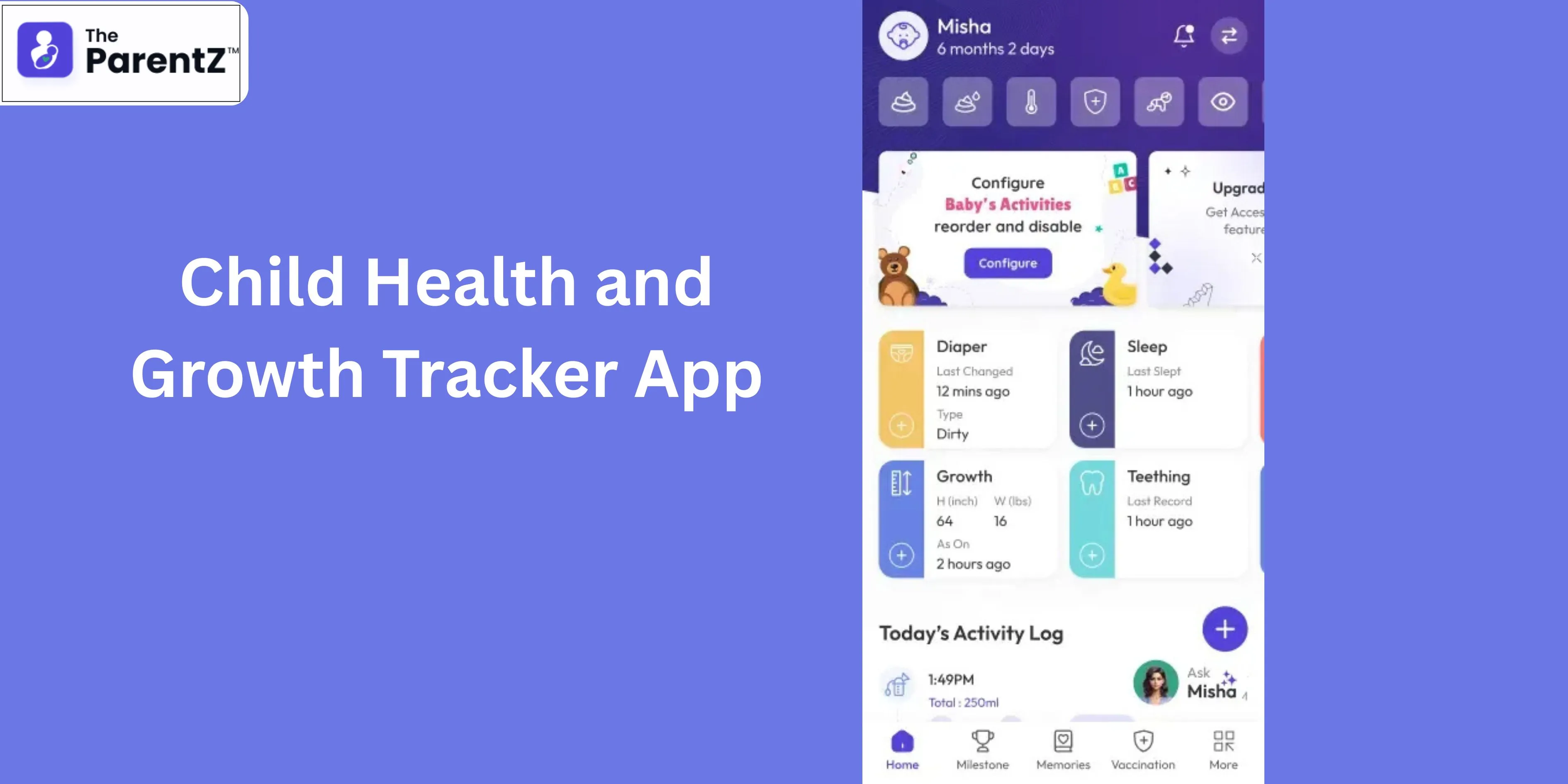
- Track height, weight, and growth trends
- Monitor milestones
- Record health data like sleep, nutrition, and vaccinations
It gives you a clear picture of how your child is growing and developing over time—without relying on guesswork.
The Real Problem: Parents Don’t Lack Care—They Lack Clarity
Most parents are doing their best. The problem isn’t effort.
It’s confusion.
Here’s what usually happens:
- You track things mentally (which doesn’t work long-term)
- You forget patterns between doctor visits
- You compare your child with others
- You panic over small changes
And in India, it gets even more layered:
- Advice from elders
- Google searches
- Doctor guidance
Too many inputs, not enough clarity.
My honest take?
Parents don’t need more information. They need better organization.
How a Child Health and Growth Tracker App Supports Your Child’s Development
Let’s break this into real, practical benefits.
1. Do you actually remember your child’s growth patterns?
Most parents don’t.
You might remember:
- “He gained weight last month.”
But not:
- Exact trends
- Changes over time
A tracker shows growth like a timeline—not random memories.
2. Can it help you spot problems early?
Yes—and this is important.
If something is off:
- Slow weight gain
- Delayed milestones
You’ll notice patterns sooner.
Early awareness = early action.
3. Does it make doctor visits more useful?
Absolutely.
Instead of vague answers, you can show:
- Growth charts
- Feeding patterns
- Sleep data
Doctors can give better advice with better data.
4. Can it reduce unnecessary panic?
This one matters a lot.
Without tracking:
- Small changes feel like big problems
With tracking:
- You see trends
- You understand what’s normal
Less guessing, less stress.
5. Does it help track developmental milestones?
Yes.
Milestones like:
- Sitting
- Crawling
- Walking
A tracker helps you:
- Record them
- Compare with expected timelines
Not to panic—but to stay aware.
6. Can it improve feeding and nutrition tracking?
Yes, indirectly.
When you track:
- Growth
- Weight
You understand:
If feeding habits are working or not.
7. Does it help you stay consistent?
Consistency is hard with a baby.
A tracker creates a routine:
- Regular updates
- Regular checks
That alone improves awareness.
8. Can it replace multiple apps?
Yes, and that’s underrated.
Instead of:
- One app for growth
- One for sleep
- One for feeding
You use one platform.
Less clutter, more clarity.
9. Does it help both parents stay informed?
In many families:
- One parent tracks everything
- The other feels out of the loop
A shared tracker solves this.
Both stay updated.
10. Can it build long-term health awareness?
Yes.
You start noticing:
- Patterns
- Changes
- Habits
That awareness stays useful beyond baby years.
11. Does it make parenting feel more manageable?
This is the real benefit.
Parenting doesn’t become easy.
But it becomes:
More structured
Less chaotic
And that matters.
Comparison Table: With vs Without a Tracker App
| Situation | Without Tracker | With Tracker |
|---|---|---|
| Growth tracking | Guesswork | Clear trends |
| Memory | Unreliable | Recorded data |
| Doctor visits | Vague | Accurate |
| Stress | High | Lower |
| Awareness | Limited | Better |
It’s not perfect—but it’s practical.
Simple Example
Think of your child’s development like a plant
Without tracking:
- You water randomly
- You hope it grows
With tracking:
- You monitor growth
- You adjust care
Same idea. Just more important.
Step-by-Step: How Parents Actually Use It
No complicated system.
Step 1: Add basic details
Takes a few minutes.
Step 2: Log growth data
Weekly or bi-weekly is enough.
Step 3: Track milestones
Note major changes.
Step 4: Review trends
Don’t check daily.
Step 5: Adjust habits
Based on patterns.
Mistakes Parents Still Make
Even with apps, these happen:
- Overtracking every small detail
- Compared to other kids
- Ignoring the doctor's advice
- Stopping after a few days
The tool helps—but mindset matters more.
Practical Tips for Parents
- Follow the WHO growth charts
- Don’t compare with neighbors or relatives
- Focus on overall health, not just weight
- Track consistently but not obsessively
- Use the app as a guide, not a rulebook
FAQs
Is a child health tracker really necessary?
Not necessary—but very helpful.
How often should I update it?
Once every 1–2 weeks is enough.
Can it replace doctor visits?
No.
It supports doctors—it doesn’t replace them.
What if my child’s growth is slow?
Check trends first. Then consult a pediatrician.
Final Thoughts: My Honest Opinion
Here’s what I truly think:
Most parents don’t need more advice—they need better visibility.
That’s what a tracker gives you.
The Child Health and Growth Tracker App from The Parentz isn’t a magic solution. It won’t fix everything.
But it does something very important:
It helps you see clearly what’s happening with your child.
And when you see clearly, you worry less and act better.
Key Takeaways
- Tracking gives clarity, not perfection
- Patterns matter more than single data points
- Consistency is more important than frequency
- Apps support decisions—they don’t replace judgment
- Awareness leads to better parenting decisions




























Sign in to leave a comment.