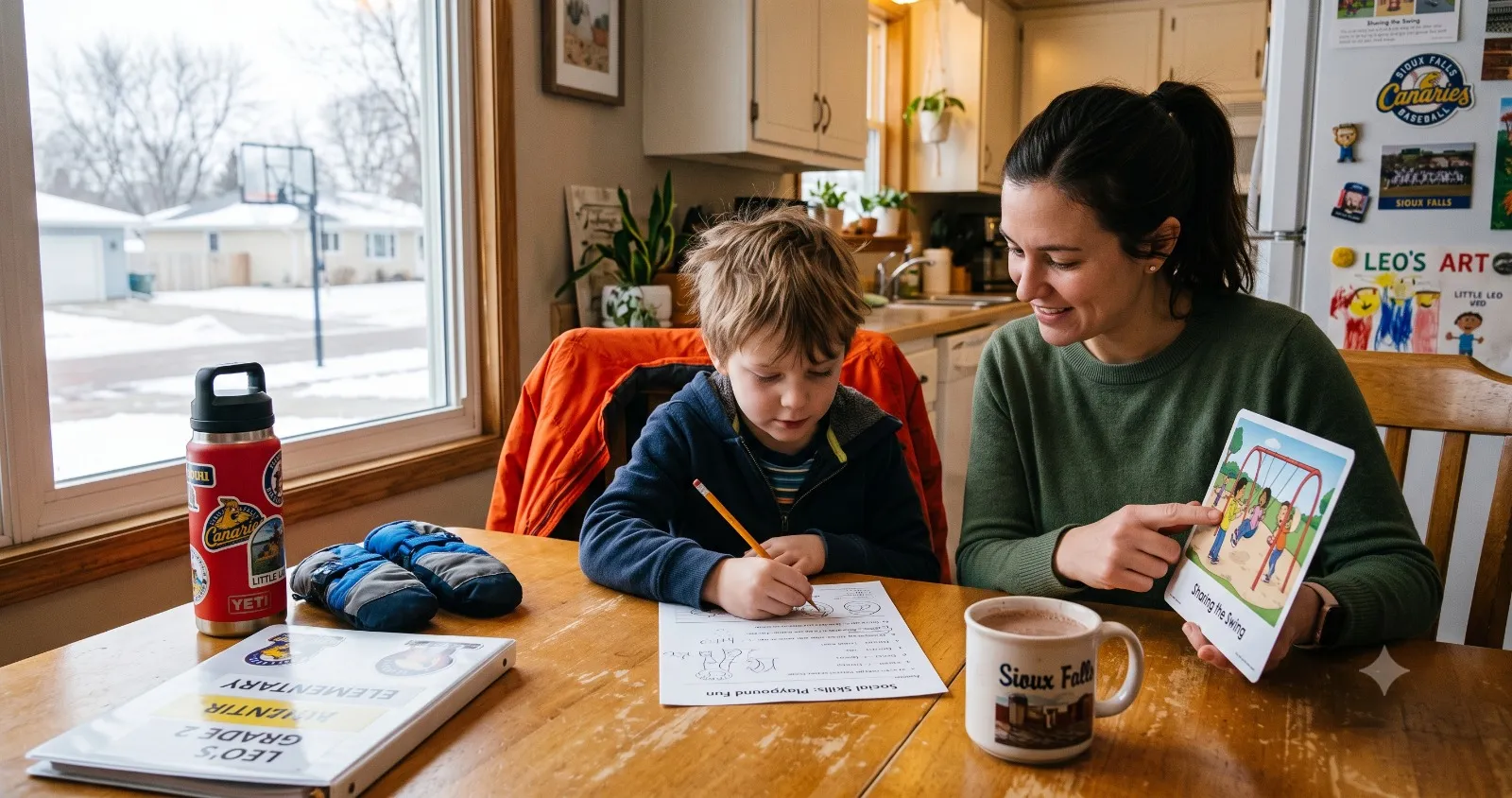

School is where many autism-related challenges become most visible. A child who manages reasonably well at home may struggle significantly in a classroom, where the demands for sustained attention, flexible behavior, and social navigation stack up fast. ABA therapy in Sioux Falls is often most valuable precisely because it targets those school-relevant skills directly, not just in session but in coordination with what educators are working on.
School-age children in ABA programs typically have goals that look different from early intervention work. Rather than foundational communication and play skills, the focus shifts toward things like transitioning between activities, tolerating instructional demands, following multi-step directions, and participating in group settings. Social skills become a bigger part of the picture, including reading social cues, initiating with peers, and managing conflict without escalating. These are the skills that determine how much a child can access their educational environment.
One of the most important things a good ABA provider does for school-age kids is communicate directly with their school team. South Dakota schools are required under IDEA to provide a free appropriate public education, and a child with autism may have an Individualized Education Program with behavior goals already written into it. When an ABA provider and an IEP team coordinate, they can align their strategies, avoid contradictory approaches, and share data that helps both sides understand what is working.
How ABA and School Services Work Together in Sioux Falls
The Sioux Falls School District has a dedicated special education department that serves students with autism across a range of support models, from inclusion with resource room support to more intensive self-contained settings. ABA therapists who understand how that system operates can help families advocate for appropriate placement and services. They can also help prepare children for the specific demands of their school environment by running trials that mimic classroom structure.
Collaboration is not always automatic. Families sometimes have to push for it. Asking the ABA clinic directly whether they have a protocol for school coordination is worth doing. Good providers will have a release of information process that allows clinicians to share data and speak with school psychologists or special education teachers. Some ABA providers in Sioux Falls will conduct observations in the school setting, which gives them much richer information than clinic-only data.
Families exploring ABA services for school-age children in Sioux Falls should look for a provider with genuine school coordination experience. Learning about autism aba cedar city and the Sioux Falls services offered by Possibilities ABA can help families understand what an integrated, school-supportive approach looks like in practice.
What Progress Looks Like for School-Age Kids
Progress for school-age children in ABA is less about dramatic developmental leaps and more about gradual accumulation of functional skills. A child who moves from needing a one-on-one aide for every transition to handling predictable transitions independently has made meaningful progress, even if it took months. A child who can participate in a group activity for fifteen minutes instead of two is closing a gap that matters for their daily life.
Data collection in ABA programs is not just a formality. The graphs and session notes are how therapists determine whether a strategy is working and when to change course. Families who ask to see their child's data regularly and who understand how to read it are better positioned to participate in treatment decisions. That partnership between family and clinician is one of the most reliable predictors of good outcomes in school-age ABA work.
































Sign in to leave a comment.