Remote work has shifted from a temporary solution to a permanent reality for many businesses. Digital nomads have also grown in numbers, blending work with travel. Yet while the freedom is attractive, the pressure of working across time zones, managing virtual communication, and maintaining boundaries often creates stress.
This is where AI stress reduction for remote teams enters the conversation. Businesses are beginning to use smart tools not just for productivity but for mental health support. For individuals who struggle with social anxiety in virtual meetings, even AI for social anxiety treatment is becoming a practical resource. When technology is applied with a people-first mindset, it creates healthier remote cultures and helps nomads sustain their lifestyle without burning out.
The Hidden Stress of Remote Work
On the surface, remote work looks flexible and liberating. But behind the scenes, it can produce:
- Isolation – working without in-person contact affects morale.
- Communication overload – constant pings and video calls leave little recovery time.
- Time zone fatigue – adjusting schedules for global colleagues disrupts personal routines.
- Blurring boundaries – home becomes the office, erasing clear separation.
Digital nomads face these challenges too, layered with additional concerns: unstable internet, inconsistent workspaces, and constant transitions between countries. Without support, these stressors can build up quickly.
Why AI Matters in Stress Reduction
Technology alone won’t solve the mental health crisis in remote work, but AI offers practical ways to reduce pressure points. AI stress reduction for remote teams works by analyzing patterns, recognizing risks, and suggesting timely interventions.
Here’s what that looks like in action:
- Monitoring workload balance – spotting when someone is taking on too many tasks.
- Detecting signs of burnout – using data like response time, working hours, and message tone.
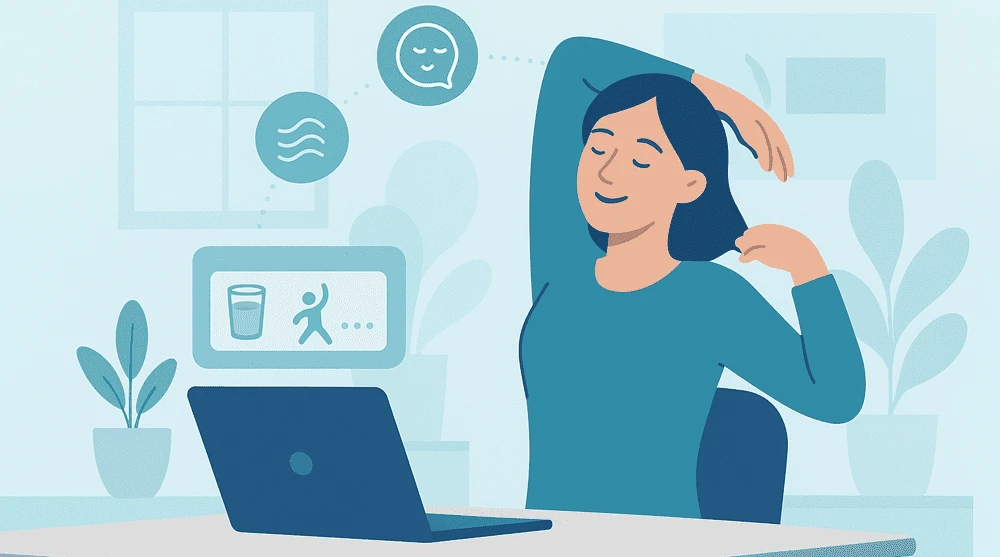
- Promoting micro-breaks – nudging workers to pause, stretch, or disconnect briefly.
- Supporting emotional resilience – offering coaching modules that train coping techniques.
This is not surveillance, but a support system that brings clarity where human managers cannot always keep track.
Examples of AI Stress Support
- AI-driven scheduling tools
These tools recognize time zone overlaps and suggest fairer meeting times. For a digital nomad in Bali collaborating with a team in New York, AI ensures the meeting doesn’t always fall at 2 a.m.
- Virtual wellness assistants
Platforms integrate AI for wellbeing into the daily flow, offering guided meditations, journaling prompts, or reminders to practice breathing before a big video cal
- Smart sentiment analysis
AI can analyze chat messages and email tone to flag rising tension within a team. A manager gets insights that allow them to address friction before it escalates.
A Real-World Illustration
Consider a SaaS startup with 50 employees across five countries. Over time, leaders noticed higher turnover among remote staff due to exhaustion. After adopting an AI-driven wellness platform:
- The system flagged when employees worked late consistently.
- It suggested breaks during periods of peak workload.
- Managers received anonymized insights about team stress levels.
Within six months, turnover dropped by 18 percent, and employee surveys showed higher satisfaction with work-life balance. This demonstrates how AI stress reduction for remote teams directly impacts business outcomes.
Benefits Beyond Stress
The advantages of AI in remote wellbeing extend beyond immediate relief:
- Better productivity – a calm workforce performs consistently.
- Reduced healthcare costs – less burnout means fewer medical claims.
- Improved retention – digital nomads and remote workers stay longer with supportive employers.
- Stronger company culture – a sense of care improves loyalty and trust.
The Role of Business Leaders
For executives and team managers, adopting AI isn’t just about efficiency, it’s about responsibility. Business leaders should:
- Evaluate platforms that focus on wellbeing, not just productivity.
- Set boundaries like “no-meeting hours” supported by AI scheduling.
- Encourage adoption by normalizing the use of wellness nudges.
- Measure impact with feedback loops to ensure tools are effective.
In remote-first organizations, leadership sets the tone. When leaders openly use and promote these tools, employees feel safer engaging with them too.
Balancing AI and Human Connection
AI can provide reminders, detect trends, and even coach employees, but it should never replace genuine human interaction. Weekly check-ins, team retreats, or even casual virtual coffee chats remain essential. The future of AI stress reduction for remote teams lies in partnership, not replacement — AI amplifies what managers and peers are already doing.
Stats That Tell the Story
- A recent survey found that 69 percent of remote employees report higher stress compared to on-site staff due to blurred boundaries.
- Companies that integrated AI-driven wellbeing platforms saw up to 20 percent improvement in employee engagement over a year.
- Among digital nomads, nearly 40 percent cite mental health as a top challenge, underscoring the need for scalable support solutions.
Final Thoughts
Remote work and digital nomad lifestyles are here to stay. Yet the stress that comes with endless connectivity and scattered schedules cannot be ignored. By integrating AI stress reduction for remote teams, companies can support employees in maintaining balance and resilience.
From AI for social anxiety treatment in virtual settings to holistic platforms built on AI for wellbeing, technology is helping transform how we care for people outside traditional office walls. For business leaders, the takeaway is simple: when you invest in the wellbeing of your remote teams, you are investing in the future stability and success of your business.

























Sign in to leave a comment.