

AI-powered chatbots are transforming processes like recruitment, employee management, and internal support. They have become an essential part of the HR department. This article examines how HR chatbots work, their benefits, real-world use cases, and how to develop a chatbot for your organisation.
HR teams are expected to hire faster, improve employee engagement, and ensure that everyone follows the company rules. But they are busy handling administrative tasks. Therefore, they are often unable to focus on important things.
AI chatbots can solve these common HR problems. They answer common questions and maintain internal workflows.
What Are AI Chatbots in Human Resources?
An AI-powered HR chatbot is a virtual assistant designed to automate and manage HR operations. These bots use the technologies of natural language processing (NLP) and machine learning. These technologies help a bot to understand the intent of what a user is asking, and then it gives the answer accordingly.
Unlike traditional rule-based chatbots that rely on preset scripts, AI chatbots can:
- Understand conversational language
- Learn from interactions
- Integrate with popular HR systems
- Provide personalised responses
In HR environments, these chatbots typically operate across:
- Recruitment portals
- Employee self-service platforms
- Internal communication systems
- Performance management tools
Modern HR chatbots also integrate with broader generative AI tools. Chatbots can retrieve the content, and based on that, they can give replies. But generative AI ensures that chatbots can create content. For example, instead of using a fixed job description template to post every job, you can develop a chatbot that can generate a customised role description.
Generative AI also helps in onboarding. These tools can automatically draft personalized welcome messages, training schedules, and a task list for the first week according to the role of the recruit. If an employee joins the marketing team, the bot can generate helpful resources for the person to understand the company processes.
Performance management is another powerful application. Instead of HR manually summarizing quarterly reviews, a chatbot can:
- Consolidate manager feedback
- Highlight recurring strengths
- Identify skill gaps
- Draft balanced performance summaries
- Suggest development goals
This significantly reduces administrative time while maintaining consistency.
Generative AI also simplifies policy communication. Employees often struggle to interpret lengthy HR documents. A chatbot can convert complex documents into simple and understandable language.
This way, AI is transforming the way the HR department operates.
Key Advantages of Integrating AI Into HR Workflows
The benefits of using AI tools in HR management are as follows:
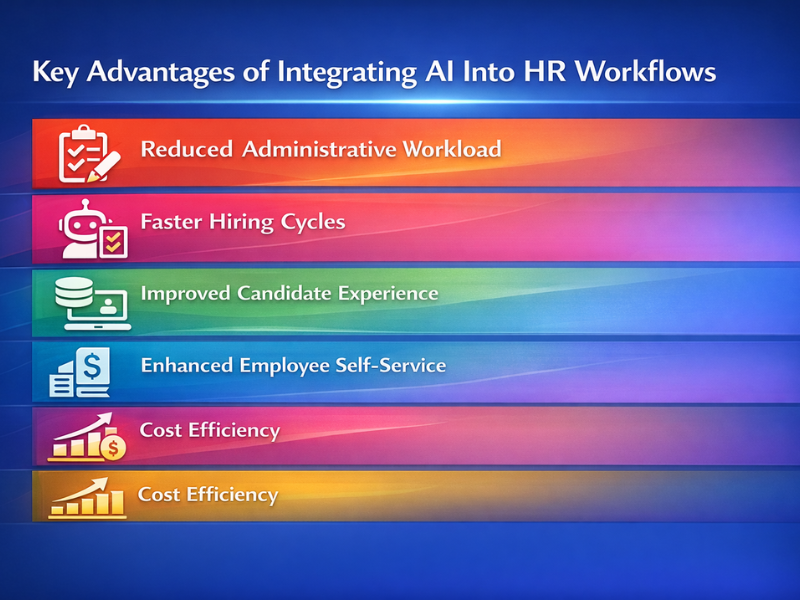
Reduced Administrative Workload
AI automates repetitive tasks, such as answering FAQs, managing leave requests, and updating employee records. This saves HR’s time, so that they can focus on other valuable tasks.
Faster Hiring Cycles
Chatbots can screen candidates, schedule interviews, and send follow-up messages instantly. This reduces the time duration that is usually taken to hire talent.
Improved Candidate Experience
Applicants receive real-time responses and status updates. This reduces the uncertainty that a candidate may experience during the hiring process.
Enhanced Employee Self-Service
Employees can understand policies, get payslip details, and any other vital information without waiting for HR assistance.
Cost Efficiency
Automation reduces manual workload and dependency on external recruitment resources. This reduces HR operational costs drastically.
Different Types of HR Chatbots and Their Roles
There are different types of chatbots to support different HR operations. Organizations deploy them based on their operational needs.
| No. | Type of HR Chatbot | Primary Purpose | Key Functions |
| 1 | Recruitment Chatbots | Support hiring and candidate screening | Answer candidate queries, collect initial information, and pre-qualify applicants based on responses |
| 2 | Onboarding Chatbots | Guide new employees through the joining process | Provide onboarding steps, explain policies and benefits, introduce tools, and company culture |
| 3 | HR Helpdesk Chatbots | Handle routine HR support queries | Respond to employee inquiries, update information, track attendance, and direct staff to HR resources |
| 4 | Surveys and Feedback Chatbots | Gather employee insights and sentiment | Conduct surveys, collect structured feedback, and measure workplace satisfaction |
| 5 | Employee Engagement Chatbots | Strengthen internal communication and culture | Share resources, facilitate communication, gather feedback, promote events and initiatives |
| 6 | Wellbeing Chatbots | Support employee health and wellness | Address well-being concerns, provide mental health resources, and connect employees to support services |
| 7 | Training & Development Chatbots | Facilitate learning and skill development | Recommend courses, share training materials, and answer learning-related queries |
| 8 | Performance Management Chatbots | Assist with evaluations and goal setting | Guide performance reviews, support goal tracking, and enable structured feedback processes |
| 9 | HR Analytics Chatbots | Enable data-driven HR decision-making | Provide workforce insights, support talent management analytics, and assist in workforce planning |
How Businesses Use HR Chatbots Today
Let’s look at a few real-world examples of companies successfully implementing HR chatbots.
1. Airbus: Bessie the HR Chatbot
Company: Airbus (Global aircraft manufacturer)
Challenge: The company manages a high volume of candidate questions and global talent engagement.
Solution: Airbus introduced Bessie. It's an HR chatbot designed to answer job-related questions and assist job seekers.
Results:
- Handles 60% of candidate questions outside regular business hours.
- 12,000 job seekers interact with Bessie monthly.
- The bot independently resolves 74% of all inquiries. This reduces manual recruiter workload and improves candidate experience.
2. General Motors: Ev-e Chatbot
Company: General Motors (Automotive manufacturer)
Challenge: Reduce delays between application and interview scheduling.
Solution: GM developed Ev-e. It’s a recruitment chatbot to automate scheduling and respond to candidate queries.
Results:
- Saved over $2 million in hard costs since implementation.
- Completed 500,000+ interviews via the chatbot.
- Average interview scheduling time reduced to 27 minutes.
3. United Overseas Bank (UOB): Recruitment Bot
Company: UOB (Major Singapore-based bank)
Challenge: The company received a high volume of applications. Evaluating them and scheduling hundreds of interviews manually was becoming tough.
Solution: They implemented a multilingual recruitment chatbot on WhatsApp and other channels to pre-qualify applicants and assist scheduling.
Results:
- Time-to-hire cut by half.
- Offer acceptance rates have increased by 15%.
- 96% of candidates rated the chatbot experience positively. It improves brand perception.
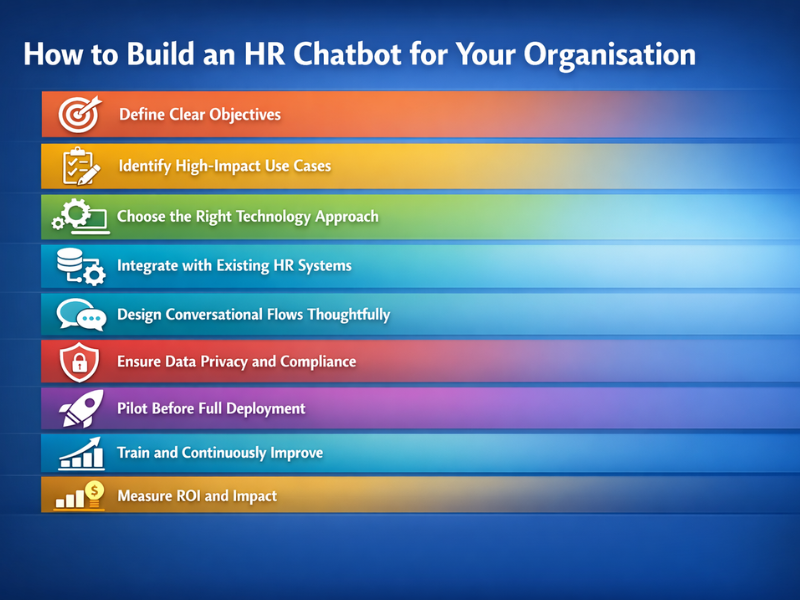
How to Build an HR Chatbot for Your Organisation
(Self-designed)
Building an HR chatbot is about solving specific operational challenges.
Here’s how to build one effectively:
1. Define Clear Objectives
Start with the problem, not the technology.
Ask:
- Are you trying to reduce repetitive HR queries?
- Do you want to speed up recruitment?
- Is employee engagement your priority?
- Are you aiming to optimise the candidate selection funnel?
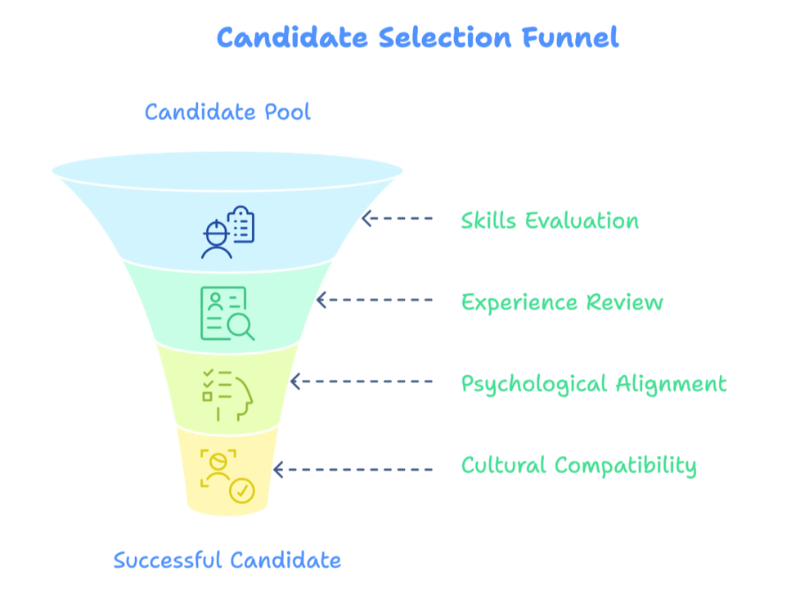
Clear objectives will help you easily determine whether you need a recruitment chatbot, helpdesk bot, onboarding assistant, or a combination.
2. Identify High-Impact Use Cases
Map your HR workflows and identify repetitive rule-based tasks that consume a considerable amount of your time.
Common starting points:
- Leave and policy queries
- Interview scheduling
- Candidate pre-screening
- Onboarding document sharing
- FAQs about payroll and benefits
Focus first on areas where automation will deliver immediate efficiency gains.
3. Choose the Right Technology Approach
There are three paths that you can choose based on your budget, the availability of a technical person, and the level of the problem you are solving. The approaches are as follows:
a. Off-the-Shelf HR Chatbot Platforms
It is best if you want fast deployment. The best part is that it requires less technical knowledge.
b. Custom-Built Chatbots
It is ideal for organisations that have complex workflows or compliance needs to meet.
c. AI Platforms With Generative Capabilities
These are the advanced solutions that help you draft documents, summarise feedback, and personalise responses.
4. Integrate With Existing HR Systems
A chatbot should not operate in isolation. It must connect seamlessly with:
- HRIS systems
- Applicant Tracking Systems (ATS)
- Payroll software
- Internal communication platforms
Without integration, a bot is just a tool that answers FAQs rather than a true workflow automation engine.
5. Design Conversational Flows Thoughtfully
Poor conversation design leads to frustration.
Best practices:
- Use simple and natural language
- Offer guided response options when needed
- Allow smooth handover to human HR staff
- Include multilingual support, if required
You should test the conversations from both your employees' and the candidate’s perspectives.
6. Ensure Data Privacy and Compliance
HR data is highly sensitive. Make sure your chatbot:
- Complies with GDPR and local regulations
- Uses secure authentication
- Includes role-based access controls
- Stores data safely
Security should be ensured along with the deployment of a bot.
7. Pilot Before Full Deployment
Run a pilot test with one department or function.
During the pilot:
- Track response accuracy
- Measure resolution rates
- Collect employee feedback
- Identify friction points
Refine the chatbot before scaling it across your organisation.
8. Train and Continuously Improve
AI chatbots improve with time if they are monitored properly.
Use analytics dashboards to track:
- Most frequent queries
- Unanswered questions
- Drop-off points
- User satisfaction scores
Update knowledge databases regularly and retrain AI models.
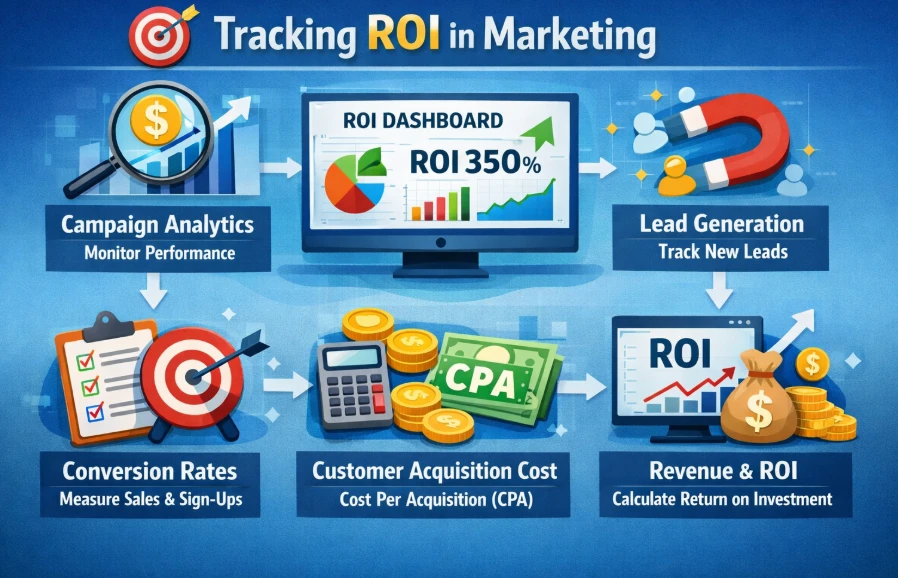
9. Measure ROI and Impact
Once you have deployed the chatbot, evaluate metrics like:
- Reduced questions
- Faster hiring cycles
- Lower administrative costs
- Improved employee satisfaction
The Future of HR Starts Now
HR chatbots with AI capabilities are transforming how organisations hire, support, and engage their employees. They automate routine tasks and improve responsiveness.
Chatbots enable HR teams to focus on strategic growth and people-first initiatives.
Ready to modernise your HR operations?


























Sign in to leave a comment.