

The digital marketing landscape is evolving at lightning speed, and businesses are continuously looking for smarter ways to attract, engage, and convert customers. Among the most impactful innovations today are AI-powered SEO and lead generation tools, which not only streamline the process of finding potential customers but also enhance search visibility. By combining the precision of artificial intelligence with the strategies of SEO, businesses can create campaigns that are not just efficient but also highly scalable. This article explores how AI-driven lead generation tools are transforming SEO campaigns and why they are essential for modern marketing.
Understanding AI-Powered SEO and Lead Generation Tools
To fully appreciate the role of AI in digital marketing, it’s important to understand what AI-powered SEO and lead generation tools are. These tools use artificial intelligence and machine learning algorithms to automate processes that traditionally required extensive human effort. For example, in SEO, AI can analyze search intent, identify keyword opportunities, and recommend content strategies. In lead generation, AI tools can scan vast databases, predict buyer behavior, and personalize outreach.
When these two areas intersect, businesses gain a powerful advantage: the ability to optimize their online visibility while simultaneously targeting the right audience. A report by Salesforce reveals that 84% of marketers using AI tools experience improved efficiency, while 77% see enhanced personalization. These stats underline why organizations of all sizes are integrating AI solutions into their SEO campaigns.
How AI Improves Keyword Research and Content Optimization
One of the core functions of SEO and lead generation tools is keyword research, and AI takes this process to a new level. Unlike traditional keyword planners that simply provide search volumes, AI-driven platforms analyze semantic relationships, user behavior, and market trends. This enables marketers to identify long-tail keywords and intent-driven queries that lead to higher conversion rates.
Furthermore, AI can suggest content structures, analyze competitor performance, and even evaluate readability and engagement metrics. According to HubSpot, businesses that blog regularly generate 67% more leads than those that don’t, and AI makes the process of producing optimized blogs much faster. By leveraging machine learning, businesses can ensure that their content resonates with search engines and users alike, maximizing organic visibility while fueling lead generation efforts.
Personalization at Scale Through AI
In today’s hyper-competitive market, personalization is no longer optional—it’s expected. AI-powered SEO and lead generation tools allow marketers to deliver highly personalized experiences at scale. For instance, AI can segment leads based on browsing behavior, demographics, or interaction history, and then tailor messages to each group. From dynamic website content to personalized email campaigns, AI ensures that prospects feel valued. Studies show that personalized campaigns generate up to 6 times higher transaction rates compared to generic ones.
For SEO campaigns, personalization also improves engagement metrics like click-through rate (CTR) and dwell time, both of which influence search rankings. Thus, by combining personalization with SEO strategies, businesses can create a loop where more visibility drives better lead generation results, and better leads boost SEO performance.
AI-Powered Analytics and Predictive Insights
Another transformative aspect of AI is its ability to provide predictive analytics. Traditional analytics tools show what has already happened, but AI goes further by forecasting future trends. For instance, an AI system can predict which keywords are likely to gain traction in the coming months, or which type of content will perform best with a specific audience. Google’s own algorithms already leverage AI to understand search intent and improve rankings.
Marketers who adopt similar AI tools gain the ability to stay ahead of competitors. According to PwC, AI could contribute up to $15.7 trillion to the global economy by 2030, largely through improved productivity and customer insights. By integrating predictive analytics into SEO campaigns, businesses not only improve visibility but also anticipate customer needs, leading to more qualified leads.
Enhancing User Experience with AI
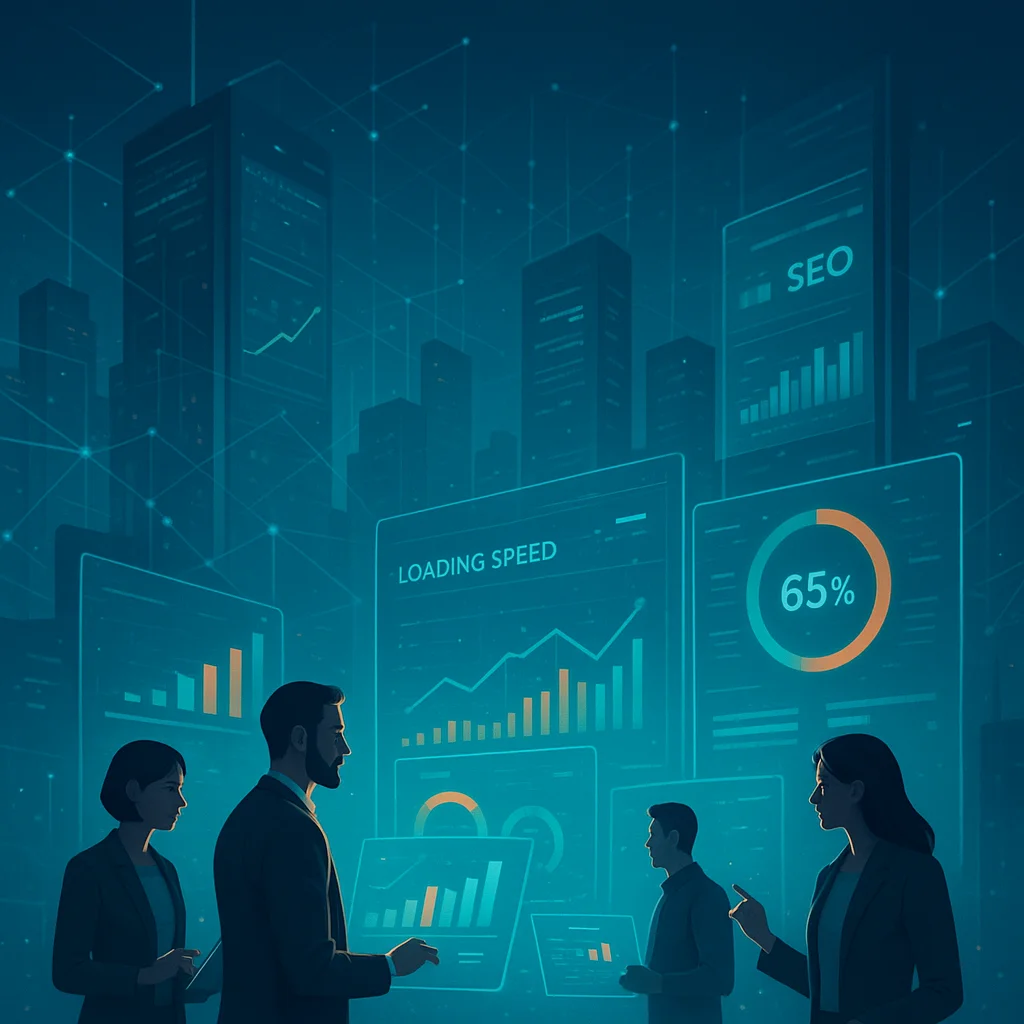
Search engines like Google now prioritize user experience (UX) as a major ranking factor, and AI tools play a crucial role here. AI can monitor how visitors interact with websites, identifying friction points that cause users to leave. It can also recommend design improvements, optimize site speed, and enhance mobile responsiveness. For lead generation, UX is equally important. A smooth and intuitive website encourages visitors to take desired actions, such as filling out a form or signing up for a demo. Statistics from Think with Google show that 53% of mobile users abandon sites that take longer than 3 seconds to load. By leveraging AI-driven UX enhancements, businesses can reduce bounce rates, improve rankings, and capture more leads, ultimately creating a stronger SEO and lead generation ecosystem.
Challenges of Using AI in SEO and Lead Generation
While AI-powered SEO and lead generation tools offer immense potential, they are not without challenges. One major issue is the reliance on data quality. If the input data is inaccurate or incomplete, AI predictions may be flawed.
Another concern is the ethical aspect, especially when AI tools use personal information to segment and target leads. Marketers must balance personalization with privacy regulations such as GDPR. Additionally, the cost of implementing advanced AI tools may be prohibitive for small businesses. Despite these challenges, the opportunities far outweigh the drawbacks. Businesses that adopt AI responsibly and strategically will enjoy higher efficiency, better targeting, and stronger SEO results.
Future of AI in SEO and Lead Generation
The future of AI-powered SEO and lead generation tools looks incredibly promising. As natural language processing (NLP) and generative AI models become more sophisticated, they will allow businesses to create highly engaging, context-aware content. AI-driven chatbots and virtual assistants will also continue to play a role in qualifying leads and guiding them through the sales funnel.
Moreover, integration with other emerging technologies like augmented reality (AR) and voice search optimization will redefine how businesses approach SEO campaigns. According to Gartner, by 2026, 75% of organizations will shift from piloting to operationalizing AI, generating 5x more data-driven insights. For companies that embrace this shift, AI will not just enhance SEO campaigns but completely transform how digital marketing operates.
Conclusion
AI-powered SEO and lead generation tools represent the next frontier in digital marketing. From improving keyword research and content optimization to enhancing personalization and user experience, AI enables businesses to deliver more impactful campaigns. Though challenges exist in terms of cost, ethics, and data quality, the benefits of AI adoption are far greater.
By integrating these tools into their strategy today, businesses can future-proof their marketing efforts, stay ahead of competitors, and build sustainable growth. The synergy of SEO and lead generation tools powered by AI is not just an advantage—it is a necessity for success in the digital era.



























Sign in to leave a comment.