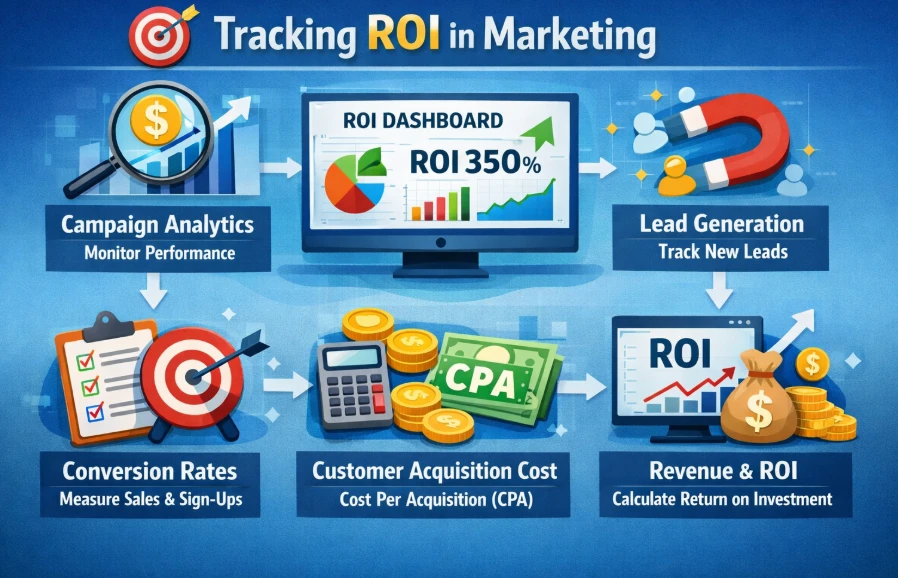

Today, clicks, views, and conversions are not enough on their own. They need to prove they are driving real outcomes.
In 2026, marketing campaigns are operating under intense pressure. AI-powered personalization, decreased third-party data, a fragmented customer journey, and rising acquisition costs all make it more difficult to relate expenses to results.
For instance, a post with 10,000 likes means nothing if it’s not helping with pipeline, conversions, or revenue.
Campaign ROI has now become the ultimate performance indicator. It drives budgets, defines strategy, and decides what gets scaled or shut down. But the problem is, measuring ROI isn’t easy.
In this article, we explore nine practical ways to track ROI and link campaigns directly to revenue, so that you can make smarter investment decisions.
ROI in Marketing Campaigns
Return on investment, or ROI, demonstrates how much value your marketing generates relative to its cost. In simple words, it helps you ensure your marketing earns more than it spends and keeps your focus on real business results.
You typically compute ROI with this formula:
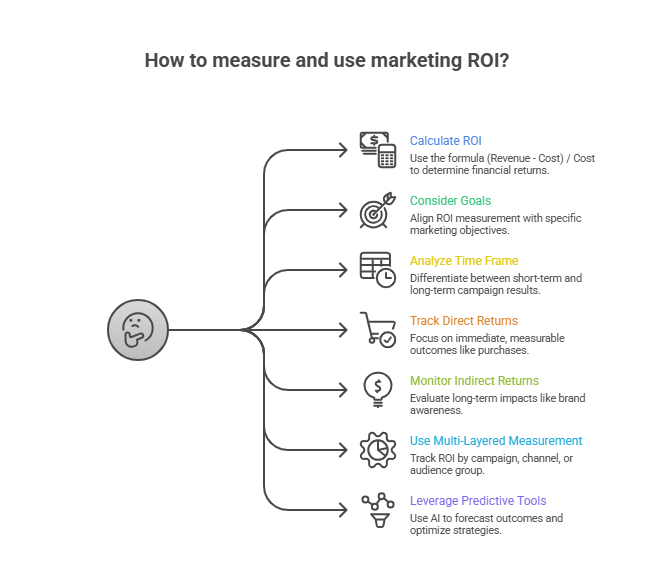
ROI = (Revenue − Cost) ÷ Cost.
However, marketing ROI involves more than simple math. You also need to consider your goals, marketing reporting, and time frame. For example, short campaigns and long campaigns show results differently. Therefore, you should always read ROI numbers in context.
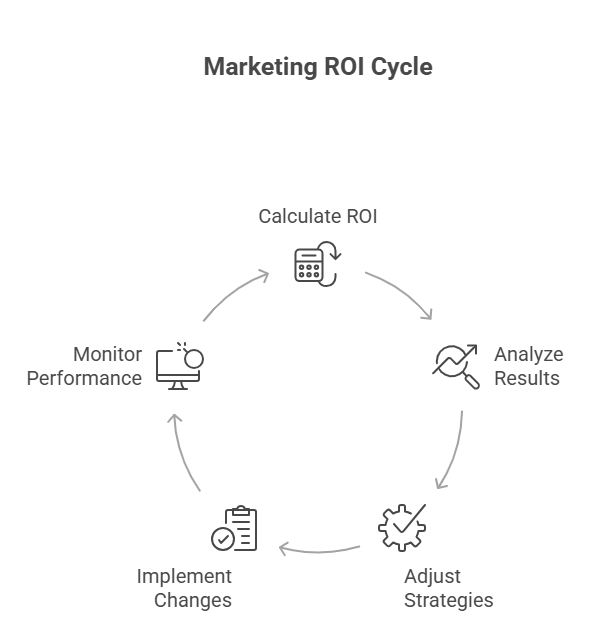
To understand ROI in marketing campaigns clearly, you should view it through different angles: direct impact, measurement depth, and future prediction.
ROI Through Direct and Indirect Returns
ROI reflects both short-term outcomes and long-term value in marketing campaigns.
- Direct returns feel clear. They show up fast through purchases, sign-ups, or paid subscriptions. You can measure them right away. Thus, you can decide where to invest more.
- Indirect returns need time. They include brand awareness, customer lifetime value, retention, pricing power, and B2B pipeline growth. They develop slowly but still matter. So, you cannot ignore them.
ROI Through Multi-Layered Measurement
ROI becomes more accurate when measured at multiple levels instead of relying on a single result.
When you evaluate ROI by campaign, channel, or audience group, performance patterns become easier to identify. This layered view helps you recognise what delivers value, reduce wasted spending, and make better allocation decisions. As a result, optimization becomes clearer and more confident.
ROI as a Predictive Planning Tool
ROI is not just about what happened; it’s also about what to do next. With the right AI tools, you can predict what will happen and forecast outcomes, and make changes to your budget or targets in advance of launch.
When you start measuring marketing ROI, you will clearly see how your marketing activity supports smarter strategic decisions.
Why ROI Is Important for Marketing Campaigns
When you measure ROI more frequently, marketing becomes an investment, not a cost. You can easily demonstrate value to leaders and teams, so that everyone stays aligned on what the key goals are.
1. Smarter and More Accountable Budgeting
ROI helps you see which campaigns genuinely create value instead of simply generating clicks or impressions. When you know the true return produced by each channel, you can direct money where it works best.
With ROI, you can:
- Improve high-performing campaigns and channels
- Eliminate or reduce low-impact activities
- Depicts future budgets based on proven results
2. Continuous Optimization and Performance Improvement
Marketing ROI supports a test→learn→improve cycle. You avoid the old “set and forget” mindset. You stop guessing. Instead, you let data show you what works.
ROI helps you:
- Check and identify weak ads, audiences, or creatives early
- Execute A/B tests and keep the winning ideas
- Replicate top campaigns across new regions or segments
The focus shifts away from vanity metrics. You stop chasing likes or reach. Instead, you track revenue, profit, and lifetime value.
3. Stronger Alignment With Business and Leadership
ROI expresses marketing results in financial language, which leaders, sales teams, and finance teams already use. This turns marketing from a cost center into a strategic revenue partner.
Clear ROI helps:
- Build credibility with executives
- Connect marketing activity to revenue and pipeline
- Support requests for funding, tools, and headcount
4. Better Decision-Making in Times of Uncertainty
Markets in 2026 shift fast due to privacy rules, platform changes, economic pressure, and new customer habits. You cannot rely on guesswork anymore. ROI reduces confusion because it shows what creates value across your campaigns. As a result, you move with clarity instead of reacting out of fear or assumptions.
With ROI insight, you can:
- Prioritise campaigns that prove real business impact and support growth
- Avoid spending driven by hype, trends, or vague assumptions
- Choose channels that show measurable returns instead of promises
9 Ways to Effectively Track ROI for Marketing Campaigns in 2026
Today, many marketers believe they track ROI well. However, only about 32% measure ROI across digital and offline channels together. Even though 85% feel confident, gaps still exist. Because of this, you have plenty of room to improve how you measure ROI.
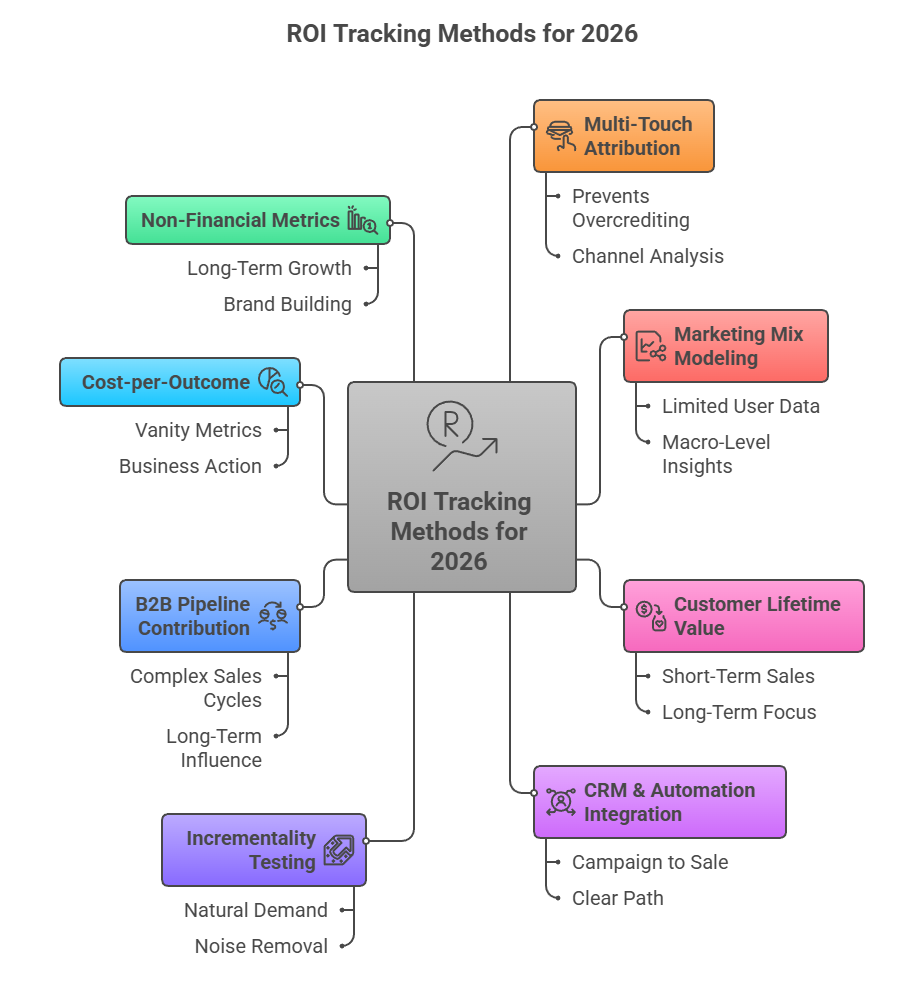
1. Implement Advanced Multi-Touch Attribution Models
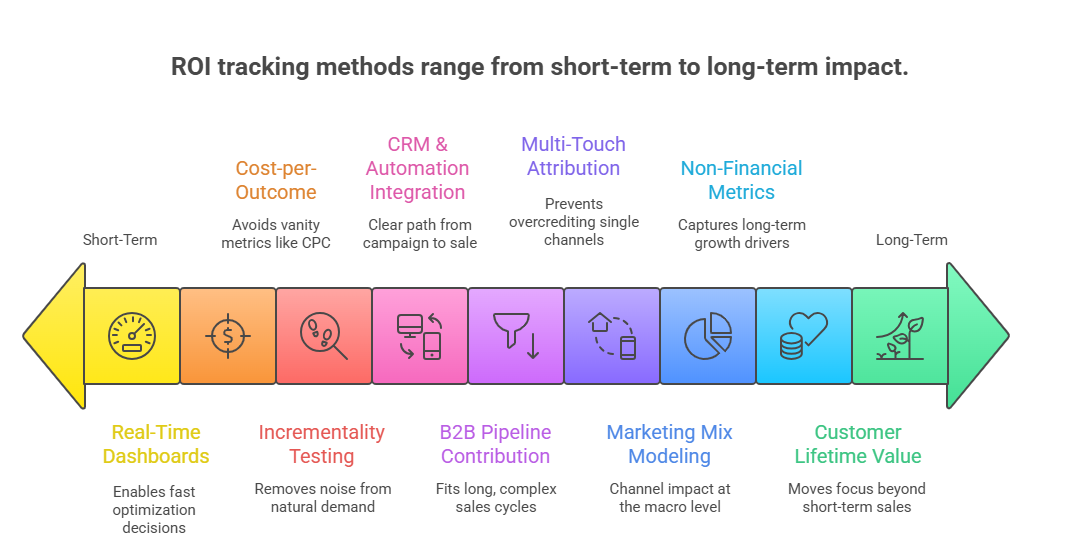
You rarely buy after one brand interaction. Instead, you move through many touchpoints before you decide. So, multi-touch attribution (MTA) helps you see this full journey in detail. It shares credit across emails, videos, landing pages, and chat tools. This way, you avoid giving all credit to just one step in the funnel.
In 2026, AI-driven MTA goes even further. It looks beyond a single device or channel and connects activity across your entire ecosystem. Plus, it includes offline actions and privacy-safe identity matching that respects consent.
2. Use Marketing Mix Modeling to Complement Attribution
Attribution allows you to trace every user journey across channels. Meanwhile, marketing mix modeling, aka MMM, examines performance at a higher level. It looks at past data and estimates how different channels contribute to revenue. As a result, you get a larger and more stable view of results.
This big data based tool has become a must-have in a world without cookies. Seasonality, pricing, economic change, and competitive activity are all taken into account by AI-powered MMM. That way, you can measure the impact without following people.
3. Track Customer Lifetime Value, Not Just Single Purchases
Customer lifetime value, or CLV, is how you connect marketing to long-term profit. Instead of tracking just one sale, you see the full value of a customer. Because of this, campaigns that attract repeat buyers often perform better.
That way, you can make more accurate predictions of value. Viewed through the lens of CLV, ROI is more about retention, loyalty, and having a stronger relationship with your customer base.
4. Integrate CRM and Marketing Automation Data
Siloed systems make ROI hard to measure. When CRM, automation tools, eCommerce platforms, and analytics aren’t connected, revenue attribution becomes unreliable, and marketing analytics becomes incomplete.
In 2026, many companies will use unified data systems. These systems connect every touchpoint from first interaction to final sale. You also gain stronger insight into which campaigns truly perform well.
5. Use Incrementality Testing and Controlled Experiments
Incrementality testing helps you measure the real impact of your marketing. It shows what changes because of your campaign, not by chance. For example, you can use A/B tests, audience holdouts, or geo tests. These methods help you isolate true campaign lift. As a result, you avoid false success signals.
In 2026, automated tools will run these tests at scale. You can test campaigns often without extra effort. Because of this, you separate real demand from seasonal or organic trends. This way, you trust your results and make better decisions.
6. Monitor Pipeline Contribution and Revenue Influence in B2B
B2B transactions are long and complex, with many decision-makers. Only looking at closed sales would undervalue marketing’s role. Instead, track:
- Pipeline influence
- Opportunity creation
- Win rate improvement
- Sales cycle acceleration
7. Evaluate ROI Through Cost-Per-Outcome, Not Cost-Per-Click
Metrics like CPC and impressions show activity, not business value. ROI improves when you evaluate cost per meaningful outcome, such as:
- Qualified leads
- Booked demos
- Paid conversions
- Completed subscriptions
Modern tools automatically map expenses to these deeper outcomes and prevent optimization toward cheap but low-quality traffic.
8. Combine Financial ROI With Non-Financial Impact Metrics
Not all returns show immediately as revenue. Long-term brand strength also drives growth. Non-financial ROI includes:
- Brand trust
- Awareness
- Share of voice
- Advocacy
Blended frameworks in 2026 pair revenue metrics with strategic impact scores, which ensures future-value campaigns aren’t ignored.
9. Build Dynamic Dashboards With Real-Time Data
Static reports cannot keep pace with modern campaign speed. Real-time dashboards consolidate data from ad platforms, CRM, eCommerce, social tools, and finance systems.
They enable teams to edit bids, consolidate targets, and turn off underperforming campaigns right away so you don’t lose money.
Why Your Next Marketing Win Depends on Measurable ROI
So here is the real question: if your marketing spend vanishes tomorrow, will you be able to prove the revenue it creates today?
In 2026, creativity alone does not win. Instead, the brands that succeed measure results, learn fast, and reinvest wisely. ROI turns guesses into clear proof and helps you build campaigns that drive steady growth.
When you track what truly drives revenue, you stop guessing and start improving. So, every decision feels more confident and focused. Plus, marketing shifts from an expense to a smart investment. And most importantly, it turns “we think” into “we know.”





























Sign in to leave a comment.