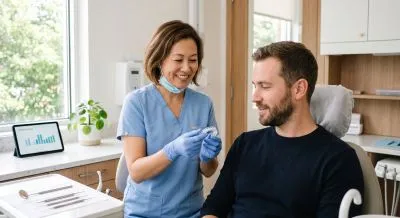

Sleep Apnea Treatment: How Can a Dentist Help?
If you snore loudly, wake up tired, or gasp for air at night, you may need sleep apnea treatment. Many people think only a doctor can help. But a dentist can also play a big role in your care. Dentists trained in sleep medicine offer custom, comfortable options that fit easily into daily life.
This guide explains how a dentist supports sleep apnea treatment, what devices they use, and when you should book a visit.
Quick Answer
A dentist can help with sleep apnea treatment by fitting custom oral appliances, such as a mandibular advancement device, that keep your airway open while you sleep. This is often used for mild to moderate obstructive sleep apnea, or alongside a CPAP machine for more severe cases.
Key Takeaways
- Dentists offer a comfortable, non-invasive option for sleep apnea treatment.
- A custom sleep apnea mouth guard works by gently moving your jaw forward.
- Oral appliances suit people with mild to moderate obstructive sleep apnea, or those who cannot tolerate CPAP.
- Untreated sleep apnea raises the risk of heart disease, high blood pressure, and daytime fatigue.
- A dental sleep check is a simple first step towards better rest.
What Is Sleep Apnea Treatment?
Sleep apnea treatment refers to the range of methods used to stop breathing pauses during sleep. These pauses happen when throat muscles relax too much, blocking the airway. This is called obstructive sleep apnea, the most common form of the condition.
Common sleep apnea treatment options include:
- CPAP (Continuous Positive Airway Pressure) machines
- Oral appliance therapy fitted by a dentist
- Lifestyle changes, such as weight management and side sleeping
- Surgery, in severe or structural cases
For many patients, a dentist-fitted device is the easiest and most comfortable place to start.
Signs You May Need Sleep Apnea Treatment
You might benefit from sleep apnea treatment if you notice:
- Loud, regular snoring
- Waking up gasping or choking
- Morning headaches
- Dry mouth or sore throat on waking
- Daytime tiredness, even after a full night's sleep
- Trouble concentrating or mood changes
If these signs sound familiar, a chat with your dentist or GP is a good next step.
How a Dentist Provides Sleep Apnea Treatment
Dentists who focus on sleep health work alongside your doctor to manage your care. After a diagnosis, usually made through a sleep study, your dentist can design a device suited to your mouth and airway shape.
Oral Appliance Therapy for Sleep Apnea
Oral appliance therapy for sleep apnea uses a small, custom-made device worn in the mouth during sleep. It is a popular choice because it is quiet, portable, and easy to travel with. Unlike a CPAP mask, it needs no power source or hose.
Mandibular Advancement Device
The most common option is a mandibular advancement device. This device gently holds the lower jaw slightly forward. This position keeps the airway open by stopping the tongue and soft tissue from collapsing backward during sleep. It is fitted to your teeth for a precise, secure fit.
Sleep Apnea Mouth Guard vs Anti-Snoring Device
People often confuse a sleep apnea mouth guard with a basic anti-snoring device. Store-bought anti-snoring devices are generic and not designed for diagnosed sleep apnea. A dentist-made sleep apnea dental appliance, however, is custom-fitted after an assessment. It is built to treat the medical condition, not just quieten snoring sounds. A snoring mouthpiece from a pharmacy may ease mild snoring, but it is not a substitute for a properly diagnosed and monitored sleep apnea device.
Benefits of Dental Sleep Apnea Treatment
Choosing a dentist for sleep apnea treatment offers several advantages:
- Comfort: Small and easy to wear compared with a CPAP mask.
- Convenience: No electricity or machine needed, ideal for travel.
- Custom fit: Made from a mould of your own teeth and bite.
- Quiet: No noise, unlike some CPAP machines.
- Ongoing care: Regular check-ups to adjust fit and monitor progress.
This makes dental options a strong choice for people with mild to moderate obstructive sleep apnea, or those who find CPAP hard to use every night.
What to Expect During Sleep Apnea Treatment
The process usually follows these steps:
- Assessment: Your dentist reviews your symptoms and sleep study results.
- Impressions: A mould or digital scan of your teeth is taken.
- Custom fitting: Your mandibular advancement device is made in a dental lab.
- Adjustment visits: Your dentist fine-tunes the fit for comfort and effectiveness.
- Follow-up: Regular reviews check that the device still works well and your symptoms have improved.
Most people adjust to wearing their device within a few weeks.
When to See a Dentist for Sleep Apnea Treatment
Book a visit if you snore heavily, feel tired despite sleeping enough hours, or have been told by a partner that you stop breathing at night. Your dentist can assess your airway, refer you for a sleep study if needed, and discuss whether oral appliance therapy suits your case.
Early sleep apnea treatment can lower your risk of long-term health problems and help you feel more rested day to day.
Frequently Asked Questions
Can a dentist actually treat sleep apnea?
Yes. A dentist can provide oral appliance therapy, a proven sleep apnea treatment for mild to moderate obstructive sleep apnea, working alongside your doctor.
How is a dental sleep apnea device different from a regular mouth guard?
A sleep apnea dental appliance is custom-made to reposition your jaw and keep your airway open. A regular mouth guard only protects teeth from grinding and does not treat breathing issues.
Is a mandibular advancement device better than CPAP?
Not always better, but often more comfortable. CPAP is usually recommended for severe cases, while a mandibular advancement device suits mild to moderate cases or people who cannot tolerate CPAP.
Do I need a sleep study before getting a sleep apnea mouth guard?
Yes. A proper diagnosis through a sleep study helps your dentist confirm the severity of your condition and design the right device.
How long does a sleep apnea device last?
With good care, most oral appliances last two to five years, depending on wear and how well they are maintained.
Are anti-snoring devices from the pharmacy safe to use?
They may help mild, occasional snoring, but they are not a medical sleep apnea treatment. Anyone with diagnosed sleep apnea should use a device fitted and monitored by a dentist.
























Sign in to leave a comment.