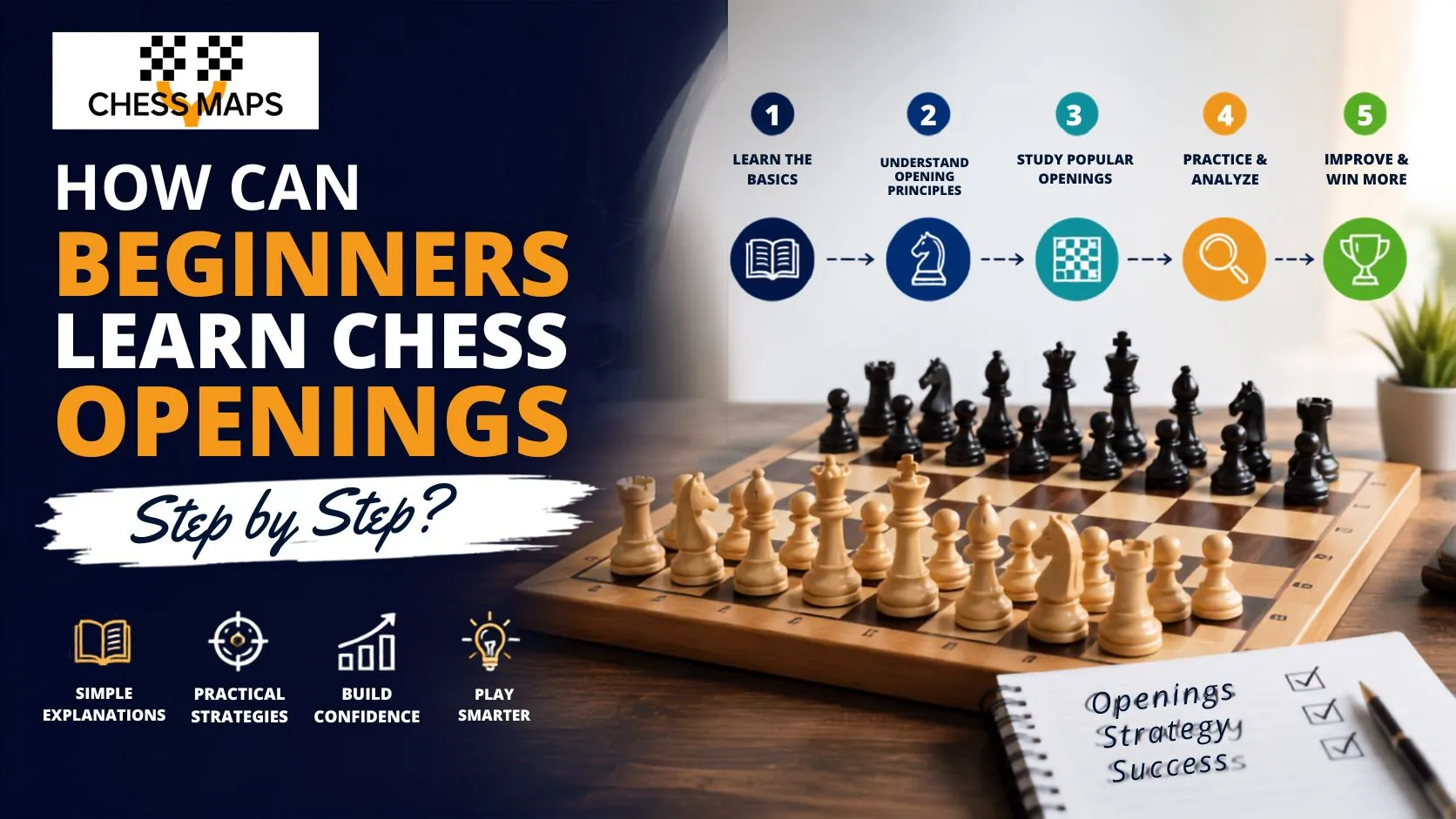

Learning chess can feel exciting at first, but many beginners quickly discover that the opening phase is one of the most challenging parts of the game. With hundreds of opening names, countless variations, and endless move sequences, it is easy to feel overwhelmed. The good news is that you do not need to memorize hundreds of moves to become a better player. Instead, you need a simple, structured approach that helps you understand why each move is played.
Chess openings are not just about remembering moves. They are about building strong habits, controlling the board, developing your pieces efficiently, and creating opportunities for the middle game. Once you understand these principles, learning new openings becomes much easier.
Whether you are completely new to chess or looking to improve your online rating, this guide explains how beginners can learn chess openings step by step. You will also discover how modern learning tools like Chess Maps make studying openings more visual, organized, and enjoyable. You can explore more resources at chessmaps.de to simplify your chess learning journey.
Why Learning Chess Openings Matters
The opening is the foundation of every chess game. A strong opening helps you develop your pieces, protect your king, and prepare for future attacks. A poor opening often leaves your pieces uncoordinated and gives your opponent an early advantage.
Learning openings provides several benefits:
- Better control of the center
- Faster piece development
- Improved king safety
- Easier transition into the middle game
- Greater confidence in competitive games
- Better understanding of chess strategy
Instead of viewing openings as long lists of moves, think of them as roadmaps that guide your early decisions.
Step 1: Learn the Basic Opening Principles First
Before studying any specific opening, every beginner should master the universal principles that apply to almost every game.
Control the Center
The four central squares are among the most important areas of the chessboard. Moves such as e4, d4, e5, and d5 help control these squares and create space for your pieces.
When you control the center, your pieces become more active and your attacks become stronger.
Develop Minor Pieces Early
Knights and bishops should usually enter the game before moving the queen or rooks.
A common beginner mistake is moving the same piece several times while other pieces remain undeveloped.
Castle Early
King safety is essential. Castling protects your king and connects your rooks, making them more effective later in the game.
Avoid Moving the Queen Too Soon
Many beginners bring the queen out early hoping for a quick attack. Experienced opponents often gain time by attacking the queen repeatedly.
Develop your other pieces first before launching aggressive attacks.
Step 2: Start With Just One Opening as White
One of the biggest mistakes beginners make is trying to learn dozens of openings at once.
Instead, choose one reliable opening and play it consistently.
Good beginner friendly openings include:
Italian Game
The Italian Game teaches piece development, center control, and tactical ideas. It is one of the easiest openings for beginners to understand.
London System
The London System follows a similar setup against many defenses, making it simple for new players to remember.
Queen's Gambit
Although slightly more advanced, the Queen's Gambit introduces important positional concepts that remain useful throughout your chess journey.
Playing one opening repeatedly helps you recognize common positions instead of memorizing isolated moves.
Step 3: Choose One Defense Against e4 and One Against d4
As Black, you do not need to prepare for every opening immediately.
Simply choose one response against each of White's main first moves.
Against e4:
- Scandinavian Defense
- Caro Kann Defense
- French Defense
Against d4:
- Queen's Gambit Declined
- Slav Defense
- King's Indian Defense
Learning just these systems gives you a practical repertoire without unnecessary complexity.
Step 4: Understand the Ideas Behind Every Move
Many players memorize move sequences but forget them after only a few games.
Instead, ask questions like:
- Why is this pawn moved?
- Which piece becomes stronger?
- What weakness does this move prevent?
- What is the long term plan?
When you understand the purpose of each move, your memory becomes much stronger.
This is where visual learning can make a significant difference. Instead of reading long lists of notation, many players prefer organized opening maps that clearly show how different variations connect. Platforms like Chess Maps present openings in an easy to follow structure, helping beginners understand relationships between moves rather than simply memorizing them.
Step 5: Practice Against Real Opponents
Studying alone is never enough.
After learning an opening, play several games using that opening. Online platforms make it easy to find opponents of similar skill levels.
After every game, ask yourself:
- Did I follow my opening plan?
- Which move confused me?
- Where did I leave theory?
- What mistake changed the position?
Real games reinforce what you study and reveal areas for improvement.
Step 6: Review Your Games Regularly
Improvement comes from reviewing your own mistakes.
Instead of jumping into another game immediately, spend a few minutes analyzing your opening.
Look for patterns such as:
- Delayed development
- Missed castling
- Weak pawn structure
- Unnecessary queen moves
- Forgotten opening ideas
Keeping a simple notebook or digital record of these observations helps you avoid repeating the same mistakes.
Step 7: Learn Common Opening Traps Carefully
Opening traps can be fun to study, but beginners should avoid relying on them.
Instead, learn traps so you can recognize and avoid them.
Examples include:
- Scholar's Mate
- Legal Trap
- Noah's Ark Trap
Understanding these tactical ideas improves your awareness while reinforcing sound opening principles.
Step 8: Build a Small Opening Repertoire
A repertoire is simply your personal collection of openings that you play consistently.
For beginners, a simple repertoire may include:
As White:
- Italian Game
As Black against e4:
- Caro Kann Defense
As Black against d4:
- Slav Defense
Keeping your repertoire small allows you to gain deeper understanding instead of spreading your study time across too many openings.
Many improving players use visual repertoire tools from Chess Maps because they organize opening choices into connected pathways, making it easier to remember ideas and transition between variations.
Step 9: Use Visual Learning Instead of Rote Memorization
One of the biggest reasons beginners struggle with chess openings is trying to memorize long sequences of moves without understanding the position. While memorization has its place, visual learning is far more effective because it helps you recognize patterns and ideas.
When you see how one variation branches into another, it becomes much easier to remember your options during an actual game. Instead of recalling isolated moves, you understand the overall structure of the opening.
This is where visual opening maps can make a real difference. Chess Maps offers an intuitive way to study openings by organizing them into clear, connected paths. Rather than feeling overwhelmed by endless notation, beginners can see how openings develop naturally from one move to the next. chessmaps.de to explore a more structured and beginner friendly way to build your opening knowledge.
Step 10: Practice a Little Every Day
Consistency beats long study sessions.
Spending just 15 to 20 minutes each day reviewing your openings is often more effective than studying for several hours once a week. Regular practice strengthens your memory and helps you recognize familiar positions during games.
A simple daily routine could include:
- Review one opening for five minutes.
- Play one or two rapid games.
- Analyze your opening moves after each game.
- Repeat any variation you found difficult.
- Review one common tactical pattern.
Small daily improvements add up over time and help you build lasting confidence.
Common Mistakes Beginners Should Avoid
Learning openings is important, but avoiding common mistakes is equally valuable. Here are some habits that often slow a player's progress.
Trying to Learn Too Many Openings
Many beginners jump from one opening to another after every loss. This makes it difficult to build experience with any single system.
Stick with a few reliable openings until you understand them well.
Memorizing Without Understanding
Knowing twenty moves by heart does not help if you do not know why they are played. Focus on understanding ideas before memorizing variations.
Ignoring Opening Principles
Even if you forget theory, good opening principles can guide your decisions. Prioritize piece development, center control, and king safety over memorization.
Watching Without Practicing
Videos and books are useful, but improvement comes from playing games and reviewing your own decisions.
Skipping Game Analysis
Every game contains valuable lessons. Reviewing your mistakes helps you improve much faster than simply playing more games.
How Long Does It Take to Learn Chess Openings?
There is no single answer because every player learns at a different pace.
Most beginners can become comfortable with one opening in a few weeks of regular practice. Developing a complete opening repertoire usually takes several months, while mastering opening strategy is an ongoing process throughout a player's chess journey.
Remember that even grandmasters continue refining their opening preparation.
Instead of aiming to memorize everything, focus on becoming comfortable with the positions you reach most often.
Why Chess Maps Is a Helpful Learning Resource
Modern chess players have access to more learning resources than ever before. The challenge is finding information that is organized and easy to understand.
Chess Maps helps players simplify opening study through visual opening structures that are easier to follow than traditional move lists. Beginners can quickly see how different variations connect, making it easier to build confidence and remember key ideas.
Whether you are preparing your first opening repertoire or expanding your existing knowledge, Chess Maps provides an organized approach that supports long term improvement. Learn more by visiting chessmaps.de.
Final Thoughts
Learning chess openings does not have to be complicated. The most successful beginners focus on understanding basic principles before worrying about advanced theory. By choosing one opening for White, one defense against e4, and one defense against d4, you can build a strong foundation without becoming overwhelmed.
Remember that improvement comes from consistent practice, thoughtful game analysis, and understanding the ideas behind each move. Visual learning methods can also make the process much easier by helping you recognize patterns instead of memorizing endless move sequences.
With patience, regular practice, and structured resources like Chess Maps, you can steadily improve your opening knowledge and begin every game with greater confidence.
Frequently Asked Questions
1. What is the best chess opening for complete beginners?
The Italian Game is one of the best openings for beginners because it teaches piece development, center control, and simple attacking ideas.
2. Should beginners memorize chess openings?
Beginners should focus on understanding opening principles first. Memorization becomes much easier once you understand the purpose behind each move.
3. How many openings should a beginner learn?
It is usually best to learn one opening as White and one defense against each of White's main first moves when playing Black.
4. How often should I practice chess openings?
Practicing for 15 to 20 minutes each day is more effective than studying for long sessions once a week.
5. Can I improve without memorizing long opening lines?
Yes. Understanding opening ideas, piece placement, and common plans is more important than memorizing lengthy variations.
6. Why are visual opening maps useful?
Visual opening maps help players understand how different variations connect, making openings easier to learn and remember.
7. Is Chess Maps suitable for beginners?
Yes. Chess Maps is designed to present chess openings in a structured and visual format, making it easier for beginners to build a solid opening repertoire.
8. How can I remember chess openings faster?
Study one opening at a time, play practice games, review your mistakes, understand the ideas behind each move, and use visual learning resources like Chess Maps to reinforce your memory.
Chess Maps today at chessmaps.de and discover an easier, more visual way to learn chess openings, improve your memory, and play every game with greater confidence. Start your chess improvement journey now.























Sign in to leave a comment.