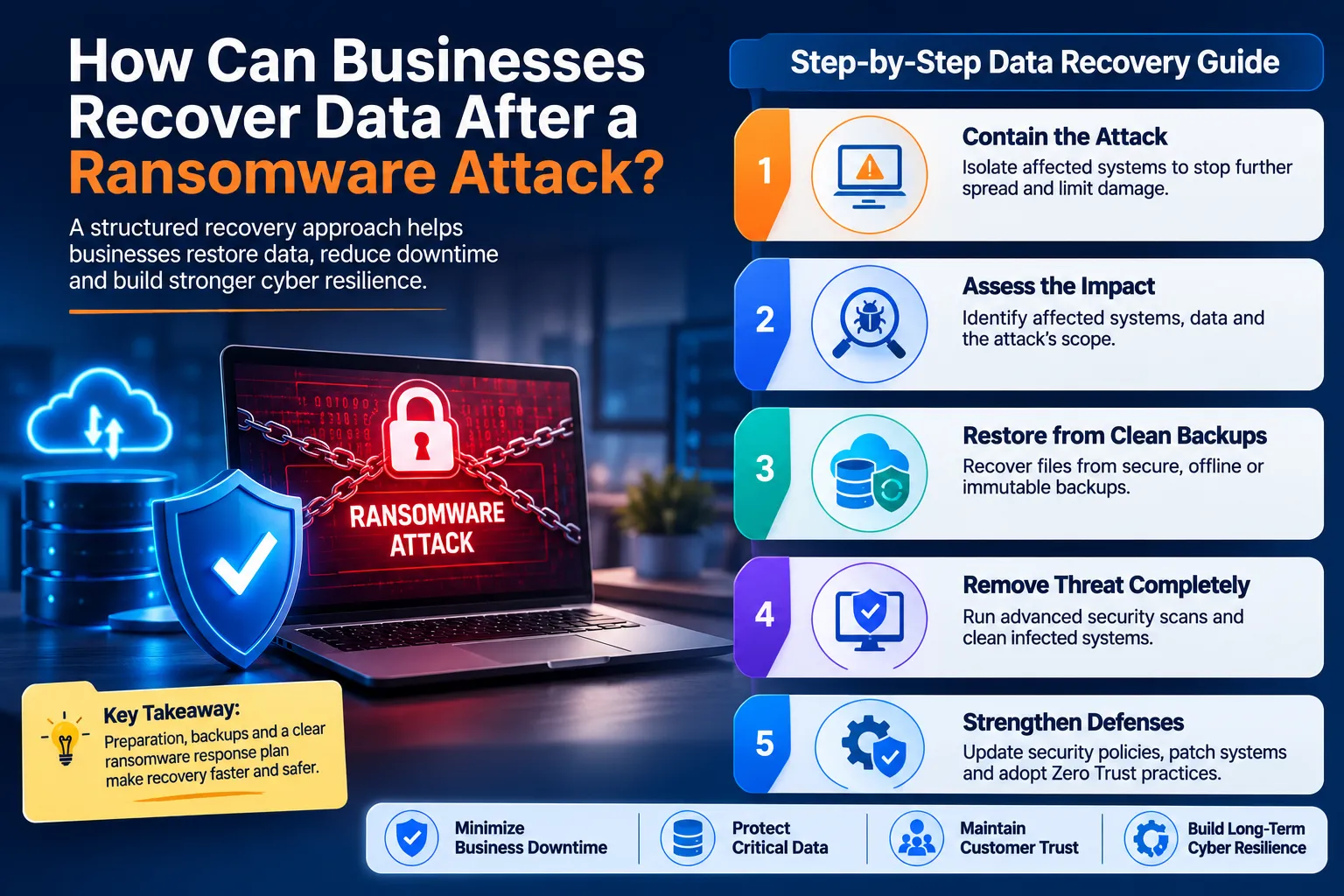

Ransomware attacks can disrupt business operations within minutes by encrypting critical files, blocking system access, and putting sensitive data at risk. For enterprises, the challenge extends beyond restoring files—it involves ensuring business continuity, protecting customer trust, and strengthening cyber resilience.
Effective ransomware data recovery requires a structured approach that combines technology, preparedness, and a well-defined ransomware response and recovery strategy.
Why Ransomware Attacks Lead to Data Loss
Ransomware operators use advanced techniques to compromise systems, encrypt business data, and demand payment to restore access. Modern attacks often include data theft before encryption, creating additional risks such as regulatory penalties and reputational damage.
Businesses may lose access to:
- Customer and employee data.
- Financial records.
- Business applications.
- Intellectual property.
- Operational systems.
Without proper security controls and backups, organisations face longer recovery timelines and higher financial impact.
Recovery Options Available After a Ransomware Attack
A successful recovery process begins with containing the attack and identifying the affected systems. Enterprises can explore several recovery options:
- Restore from secure backups: Regularly maintained, offline, or immutable backups help organisations recover critical data without relying on attackers.
- Use threat intelligence and security tools: Advanced solutions help identify attack patterns, remove threats, and support faster recovery.
- Engage cybersecurity experts: Managed Detection and Response (MDR) services can provide specialised support during complex ransomware incidents.
- Analyse affected systems: Security teams should investigate the root cause to prevent reinfection.
Best Practices for Ransomware Data Recovery
Organisations should follow these practices to improve recovery outcomes:
- Maintain frequent and tested backups of critical data.
- Create a documented ransomware incident response plan.
- Segment networks to limit ransomware movement.
- Deploy endpoint protection with AI/ML-based threat detection.
- Train employees to recognise phishing and social engineering attacks.
Preventing Future Ransomware Incidents Through Preparedness
Recovery becomes faster when businesses build security resilience before an attack occurs. A comprehensive cybersecurity strategy based on Zero Trust principles, continuous monitoring, and proactive threat intelligence helps enterprises reduce ransomware risks.
Seqrite delivers AI/ML-powered cybersecurity solutions that protect endpoints, networks, cloud environments, identities, and data through advanced threat intelligence from Seqrite Labs. With capabilities across Endpoint Protection, EDR/XDR, MDR, and Zero Trust Network Access, Seqrite helps businesses strengthen their ransomware defence strategy.
Prepare your organisation for evolving cyber threats. Explore Seqrite’s enterprise cybersecurity solutions to build stronger ransomware resilience today.





























Sign in to leave a comment.