
Quick answer: Choosing the right can carrier applicator comes down to five factors: your current and target line speed, compatibility with the ring material you plan to use (including biodegradable options), changeover time between pack sizes, total cost per case rather than machine price alone, and whether the vendor supports biodegradable 6 pack rings as regulations tighten. The rest of this guide breaks down how these machines work, what to evaluate before buying, and why biodegradability has become a core part of the decision rather than an afterthought.
What Is a Can Carrier Applicator?
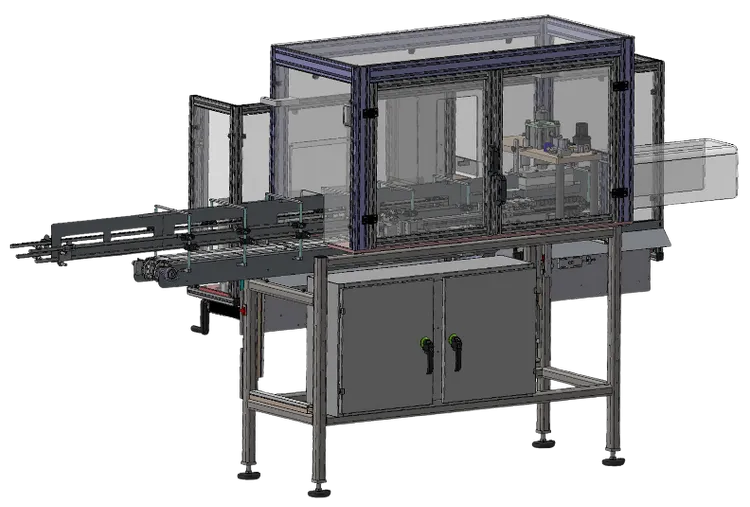
A can carrier applicator, also called a six-pack rings machine, is the equipment that groups filled, sealed cans into a fixed pattern (most often two rows of three for a six-pack) and presses a flexible ring carrier over the tops. Hence, the cans travel and sell together as one retail unit.
At the small end, craft producers use compact, manual platen-style applicators: load the cans, set a carrier over them, lower a lever, and the rings lock into place. At the industrial end, automated jaw-drum applicators pull continuous reels of carrier material and apply rings to hundreds or thousands of cans per minute with no operator touching a can.
How a Six-Pack Rings Machine Works
The core mechanism is consistent across machine sizes:
- Grouping: An infeed conveyor arranges loose cans into the correct rows and columns for the chosen pack size.
- Feeding: A reel stand or magazine-fed carrier material, such as thermoplastic, recycled HDPE, paperboard, or compostable fiber, is fed toward the application point.
- Application: The carrier is positioned over the grouped cans, and a closing jaw or downward platen pressure stretches the carrier's openings, causing them to snap and lock around each can's rim or neck.
- Output: The finished multipack moves on to a case packer, shrink-wrapper, or palletizer.
Speed is the main differentiator between tiers. A hand applicator produces roughly one six-pack every few seconds. A mid-size automated unit typically runs around 30 cycles a minute, producing 120 to 180 packaged cans in that time. Large beverage companies run multi-lane jaw-drum systems built for volumes well beyond what manual production could ever support.
How to Choose a Can Carrier Applicator: 5 Key Factors
- Line speed, current, and projected. A tabletop hand applicator suits a taproom or small batch run. A regional or national operation needs an automated applicator rated for where the business is headed, not just where it is today.
- Material compatibility. Confirm in writing that the applicator supports the specific carrier — including any biodegradable 6-pack rings you intend to run. Many machines are engineered around one carrier brand's dimensions and stretch characteristics.
- Changeover time. Ask how long it takes to switch between a 4-pack and 6-pack, or between 12oz and 16oz cans, and who handles operator training on the new settings.
- Total cost per case. Compare machine price, carrier cost per case, and maintenance — not just the upfront sticker price of the applicator.
- Vendor support for biodegradable rings. As more states and countries restrict non-degradable plastic carriers, a vendor who already supports compostable, paperboard, or recycled-content rings reduces the risk of an expensive retrofit later.
Why Biodegradable 6-Pack Rings Matter
Biodegradable 6-pack rings matter because regulatory pressure on non-degradable plastic carriers has been building for nearly fifty years and shows no sign of reversing. Vermont became the first U.S. state to ban non-degradable ring carriers in 1977, and roughly two dozen more states followed within fifteen years after plastic rings were found persisting in marine environments and entangling wildlife. The EPA recommended a formal biodegradability standard in 1993.
The first fix for photodegradable plastic only solved part of the problem, since it broke down into microplastics rather than disappearing. That's part of why the current generation of biodegradable carriers focuses on full compostability or recyclability instead of degradation alone.
Types of Biodegradable Six-Pack Rings
- Compostable fiber carriers made from brewing byproducts like spent barley and wheat, designed to fully break down and even be safely ingested by marine life if they end up in waterways.
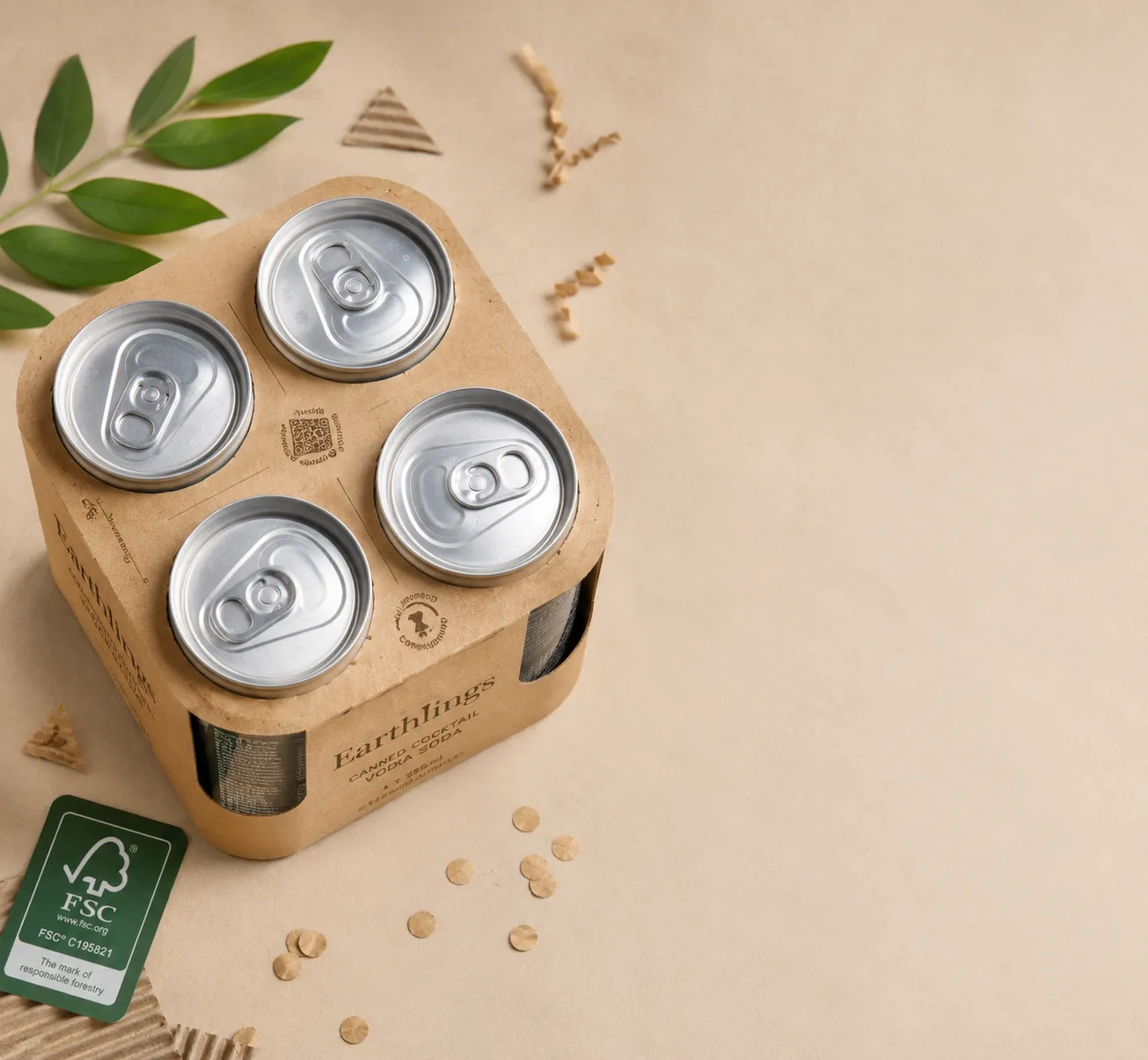
- Paperboard clip carriers that wrap around can tops like a clip instead of looping through them are used by several major global brewers and bottlers.
- Glue-based multipacking that eliminates rings entirely, holding cans together with an adhesive instead.
- High-recycled-content HDPE carriers made from 100% post-consumer plastic — not compostable, but a significant reduction in new plastic and often a lower-cost option.
- Marine-biodegradable layered plastics are engineered to separate and break down within about a day of contact with water.
Biodegradable vs. Traditional Plastic Rings: Quick Comparison
| Factor | Traditional Plastic Rings | Biodegradable Rings |
|---|---|---|
| Regulatory risk | High in states/countries with bans | Low to none |
| Material cost per case | Generally lowest | Varies; often slightly higher, narrowing over time |
| Machine compatibility | Works with most legacy applicators | May need tooling or sensor adjustments |
| Breakdown time | Decades, or fragments into microplastics | Days to a few months, depending on the material |
| Consumer perception | Increasingly negative | Strong positive/marketing value |
Frequently Asked Questions
Is a "six-pack rings machine" the same as a "can carrier applicator"? Yes. Both terms describe the same equipment — machinery that groups cans and applies a ring or clip carrier to hold them together as a multipack.
Can I run biodegradable rings on my existing can carrier applicator? Sometimes, but not always without adjustment. Paperboard, glued, and compostable fiber carriers often require different tension settings, sensors, or jaw configurations than standard plastic rings, so it's worth confirming compatibility with the equipment manufacturer before switching materials.
Are biodegradable 6-pack rings more expensive than plastic? Per-ring cost can run higher for some biodegradable materials, though pricing has been narrowing as adoption grows. Comparing total cost per case, not just ring price, gives a more accurate picture, especially when factoring in compliance costs avoided in jurisdictions that restrict plastic rings.
How fast can a can carrier applicator run? It depends on the equipment tier. Manual applicators produce roughly one pack every few seconds, mid-size automated units run around 30 cycles a minute (120–180 cans), and large industrial multi-lane systems can run into the thousands of cans per minute.
Are plastic six-pack rings banned? Non-degradable plastic ring carriers are restricted in numerous U.S. states and several countries, a trend that started with Vermont's 1977 ban and has expanded steadily since. Specific rules vary by location, so it's worth checking current regulations for where the product will be sold.
Conclusion
Whether it's a one-person nanobrewery pressing six-packs by hand on a compact applicator like the ones Earthrings makes, or a national bottler running multi-lane automated lines, the right can carrier applicator needs to match current and projected volume, run the chosen ring material without costly retooling, and leave room to scale. With biodegradable 6-pack rings moving from a niche choice to an industry expectation, factoring material compatibility into the equipment decision now is far cheaper than retrofitting under regulatory or market pressure later.






















Sign in to leave a comment.