

Artificial intelligence has rapidly evolved from a futuristic concept into a practical business tool that is reshaping industries worldwide. Among the most impactful innovations is conversational AI, a technology that enables computers to interact with humans through natural language, whether via text or voice. Modern conversational AI systems can understand context, recognize intent, and generate meaningful responses, making interactions more efficient and personalized. As organizations seek new ways to improve customer experiences, reduce operational costs, and streamline workflows, conversational AI has become a strategic investment across healthcare, finance, retail, and many other sectors.
Healthcare organizations, in particular, face growing challenges related to patient communication, administrative workloads, staffing shortages, and rising operational costs. To address these issues, providers and healthcare technology companies are increasingly adopting conversational ai solutions to automate routine interactions while maintaining a high level of service quality.
This article explores the fundamentals of conversational AI, its benefits, healthcare applications, implementation strategies, challenges, and future trends that are shaping the next generation of intelligent healthcare operations.
Understanding Conversational AI
Conversational AI refers to technologies that enable machines to communicate with people using natural language. Unlike traditional rule-based chatbots that rely on predefined scripts and keyword matching, modern conversational AI leverages natural language processing (NLP), machine learning, and large language models (LLMs) to understand human intent and respond intelligently.
These systems can:
- Answer questions in real time
- Schedule appointments
- Provide personalized recommendations
- Guide users through complex workflows
- Handle customer support inquiries
- Process voice and text interactions
- Learn from previous conversations
As AI models continue to advance, conversational interfaces are becoming increasingly capable of understanding context, sentiment, and nuanced language. This creates interactions that feel more natural and human-like, improving both customer satisfaction and operational efficiency.
Why Businesses Are Investing in Conversational AI
Organizations across industries are experiencing significant benefits from AI-powered communication platforms. Traditional support models often require large teams to manage repetitive inquiries, leading to increased costs and slower response times.
Conversational AI helps address these issues by providing:
24/7 Availability
Unlike human agents, AI assistants can operate continuously without breaks. Customers and patients can receive assistance at any time of day, improving accessibility and convenience.
Faster Response Times
AI systems can instantly answer common questions, reducing wait times and increasing customer satisfaction.
Reduced Operational Costs
Automating repetitive tasks allows organizations to optimize staffing resources and reduce administrative expenses.
Improved Scalability
As demand grows, AI systems can handle thousands of simultaneous interactions without requiring additional personnel.
Enhanced User Experience
Modern conversational interfaces create personalized interactions that improve engagement and strengthen relationships.
These advantages explain why businesses worldwide are rapidly expanding their investments in conversational technologies.
The Growing Role of Conversational AI in Healthcare
Healthcare providers face unique communication challenges. Patients often need assistance with appointment scheduling, insurance verification, medication reminders, billing questions, and care coordination.
Traditionally, these tasks require extensive manual effort from administrative staff. However, healthcare organizations are increasingly turning to conversational ai solutions to automate many of these processes.
Some of the most common healthcare applications include:
Patient Appointment Scheduling
AI-powered assistants can schedule, reschedule, and cancel appointments automatically. Patients can interact through websites, mobile apps, text messaging, or voice channels without needing to speak directly with a staff member.
Patient Intake and Registration
Before appointments, conversational AI can collect demographic information, insurance details, medical histories, and consent forms, reducing paperwork and accelerating workflows.
Insurance Verification
AI systems can guide patients through insurance-related questions and help verify coverage information before treatment begins.
Medication Adherence Support
Automated reminders can encourage patients to take medications on schedule and provide educational information regarding prescriptions.
Billing Assistance
Patients frequently have questions about invoices, payment plans, and insurance claims. AI assistants can provide immediate answers and direct complex issues to human representatives.
Care Coordination
Conversational AI can facilitate communication between patients, providers, caregivers, and support teams, helping improve continuity of care.
How Conversational AI Improves Patient Experience
Patient expectations continue to evolve. Consumers now expect the same convenience from healthcare organizations that they receive from online retailers, banks, and technology companies.
Conversational AI helps healthcare providers meet these expectations by delivering:
Immediate Access to Information
Patients no longer need to wait on hold to obtain basic information about appointments, office hours, or services.
Personalized Communication
AI systems can tailor responses based on patient histories, preferences, and previous interactions.
Multichannel Support
Patients can communicate using their preferred channels, including websites, mobile applications, SMS, social messaging platforms, and voice assistants.
Reduced Friction
Simplified interactions remove barriers that often discourage patients from seeking care or following treatment plans.
Better Engagement
Ongoing communication strengthens patient relationships and promotes healthier outcomes.
As healthcare organizations continue focusing on patient-centered care, conversational AI serves as a valuable tool for improving engagement and satisfaction.
Operational Benefits for Healthcare Providers
While patient experience receives much attention, healthcare providers also realize significant operational advantages from AI adoption.
Administrative Efficiency
Many healthcare employees spend substantial portions of their day performing repetitive administrative tasks. AI automation reduces this burden and allows staff to focus on higher-value activities.
Lower Call Center Volume
AI assistants can resolve a large percentage of routine inquiries without requiring human intervention.
Improved Staff Productivity
By handling repetitive tasks, conversational AI allows employees to dedicate more time to complex cases and patient care.
Reduced Errors
Automated workflows minimize data entry mistakes and improve consistency across processes.
Better Resource Allocation
Organizations can optimize staffing requirements while maintaining service quality.
These improvements contribute directly to financial performance and operational sustainability.
The Importance of Integration
Successful AI deployment requires seamless integration with existing healthcare systems.
Conversational AI platforms should connect with:
- Electronic Health Records (EHRs)
- Practice Management Systems
- Billing Platforms
- Patient Portals
- CRM Systems
- Inventory Management Solutions
- Revenue Cycle Management Tools
Integrated environments enable AI systems to access relevant information and provide accurate, personalized responses.
Without proper integration, conversational AI risks becoming an isolated tool that delivers limited value.
NikoHealth and Intelligent Healthcare Operations
As healthcare organizations modernize their technology infrastructure, software platforms increasingly incorporate AI-powered capabilities to improve efficiency.
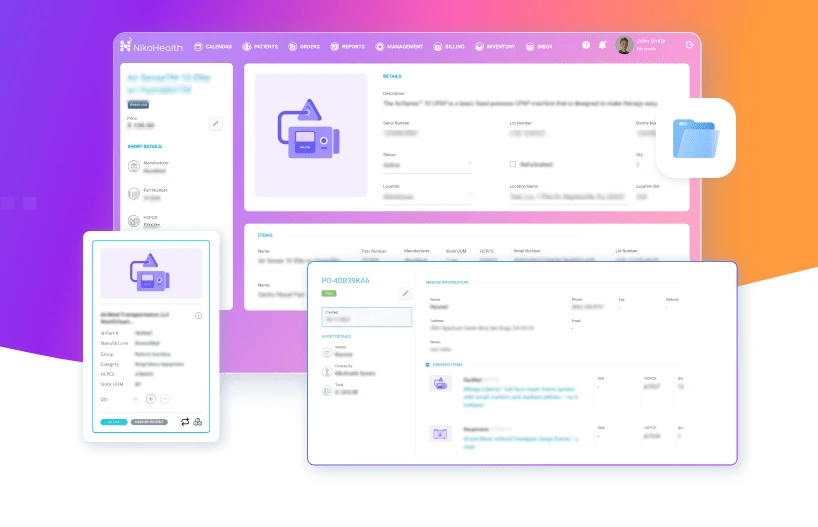
NikoHealth, a leading cloud-based platform for Durable Medical Equipment (DME), Home Medical Equipment (HME), and Orthotics & Prosthetics providers, focuses on streamlining complex operational workflows through automation and intelligent software design.
Healthcare businesses using platforms like NikoHealth often manage large volumes of patient interactions, insurance processes, billing activities, inventory management tasks, and delivery coordination. As conversational AI technologies continue to mature, they can complement these workflows by automating patient communications, facilitating intake processes, supporting billing inquiries, and enhancing customer service experiences.
The combination of operational software platforms and AI-driven communication tools represents a powerful opportunity for healthcare organizations seeking to improve both efficiency and patient satisfaction.
Challenges of Implementing Conversational AI
Despite its many benefits, conversational AI implementation is not without challenges.
Data Privacy and Security
Healthcare organizations must comply with strict regulatory requirements regarding patient information.
AI systems must support:
- HIPAA compliance
- Secure data transmission
- Access controls
- Audit trails
- Data encryption
Security should remain a top priority throughout deployment and ongoing operation.
Accuracy and Reliability
AI-generated responses must be accurate and trustworthy. Incorrect information can negatively impact patient outcomes and organizational credibility.
Organizations should establish oversight mechanisms and validation processes to ensure quality.
Change Management
Employees may initially resist automation initiatives due to concerns about job displacement or workflow disruption.
Successful implementation requires:
- Clear communication
- Staff training
- Ongoing support
- Defined governance structures
Complex Medical Questions
While AI performs well with routine inquiries, complex clinical questions often require human expertise.
Organizations must establish escalation pathways that seamlessly transfer conversations to qualified professionals when necessary.
Best Practices for Deploying Conversational AI
Healthcare organizations can maximize success by following several key practices.
Start with High-Value Use Cases
Begin with applications that offer immediate operational benefits, such as appointment scheduling or billing support.
Maintain Human Oversight
AI should augment human capabilities rather than completely replace them.
Focus on User Experience
Design intuitive conversational flows that prioritize simplicity and accessibility.
Continuously Monitor Performance
Regular evaluation helps identify improvement opportunities and maintain quality standards.
Invest in Staff Training
Employees should understand how AI systems operate and how they fit into existing workflows.
Prioritize Security
Robust security measures must be embedded throughout the technology stack.
Future Trends in Conversational AI
The future of conversational AI extends far beyond simple chatbots.
Several emerging trends are expected to drive innovation:
Voice-First Healthcare Experiences
Voice assistants will increasingly support patient interactions across mobile devices, smart speakers, and telehealth platforms.
Multimodal AI
Future systems will combine text, voice, images, and video to create richer user experiences.
Emotion Recognition
Advanced AI models may detect emotional cues and adapt responses accordingly.
Predictive Patient Engagement
AI will proactively identify patient needs and initiate relevant communications.
Autonomous Healthcare Workflows
Conversational interfaces will become integrated with broader automation systems capable of completing complex tasks with minimal human involvement.
Hyper-Personalization
AI will deliver increasingly customized experiences based on patient history, preferences, behavior patterns, and clinical data.
These developments will further strengthen the role of conversational AI as a core component of modern healthcare technology ecosystems.
Conclusion
Conversational AI is rapidly transforming how organizations communicate with customers, patients, and employees. By combining natural language understanding, machine learning, and intelligent automation, these systems create more efficient, scalable, and personalized interactions.
Healthcare organizations are particularly well positioned to benefit from this technology. From appointment scheduling and patient intake to billing support and care coordination, conversational ai solutions help reduce administrative burdens while enhancing patient experiences.
As platforms such as NikoHealth continue advancing operational efficiency for DME and healthcare providers, the integration of conversational AI capabilities offers an exciting opportunity to further streamline workflows, improve communication, and support long-term organizational growth.
Organizations that embrace conversational AI today will be better prepared to meet evolving patient expectations, optimize operations, and compete successfully in an increasingly digital healthcare environment.

























Sign in to leave a comment.