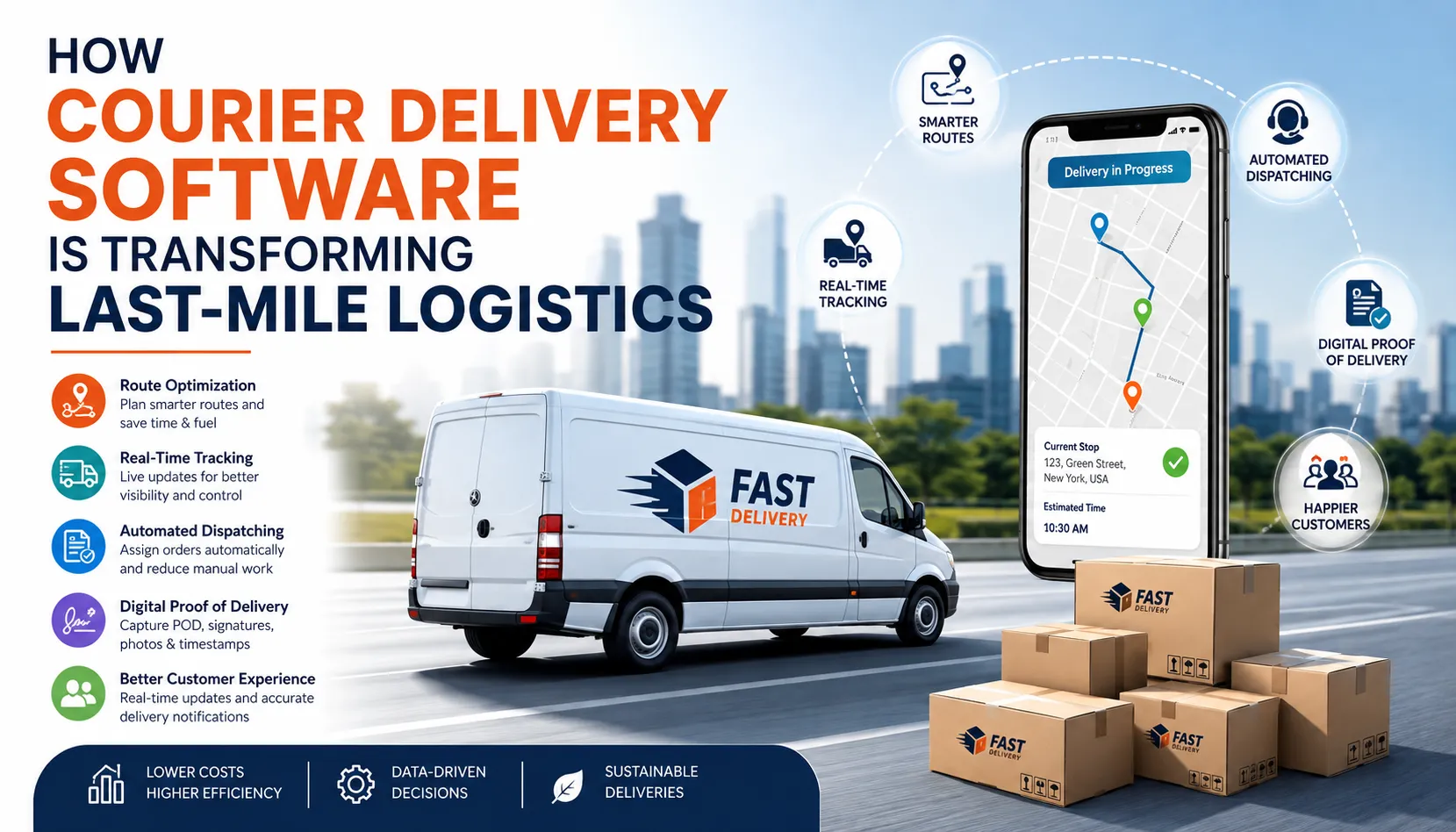

Last-mile delivery has become one of the most important parts of modern logistics. Customers no longer judge a business only by the quality of its products; they also expect fast, reliable, transparent, and convenient delivery experiences. As e-commerce, online marketplaces, food delivery, retail, healthcare, and on-demand services continue to expand, logistics companies are under increasing pressure to complete deliveries efficiently while controlling operational costs. This is where courier delivery software is transforming the way businesses manage their last-mile operations.
Traditional delivery processes often depend on manual dispatching, phone calls, spreadsheets, paper-based records, and static route planning. These methods may work for smaller delivery volumes, but they become difficult to manage as the number of orders, drivers, locations, and customer requirements increases. Modern courier delivery software brings these processes together in a centralized digital platform, helping businesses automate dispatching, optimize routes, track drivers, manage deliveries, and improve communication.
The Growing Challenges of Last-Mile Logistics
The final stage of the delivery journey is often the most complicated because it involves reaching individual customers at specific locations and sometimes within narrow time windows. A vehicle may need to make dozens of stops across different neighborhoods while dealing with traffic, parking limitations, changing customer availability, weather conditions, address issues, and unexpected delays.
Customer expectations have also changed significantly. Same-day and next-day delivery have become important competitive advantages, while customers increasingly expect accurate estimated arrival times and real-time shipment updates. As a result, logistics businesses need more than basic GPS navigation. They need technology capable of coordinating the entire delivery process from order assignment to final proof of delivery.
How Courier Delivery Software Is Changing Delivery Operations
Courier delivery software provides a centralized system for managing different stages of the last-mile delivery process. Instead of relying on separate tools for order management, driver communication, route planning, tracking, and reporting, businesses can connect these activities through a single digital workflow.
One of the biggest changes is the automation of delivery assignment. Software can consider factors such as driver location, availability, vehicle capacity, delivery priority, customer location, and existing workloads before assigning an order. This reduces the amount of manual work required from dispatch teams and helps ensure that deliveries are assigned more efficiently.
Route Optimization for Faster and More Efficient Deliveries
Route planning is one of the most valuable capabilities of modern courier delivery software. Manual route planning can become extremely difficult when a driver has multiple stops, different delivery windows, traffic restrictions, and changing road conditions.
Route optimization technology analyzes delivery locations and operational constraints to determine more efficient sequences. Advanced systems can also adjust routes when unexpected situations occur. For example, if traffic becomes heavier on a planned road, the system can help identify an alternative route rather than relying on the original plan.
Real-Time GPS Tracking Improves Delivery Visibility
Another major transformation comes from Real-time GPS tracking. Traditional delivery systems may only provide information when a package is scanned or manually updated. Modern courier delivery software can provide continuous visibility into driver and vehicle locations.
Dispatchers can monitor active deliveries from a centralized dashboard, while customers can receive shipment updates and estimated arrival information. This creates greater transparency and reduces the uncertainty associated with waiting for a delivery.
Real-time tracking is also valuable when delays occur. Instead of discovering a problem after a delivery has already failed, logistics teams can identify potential delays earlier and take corrective action. Drivers can be contacted, routes can be adjusted, and customers can receive updated information.
Automated Dispatching Reduces Manual Work
Manual dispatching requires employees to constantly monitor orders, contact drivers, assign tasks, and update delivery statuses. As delivery volumes increase, this process can consume significant time and increase the possibility of human error.
Courier delivery software automates much of this workflow. Orders can enter the system automatically, and delivery tasks can be assigned according to predefined business rules. Dispatchers can then monitor operations instead of spending most of their time performing repetitive administrative tasks.
Automation is particularly useful during peak periods when order volumes increase rapidly. A digital dispatch system can process a large number of delivery tasks much faster than a manual process, helping businesses maintain consistent operations even during busy periods.
Digital Proof of Delivery Builds Greater Accountability
Proof of delivery is another area where courier technology is replacing traditional processes. Paper signatures and manual delivery records can be difficult to organize, verify, and retrieve when disputes arise.
Digital proof of delivery allows drivers to capture information such as electronic signatures, photographs, timestamps, location data, or other confirmation details directly through a mobile application. This creates a digital record that can be accessed by authorized users when required.
Better Customer Communication and Experience
A successful last-mile strategy is not only about getting packages from one location to another. Communication is equally important.
Customers want to know when their order has been dispatched, where it is currently located, and when it is expected to arrive. Courier delivery software can support automated notifications through different stages of the delivery process.
Customers may receive updates when an order is assigned to a driver, when the driver is approaching the destination, or when the delivery has been completed. Accurate estimated arrival times can also help customers plan their schedules.
Data and Analytics Improve Logistics Decisions
One of the most valuable long-term benefits of courier delivery software is the data it generates. Every delivery can produce information about route performance, delivery times, driver productivity, failed attempts, customer wait times, and operational costs.
Managers can use this information to identify recurring problems and make better decisions. For example, analytics may reveal that certain delivery areas regularly experience delays or that particular routes require excessive travel time.
Integration Makes Delivery Operations More Connected
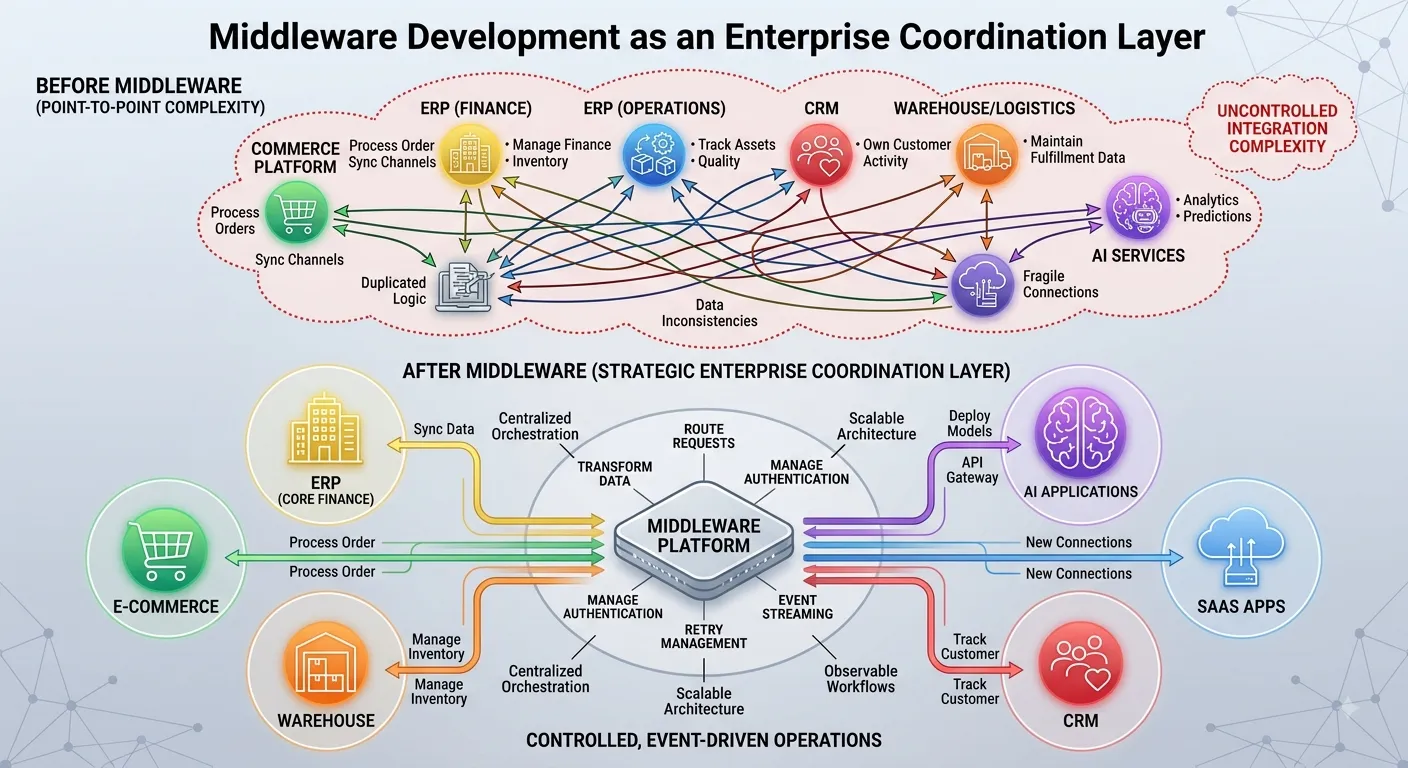
Courier delivery software becomes even more powerful when it integrates with existing business systems. E-commerce platforms, order management systems, payment gateways, customer relationship management systems, warehouse platforms, and accounting tools can exchange information with the delivery platform through APIs and other integrations.
This reduces duplicate data entry and helps create a connected logistics ecosystem. When an order is placed, information can move through the appropriate systems automatically, from order processing and dispatch to delivery confirmation and reporting.
AI Is Taking Last-Mile Optimization Further
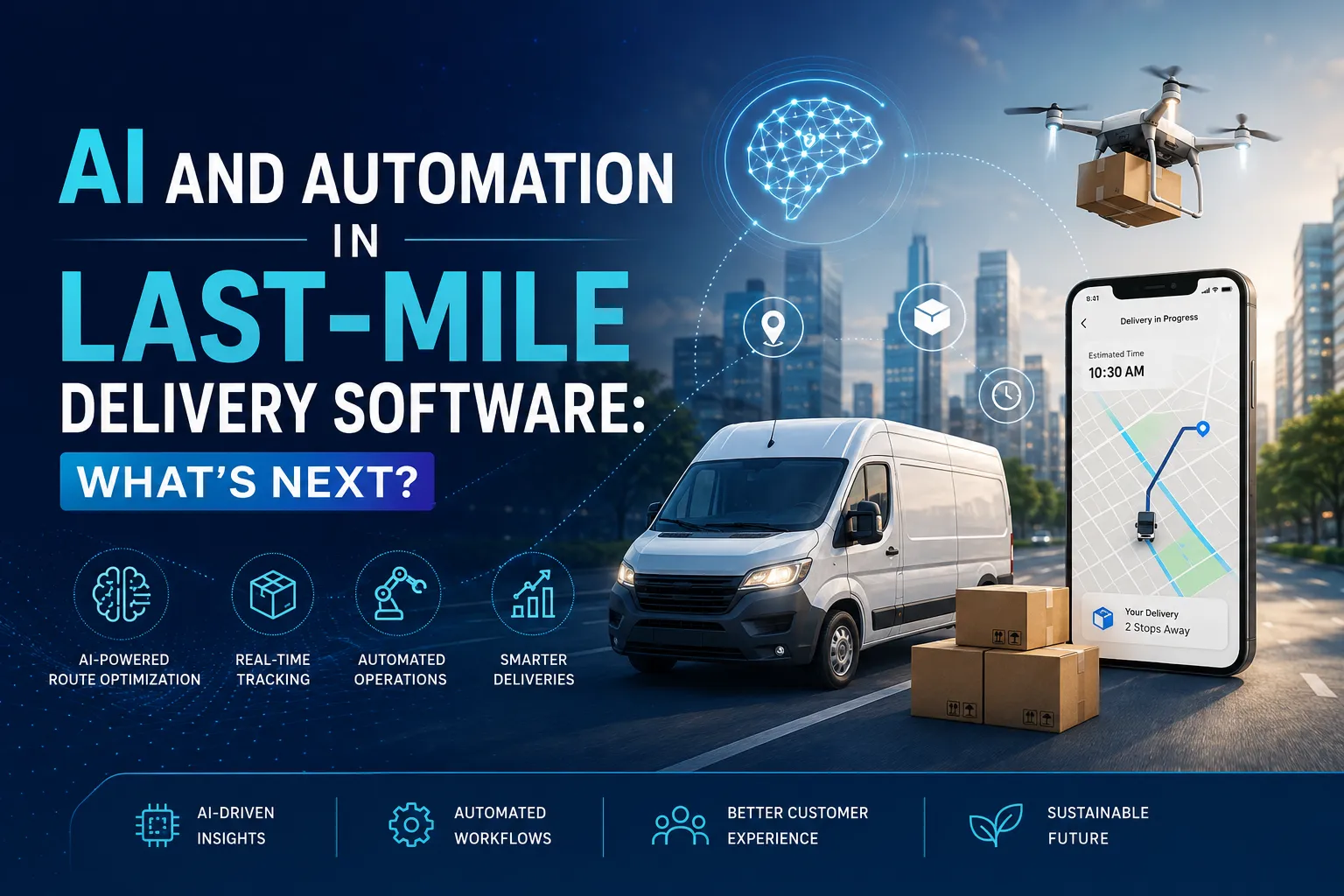
Artificial intelligence is becoming another important component of modern logistics software. AI-based systems can analyze large volumes of operational data and identify patterns that may be difficult to detect manually.
In last-mile delivery, AI can support route optimization, demand forecasting, delivery time estimation, driver assignment, and exception management. Advanced systems can also consider changing conditions rather than relying exclusively on fixed delivery plans.
Sustainability Through Smarter Delivery Planning
Efficiency and sustainability are closely connected in last-mile logistics. When delivery vehicles travel unnecessary distances, fuel consumption and emissions increase. Better route planning can help reduce inefficient travel while allowing businesses to serve more customers with available resources.
Courier delivery software can support sustainability by optimizing routes, reducing unnecessary mileage, improving vehicle utilization, and helping businesses understand fuel and operational patterns.
The Future of Last-Mile Logistics
The future of last-mile delivery will be increasingly digital, connected, and data-driven. Courier delivery software is moving beyond simple tracking and dispatching toward intelligent platforms capable of coordinating multiple parts of the delivery ecosystem.
AI-powered optimization, predictive analytics, real-time tracking, automated communication, digital proof of delivery, and API-based integrations will continue to shape delivery operations. Businesses that adopt these technologies can improve operational visibility while creating more flexible and responsive delivery processes.
The goal is not simply to deliver packages faster. Modern logistics technology aims to create a complete delivery experience in which orders are processed efficiently, drivers receive better instructions, customers receive accurate information, and managers have the data required to continuously improve operations.
Conclusion
Courier delivery software is transforming last-mile logistics by replacing fragmented and manual processes with connected, automated, and data-driven workflows. From route optimization and automated dispatching to real-time tracking, digital proof of delivery, customer communication, and analytics, modern technology is helping logistics companies manage the final stage of delivery more effectively.
As delivery expectations continue to rise, businesses that depend on reliable last-mile operations will increasingly need technology that can adapt to changing demand, traffic conditions, customer requirements, and fleet constraints. By investing in the right courier delivery software, companies can build more efficient operations, improve visibility, reduce unnecessary costs, and deliver a better customer experience.



























Sign in to leave a comment.