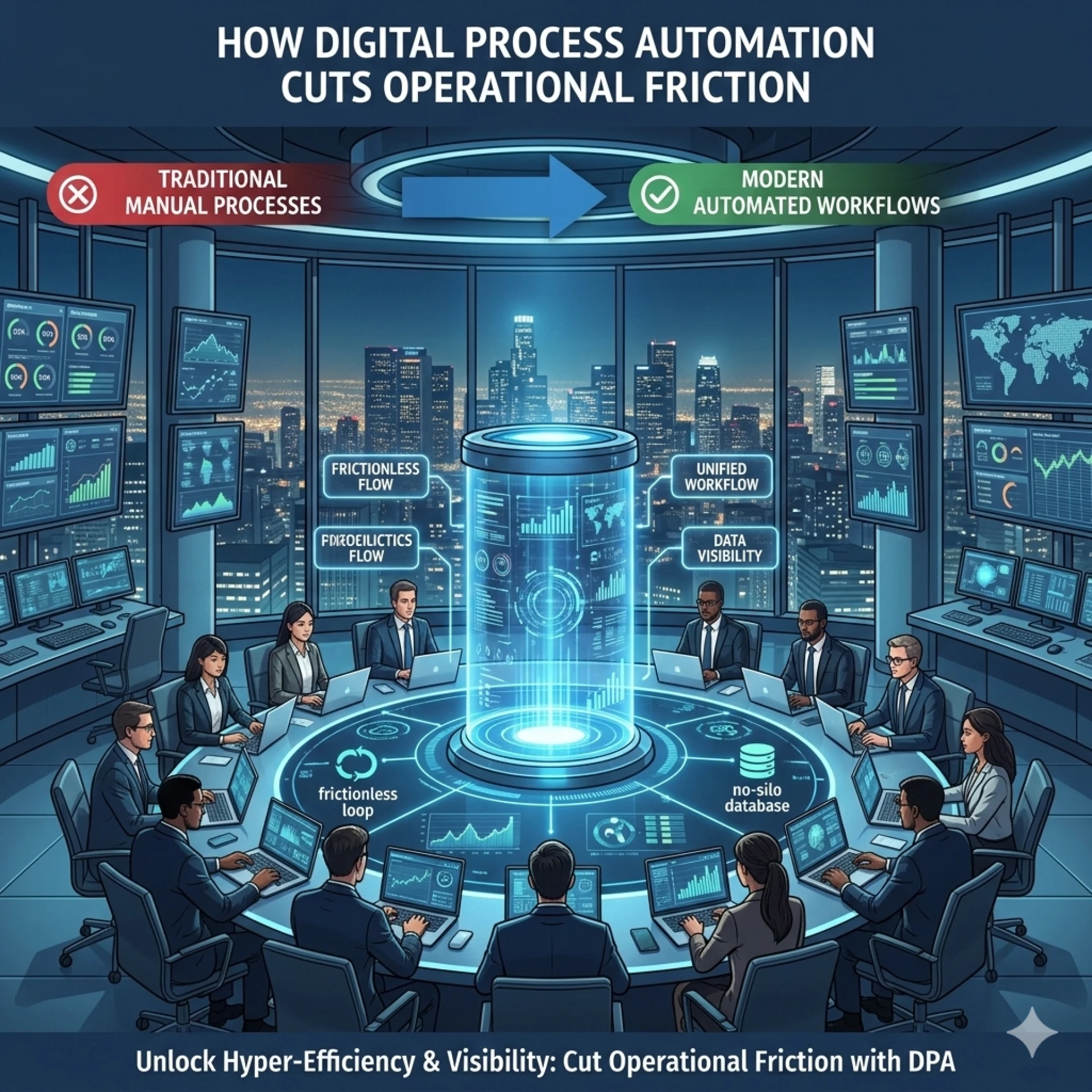

In the fast-paced business world of today, efficiency is key. Companies must continuously optimize their operations to stay competitive, reduce costs, and deliver exceptional customer experiences. One of the most effective ways to achieve this is through Digital Process Automation (DPA). By automating routine tasks, companies can cut down on manual work, eliminate bottlenecks, and significantly reduce operational friction.
In this blog, we'll explore how Digital Process Automation helps businesses streamline workflows, improve efficiency, and create a smoother, more responsive operational environment.
What is Digital Process Automation?
At its core, Digital Process Automation is the use of technology to automate complex business processes. Unlike traditional automation, which focuses on individual tasks, DPA seeks to optimize entire workflows by integrating multiple systems, processes, and applications.
The goal of Digital Process Automation is to eliminate manual intervention in repetitive tasks, reduce errors, and create seamless, efficient workflows. Whether it’s processing invoices, managing approvals, or onboarding new employees, DPA works to make processes faster, more accurate, and less resource-intensive.
Key Benefits of Digital Process Automation:
- Efficiency: Automates routine tasks, saving time and reducing human error.
- Accuracy: Reduces mistakes, ensuring consistency and reliability.
- Scalability: Enables businesses to scale operations without increasing headcount.
- Transparency: Provides real-time insights into workflows, improving accountability.
- Cost savings: Reduces operational costs by automating resource-intensive tasks.
Now, let’s explore how Digital Process Automation directly impacts operational friction.
Eliminating Manual Tasks and Reducing Errors
Manual tasks are often a significant source of operational friction. Whether it’s entering data, sorting emails, or reviewing contracts, manual work consumes valuable employee time and is prone to human error. A mistake in a manual process like entering incorrect data in an invoice or misplacing a document can cause delays, additional work, and sometimes even customer dissatisfaction.
Digital Process Automation tackles these challenges by automating repetitive, error-prone tasks. For example, invoice processing can be automated by capturing invoice data using optical character recognition (OCR), verifying the details against purchase orders, and routing the approval to the relevant person. All this can be done automatically, ensuring accuracy and speed. The result is fewer mistakes, faster processing times, and less time spent on mundane tasks.
A study by McKinsey found that automation can reduce errors by as much as 90%. This reduction in errors means fewer rework tasks, less back-and-forth communication, and quicker response times.
Improving Workflow Efficiency and Speed
One of the biggest friction points in business operations is inefficient workflows. Many processes require multiple approvals, document handoffs, or manual steps that slow things down. This results in delays, increased waiting times, and frustration for both employees and customers.
Digital Process Automation streamlines workflows by automating approvals, routing tasks to the right people at the right time, and eliminating unnecessary steps. With automation, tasks that would typically take days can be completed in hours, if not minutes.
For instance, in employee onboarding, instead of relying on HR staff to manually enter employee information, send multiple emails, and chase approvals, DPA systems can automate the entire process. From sending welcome emails and assigning tasks to collecting documentation and getting approvals, everything happens automatically. This reduces delays, eliminates friction between departments, and accelerates the onboarding experience for new hires.
Automation also provides greater visibility into workflows. Managers can track the status of a task in real time, helping them identify bottlenecks and quickly resolve issues. This level of insight leads to better decision-making and more agile operations.
Streamlining Cross Departmental Collaboration
In many organizations, operational friction arises when different departments need to collaborate on tasks. Information gets passed from one team to another, and each department uses different systems, making it difficult to share data and ensure everything runs smoothly.
Digital Process Automation bridges this gap by creating automated workflows that integrate multiple systems and departments. It breaks down silos and ensures that information flows seamlessly from one department to the next.
For example, in the case of a procurement process, once an order is placed, DPA can trigger an automated notification to the finance department for payment approval. When the payment is processed, another automated task notifies the logistics team to begin shipping. These steps can occur automatically, without requiring constant communication or manual handoffs between teams.
By streamlining cross-departmental workflows, Digital Process Automation helps eliminate friction between teams, ensuring that tasks move forward without delay and reducing the chances of miscommunication or oversight.
Enhancing Customer Experience and Satisfaction
Operational friction not only affects internal workflows but also impacts the customer experience. Slow response times, errors in order fulfillment, and miscommunications can lead to frustration, lost sales, and damaged customer relationships.
By implementing Digital Process Automation, businesses can improve their responsiveness to customers and enhance their overall experience. For example, in customer service, automated workflows can route customer inquiries to the right department or person based on predefined rules. This ensures that customers get timely responses and that their issues are addressed quickly.
In e-commerce, automation can help ensure that orders are processed efficiently, inventory levels are updated in real-time, and customers receive timely updates on their purchases. All of this leads to better customer satisfaction and retention.
Reducing Costs and Resource Strain
Another key benefit of Digital Process Automation is its ability to reduce operational costs. By automating routine tasks, businesses can do more with fewer resources. This means less time spent on manual work, fewer errors, and more time focused on high-value tasks.
Automation also enables businesses to scale their operations without increasing headcount. As the demand for products or services increases, companies don’t need to hire more employees to handle the workload. Instead, they can rely on automation to handle the increased volume of tasks, improving scalability and reducing costs.
A study by Forrester Research found that organizations that implement automation solutions can reduce operational costs by up to 30%, freeing up resources that can be reinvested into business growth and innovation.
Conclusion
Digital Process Automation is transforming the way businesses operate. By eliminating manual tasks, streamlining workflows, and improving collaboration across departments, DPA reduces operational friction and enhances overall efficiency. The result is a more agile, responsive, and cost-effective business that can handle increasing workloads without sacrificing quality or customer satisfaction.
In an increasingly competitive market, companies that embrace Digital Process Automation will be better equipped to keep up with the pace of change, deliver better customer experiences, and drive long-term growth. Operational friction is a problem of the past, and automation is the key to moving businesses forward.


























Sign in to leave a comment.