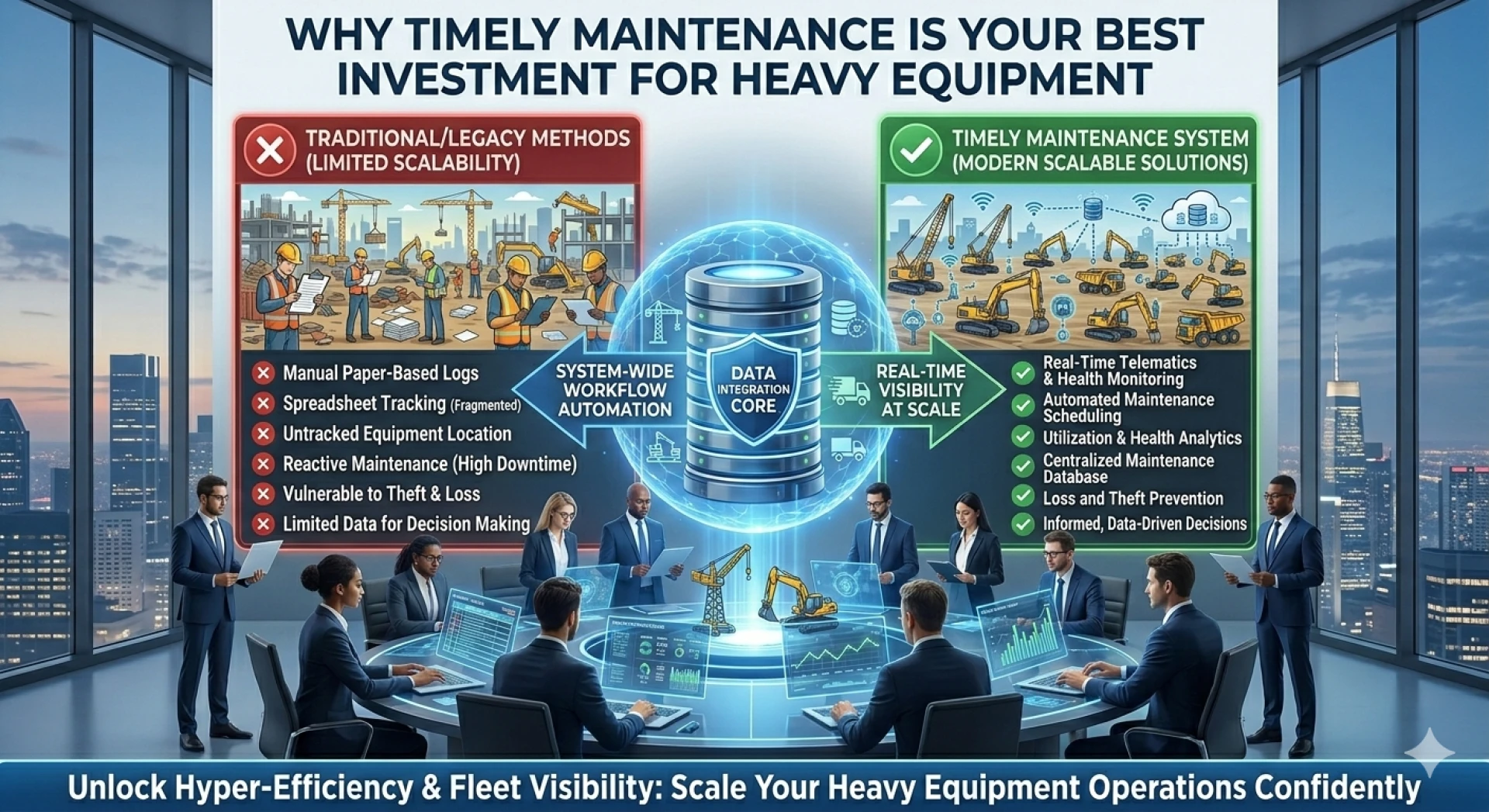

When it comes to managing a fleet of heavy construction equipment, ensuring that your machinery operates at its best is a top priority. Construction equipment plays a central role in every project, and its reliability is crucial for meeting deadlines and staying within budget. However, the reality is that all equipment requires regular care and attention to remain functional. Timely maintenance is not only an essential part of operations but a strategic investment that can save time and money in the long run.
In this article, we’ll explore why timely maintenance of heavy equipment is crucial, how it impacts the performance and profitability of your fleet, and how construction equipment maintenance software can help streamline the process and improve the overall efficiency of your operations.
The Importance of Timely Maintenance for Heavy Equipment
The heavy machinery used in construction sites, whether it's cranes, bulldozers, excavators, or loaders, are valuable assets. However, without proper care and timely maintenance, these machines can break down, leading to unexpected downtime and costly repairs. Here's why maintaining equipment on time is critical:
1. Preventing Costly Breakdowns
Unexpected breakdowns are one of the biggest threats to any construction project. A machine that breaks down on-site can cause delays, disrupt work schedules, and result in costly repairs that could have been prevented. Regular maintenance helps identify potential problems before they escalate, ensuring that your equipment remains in peak working condition and that issues are addressed before they cause major failures.
2. Extending Equipment Lifespan
Construction equipment represents a significant investment. Ensuring its longevity through regular maintenance will maximize its lifespan, which ultimately protects your bottom line. Timely maintenance allows you to keep the machinery running smoothly for a more extended period, which reduces the need for early replacements and helps you avoid costly depreciation.
3. Enhancing Performance and Efficiency
When construction equipment is well-maintained, it operates more efficiently. Machines that are regularly serviced and repaired tend to perform better and consume less fuel, which improves overall efficiency and reduces operational costs. For example, a well-maintained engine burns fuel more efficiently, reducing the overall fuel costs for the project.
4. Complying with Safety Regulations
Safety is a top priority on any construction site. Timely maintenance of your equipment ensures that all safety systems are functioning correctly. Equipment that isn't properly maintained may develop issues that could compromise the safety of workers on-site. Routine inspections help identify safety hazards, keeping workers protected and ensuring compliance with industry regulations.
5. Avoiding Downtime and Delays
Downtime is one of the biggest obstacles to construction project success. Equipment downtime disrupts the entire workflow and causes delays that can push back project timelines. Regular maintenance checks ensure that your machines are up and running when needed, minimizing the chances of unexpected failures and the resultant downtime.
How Construction Equipment Maintenance Software Helps
While traditional methods of scheduling maintenance and tracking equipment health can be effective, they tend to be time-consuming and prone to human error. Construction equipment maintenance software offers a more streamlined, efficient way to keep track of maintenance schedules, inspections, and repairs. Below are several ways in which maintenance software can enhance equipment management:
1. Automated Maintenance Scheduling
With construction equipment maintenance software, maintenance tasks are automatically scheduled based on the usage of the equipment. Whether the machine has been in use for a set number of hours or needs periodic inspections, the software will send reminders for upcoming maintenance. This feature helps you stay on top of preventive maintenance without missing critical deadlines, ensuring that your equipment is always ready for use.
2. Real-Time Monitoring and Alerts
One of the most powerful features of construction equipment management software is real-time monitoring. The software can provide instant alerts when certain equipment requires attention or is showing signs of wear. If a machine’s performance drops or it’s due for maintenance, managers are notified right away, allowing them to take corrective actions before the problem escalates.
3. Improved Record-Keeping and Documentation
Keeping accurate maintenance records for each piece of equipment is crucial for compliance and budgeting. With maintenance software, you can easily track maintenance history, repairs, inspections, and even warranty information. This data is essential for tracking equipment costs, planning future repairs, and ensuring compliance with safety and regulatory standards.
4. Cost Analysis and Budgeting
Construction equipment maintenance software also helps manage costs by analyzing repair and maintenance data. By tracking the amount of money spent on repairs and routine maintenance, managers can assess whether certain equipment is becoming too costly to maintain. This data also helps forecast future expenses and can be valuable in deciding whether to replace older equipment or keep it running.
5. Increased Fleet Utilization
By maintaining equipment properly and ensuring that it’s always in working order, you can increase the overall utilization of your fleet. When equipment is down for repairs or not properly maintained, it cannot be used to its full potential, reducing its contribution to the project. With timely maintenance and fewer breakdowns, your fleet will be ready for use when you need it, leading to higher productivity.
Best Practices for Effective Equipment Maintenance
Effective maintenance isn’t just about scheduling repairs and inspections – it’s about establishing a well-rounded approach to managing equipment health. Here are some best practices for maintaining heavy equipment and ensuring optimal performance:
1. Implement a Preventive Maintenance Program
A preventive maintenance program is key to avoiding unplanned downtime. This program involves regularly scheduled inspections, cleaning, and repairs, even if the equipment is running smoothly. Preventive maintenance helps identify potential issues before they turn into bigger, more expensive problems.
2. Conduct Regular Inspections
Regular inspections are essential for ensuring equipment is operating correctly and safely. This can include checking fluid levels, inspecting the engine and hydraulics, checking tires or tracks, and making sure that safety systems are functioning. Inspections should be done based on the equipment’s usage and manufacturer’s recommendations.
3. Track Equipment Performance and Usage
Monitoring the performance and usage of your equipment provides valuable insights into its health and efficiency. Construction equipment maintenance software can track metrics such as fuel consumption, engine hours, and load capacity. These metrics allow you to identify performance trends, schedule maintenance at the right time, and catch issues early.
4. Keep Spare Parts Available
Having spare parts readily available ensures that repairs can be made quickly when needed. This helps reduce downtime and prevents long delays waiting for parts to be shipped. For frequently used parts, such as filters, belts, and fluids, it’s important to keep them on hand to minimize disruption.
5. Train Your Team on Proper Equipment Use
Proper usage of equipment is just as important as maintenance. Ensure that all operators are trained in the correct procedures for using the machinery. Improper use can lead to unnecessary wear and tear, which could shorten the lifespan of your equipment.
Conclusion
Timely maintenance is a smart investment for any construction operation. Regularly servicing your equipment reduces the risk of unexpected breakdowns, helps extend the lifespan of machinery, improves safety, and boosts overall efficiency. With construction equipment maintenance software, managing the health of your fleet becomes more streamlined and efficient, allowing you to focus on getting the job done without the worry of costly repairs or unplanned downtime.
By implementing preventive maintenance programs, keeping track of equipment performance, and utilizing software for scheduling and monitoring, you can ensure that your equipment is always running at its best. In the world of construction, where time is money, staying on top of maintenance is not just important it’s essential for success.

























Sign in to leave a comment.