

In recent years, orthodontic aligners, commonly known as clear aligners, have taken the dental world by storm. From celebrities flashing perfect smiles to teens avoiding the dreaded “metal mouth” look, these invisible trays are changing the way America straightens teeth. For years, metal braces were the go-to fix. They worked, no doubt, but came with wires, brackets, discomfort, and a very noticeable look. This is where clear aligners come in.
But let’s hit pause for a second and dig a little deeper. How do clear aligners actually work? What’s the science behind these sleek plastic trays nudging your teeth into place without wires, brackets, or monthly tightening?
In this blog, we will walk you through the full journey, step by step, explaining to you how orthodontic aligners move your teeth, the role of biomechanics, and what to expect throughout the process. Let's proceed to explore how orthodontic aligners work, their benefits, limitations, and how they compare to traditional braces. Keep reading.
Misaligned Teeth: Causes, Risks, and Modern Treatment with Clear Aligners
Crooked or crowded teeth aren’t just about looks. Sure, they can make you a little self-conscious in photos, but there’s more going on beneath the surface. Misaligned teeth can mess with your bite, throw off your jaw alignment, affect the way you speak, and even make brushing and flossing a challenge.
That’s right, oral hygiene can take a hit, too. For years, metal braces were the go-to fix. Those brackets and wires got the job done, no doubt. But fast forward to today, and there’s a new crew in town, clear aligners like Invisalign. These modern marvels are sleek, easy to remove, almost invisible, and often deliver outcomes faster than traditional braces in mild to moderate cases. Even with all the buzz, a lot of people still don’t really get how these clear trays actually work. They just know they look cooler than braces.
It All Starts With a 3D Scan!
Forget the gooey impressions and awkward mouth molds. Your aligner journey usually kicks off with a high-tech 3D scan of your teeth. Orthodontists use a digital scanner (like the iTero) to create a precise, virtual model of your mouth. This scan offers a deep look at your teeth, bite, and jaw position. Using this data, advanced software maps out a digital plan that shows exactly how your teeth will move over time, often with a simulation of your future smile. And yes, you will get a sneak peek of your result before you even get started.
How Each Tray Gently Shifts Your Teeth?
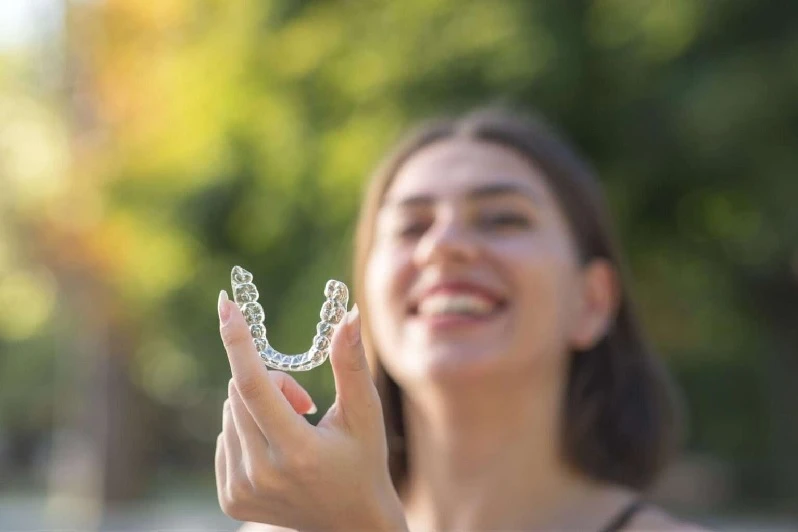
Once your treatment plan is set, a lab creates a series of custom aligner trays made from BPA-free plastic. Each tray is slightly different from the last, built to make tiny, gradual changes to your teeth. You’ll wear these aligners for 20–22 hours a day and switch to a new set every 1–2 weeks. They may look simple, but they’re built with cutting-edge biomechanics and materials science.
Attachments and Enhancers – Tiny Tools for Big Results
Sometimes, orthodontic aligners need a little extra help to make complex movements. That’s where attachments come in. These are small, tooth-colored bumps bonded to certain teeth, giving the aligners a better grip to rotate or tilt teeth more effectively. You might also hear terms like “power ridges,” “elastics,” or “bite ramps.” These are extra tools used in tougher cases to shift your bite or move stubborn teeth that don’t respond easily.
Changing Aligners – A Journey to a Straighter Smile
Think of your smile journey like a story, and each new aligner is a fresh chapter moving you closer to the happy ending. With every set you wear, small, targeted changes are happening. One might gently rotate a crooked tooth, while the next helps close a gap. These trays work step by step, each building on the last. But for the story to stay on track, consistency is key. Skipping wear time, even for a few hours, can slow your progress or set things back.
Monitoring Progress with Your Orthodontist
Even though aligners might feel “DIY,” they’re definitely not a “set-it-and-forget-it” fix, especially if you want predictable results. You’ll check in with your orthodontist or dentist every few weeks (either in person or virtually) to make sure everything’s on track.
They’ll look at:
● Whether your teeth are moving as expected.
● How are your gums doing?
● If your aligners are fitting right.
● Whether mid-course corrections are needed.
Retainers – The Secret to Keeping Your New Smile
Once you finish your last set of aligners, your smile journey isn’t quite over. Just like with braces, your teeth may try to shift back to their old spots. That’s where retainers come in. You’ll get a custom retainer (usually similar in style to your aligners) to wear at night. At first, it may be full-time wear, then you’ll taper down to nighttime only.
Are All Aligners the Same?
No! Even though clear aligners may look similar, how effective they are and how closely they’re supervised can vary a lot by brand.
● Invisalign: Great for complex cases, with high doctor involvement and a typical 1–2 week change cycle.
● Byte: Better for mild to moderate issues, fully remote care, and a faster 1-week tray schedule.
● Candid: Targets moderate cases with remote monitoring and periodic in-person dentist check-ins, using a 2-week wear time.
● SmileDirectClub: Designed for light cosmetic fixes and completely remote, with trays changed every 1–2 weeks.
These alternatives are easy, especially those offering at-home setups. On the flip side, if you are facing bite problems, crowding, or jaw misalignment, it is recommended to consult with a certified orthodontist.
Final Thoughts
Orthodontic aligners aren’t just a modern trend or a cosmetic fix; they’re a science-backed solution for straightening misaligned teeth. What truly sets them apart isn’t just their clear, discreet appearance, but the smart design behind them. These custom-made trays apply gentle, biomechanical forces, often enhanced by features like attachments and power ridges, to gradually move your teeth into the right position, all without the need for metal wires or brackets. If you’re looking to improve your smile but prefer to avoid traditional braces, aligners can be a comfortable and effective alternative. To get started, consult with an orthodontist and take the first step toward a confident, lasting smile.




























Sign in to leave a comment.