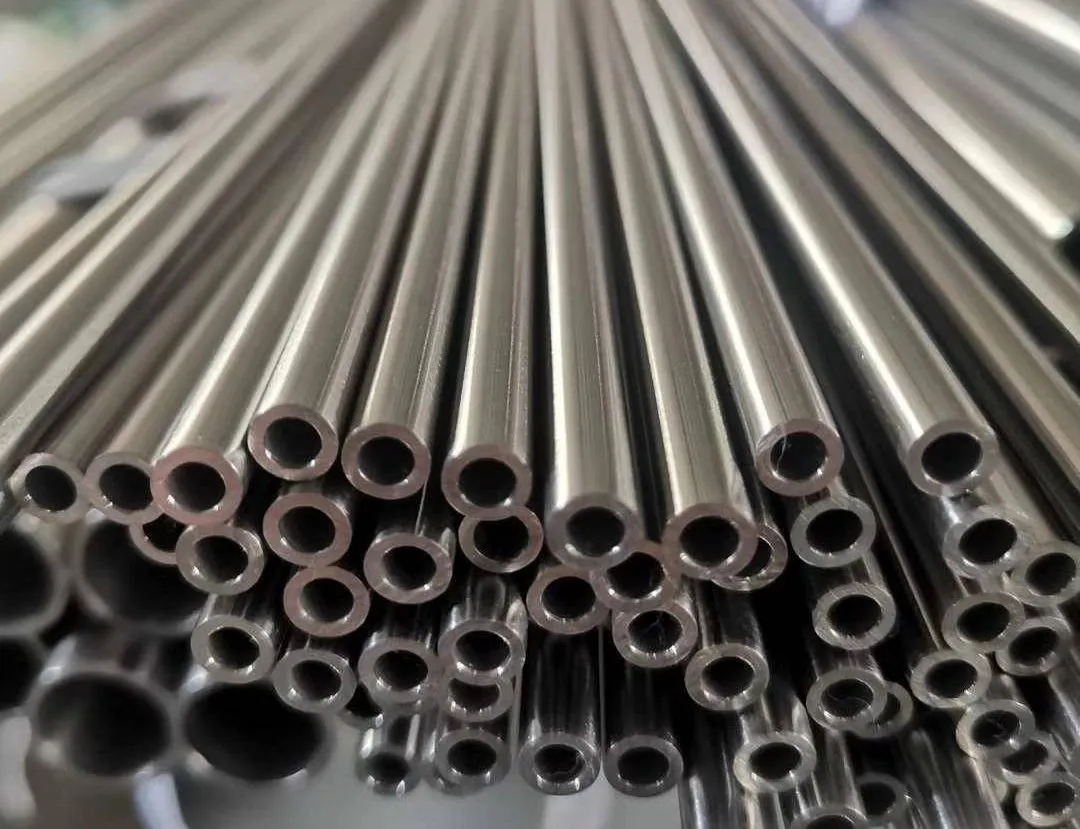


Corrosion prevention in nickel tubing systems depends on the environment, but here are the key strategies:
Material selection and alloy choice
- Pure nickel (Ni 200/201) resists caustic alkalis and dry chlorine/HCl gas well, but for more aggressive or mixed environments, nickel alloys are often better:
- Monel: resists seawater, hydrofluoric acid, reducing acids
- Inconel: resists high temperature oxidation, chlorides, and stress corrosion cracking
- Hastelloy: resists strong oxidizers and mixed acid environments
Surface preparation and finishing
- Passivation is critical, nickel's corrosion resistance depends heavily on this passive film.
- Electropolishing or mechanical polishing reduces surface defects/pits that act as corrosion initiation sites.
- Removing embedded iron contamination prevents localized rust induced pitting.
Environmental control
- Avoid oxidizing acids with pure nickel, it's poorly suited there; use a more resistant alloy instead.
- Control chloride concentration and temperature, since chlorides promote pitting and stress corrosion cracking, especially at elevated temperatures.
- Maintain proper pH, nickel is vulnerable in strongly oxidizing, low-pH conditions.
- Minimize dissolved oxygen and stagnant zones where localized corrosion cells can form.
Cathodic protection
Sacrificial anodes or impressed current systems can protect nickel tubing in aggressive aqueous environments like seawater cooling systems.
Design considerations
- Avoid crevices, dead legs, and stagnant flow areas, these promote localized corrosion.
- Ensure adequate flow velocity to prevent deposits but avoid erosion corrosion at excessive velocities.
- Design for proper drainage to avoid water pooling during shutdowns.
- Avoid galvanic coupling with less noble metals unless intentionally used for cathodic protection.
Coatings and linings
In extremely aggressive service, internal coatings or linings can supplement the base metal's resistance.
Monitoring and maintenance
- Regular inspection to catch pitting or cracking early.
- Water chemistry monitoring in cooling/process water systems to catch corrosive shifts before damage occurs.
- Periodic cleaning to remove deposits that create differential aeration cells.
Corrosion prevention in nickel tubing systems depends heavily on the nickel alloy, fluid chemistry, temperature, flow conditions, and contaminants. Nickel itself is quite corrosion resistant, but some environments can cause pitting, crevice corrosion, stress corrosion cracking, or erosion-corrosion.



























Sign in to leave a comment.