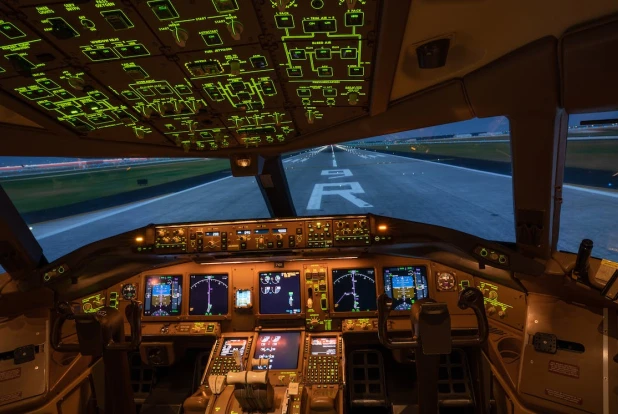

Although aviators have relied on electromechanical flight systems and decks for a long time, the EFIS (Electronic Flight Instrument System) has grown in popularity as a standard for many newer models. Instead of conventional dials, gauges, and features, the display technology used for the EFIS includes LCD screens and CRT to group critical information together for pilots.
With the use of EFIS growing rapidly in aircraft models, understanding its different display features and components can be beneficial for those who pilot airplanes or are learning to fly. FAA-qualified instructors at Momentum Flight Training explore the basics, purpose, and other things to know about Electronic Flight Instrument Systems.
The Use of Electronic Flight Instrument Systems in Modern Aviation
EFIS refers to a flight deck instrument system that utilizes electronic technology instead of electromechanical. Earlier systems portrayed data using CRT technology. Advanced instrument displays are presented on multi-color LCD screens that have replaced most, and sometimes all, conventional flight instruments for pilots. The underlying software, electronic circuity, and sensors effectively replace all mechanical flight instruments, gauging with a single unit.
Typically, EFIS systems comprise a Navigation Display/ EHSI (Electronic Horizontal Situation Indicator) and EADI/ PFD (Electronic Attitude Direction Indicator/ Primary Flight Display). Both displays are integrated into one in many designs.
What is EADI/ PFD?
PFD, or Primary Flight Display, is an instrument that integrates and depicts all the information on a single display, as opposed to how it was historically presented over many different individual electromechanical instruments.
Evolving from a basic flight director/ attitude indicator combination, once presented on a CRT electronically, to an Electronic Altitude Direction Indicator, which, although depending on the manufacturer, could vary, generally shows additional information such as altitude, rate of climb, airspeed, heading, and other basic flight parameters. It also shows the auto-throttle and autopilot engagement status, approach status, and flight director modes.
Depending on pilot selections or flight phases, the flight director provides appropriate lateral guidance to maintain approach or heading, selected track, lateral guidance for descent and climb, missed approach track, level off, approaching land, and more.
It significantly reduces the workload for pilots while in manual flying mode and facilitates flight monitoring with the autopilot engaged because all important information is displayed through a single instrument.
What is ND/ EHSI?
The Electronic Horizontal Situation Indicator, commonly referred to as the Navigation Display replaced several different flight instruments found on panels in conventional aviators. The device works alongside the display controller and flight management computer to provide various navigational aids.
The data provided by the system include things like selected track or heading, aeronautical map, heading flown, lateral divisions from the selected track, weather information, ground speed, time and distance to go, bearing to or from the navigation beacon, and lots of more information according to design. Beyond the MAP and PLAN modes, EHSI may also offer ILS and VOR modes for additional information during landing and navigation procedures.
Interested in refreshing your memory and learning new concepts before you join your dream regional aviation company? Take a comprehensive 1-day, 3-day, and 5-day aircraft simulator training course at Momentum Flight Training to make the transition smoother!Found by Andy Profit, the training institute employs some of the best FAA-qualified instructors who help aspiring regional pilots navigate all the systems, protocols, and procedures so they feel confident when they fly the real aircraft.A cutting-edge AATD CRJ simulator is used along with educational resources tailored to meet the learning goals and requirements of major regional airlines. Enroll now!Call 833-427-5876 to speak to their qualified instructors or set up an in-person consultation.
About the Author
The author of this post boasts an aviation career that spans three decades. He has cumulated 22,000 hours of flight time and worked as a designated FAA examiner after completing captaincy at a regional airline.



























Sign in to leave a comment.