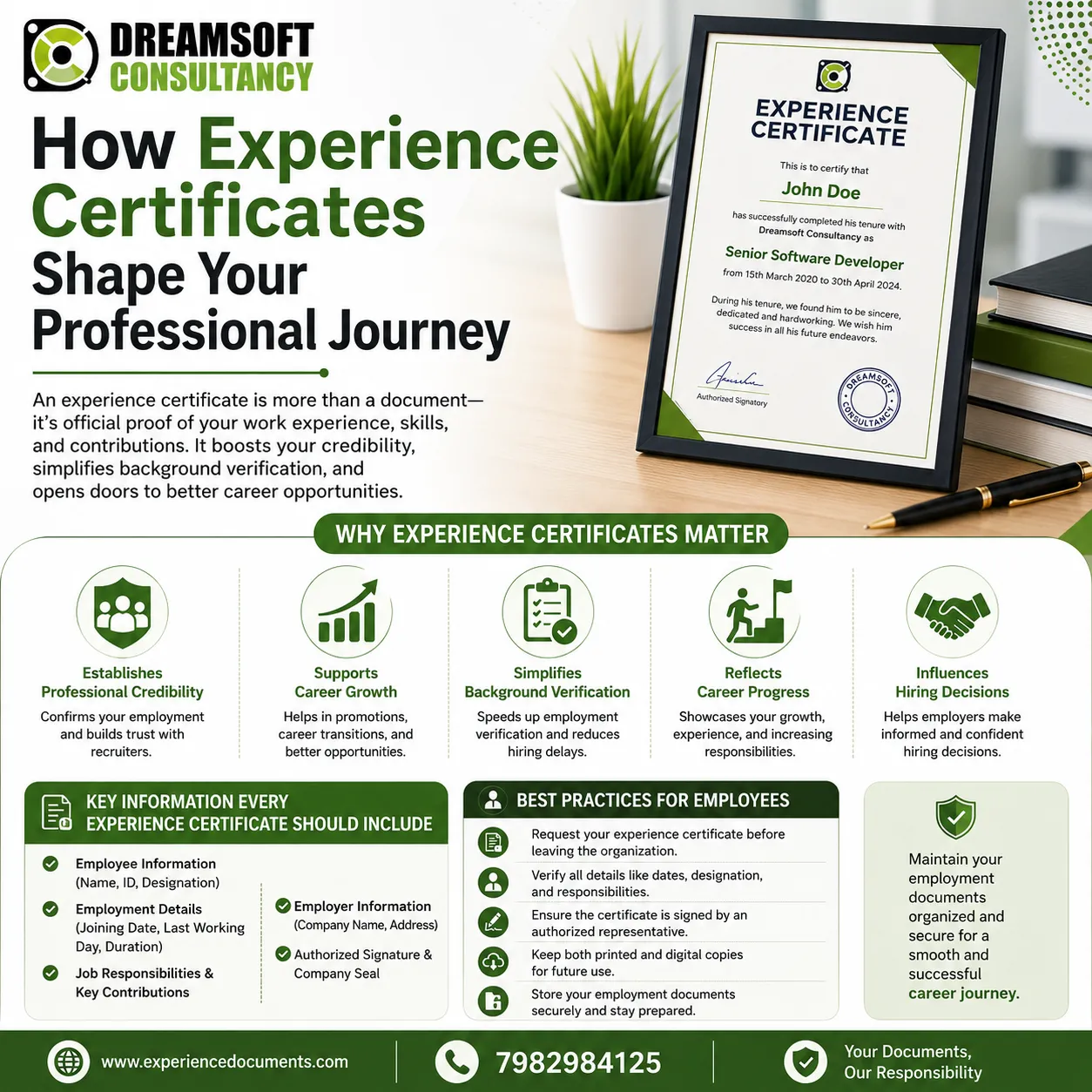

Your professional journey is built on the skills you develop, the responsibilities you take on, and the experience you gain throughout your career. While your resume highlights these achievements, an experience certificate serves as official proof of your employment history and professional contributions. It is one of the most important employment documents that employers request during recruitment, job changes, and background verification.
In today's competitive job market, organizations want to verify every candidate's work history before making a hiring decision. A genuine experience certificate confirms your employment period, designation, responsibilities, and overall work experience. This document helps recruiters understand your professional background and increases their confidence in your profile. Whether you are an experienced professional or someone looking for better career opportunities, maintaining proper employment documentation can make your job search much smoother.
What Is an Experience Certificate?
An experience certificate is an official document issued by an employer after an employee completes their tenure with the company. It acts as formal proof that you worked with a particular organization for a specified duration.
A professional experience certificate generally includes:
- Employee's full name
- Designation
- Department
- Date of joining
- Last working day
- Total duration of employment
- Key job responsibilities
- Skills demonstrated
- Employer's signature and company seal
This document becomes an important part of your professional record and is often requested during hiring, employment verification, and future career opportunities.
Why Experience Certificates Matter
An experience certificate is much more than a simple employment document. It helps professionals establish credibility and supports career growth in multiple ways.
1. Establishes Professional Credibility
Recruiters prefer candidates who can provide authentic employment records. A properly issued experience certificate confirms that the information mentioned in your resume is accurate. It builds trust between the candidate and the employer.
2. Supports Career Growth
Whether you are applying for a promotion, changing industries, or joining a multinational company, an experience certificate demonstrates your previous work experience. Employers can easily understand your professional journey through documented employment history.
3. Simplifies Background Verification
Today, almost every reputed organization performs background verification before onboarding employees. During this process, companies verify previous employment, designation, tenure, and responsibilities.
Having a genuine experience certificate makes the background verification process smoother and reduces delays during recruitment.
4. Strengthens Your Professional Profile
An experience certificate adds value to your overall profile by proving your practical industry experience. It complements your educational qualifications and professional skills, giving recruiters greater confidence in your abilities.
How Experience Certificates Influence Hiring Decisions
Recruiters don't rely solely on resumes. They also verify employment history before making final hiring decisions. An experience certificate allows employers to confirm important information such as:
- Employment duration
- Previous designation
- Nature of work
- Industry experience
- Department handled
- Career progression
- Continuity of employment
This verification helps organizations reduce hiring risks while ensuring they recruit qualified professionals.
Importance of Employment Documents During Recruitment
Apart from an experience certificate, recruiters may request several other employment documents to complete the hiring process. These include:
- Appointment Letter
- Offer Letter
- Relieving Letter
- Salary Slips
- Identity Proof
- Educational Certificates
Keeping these employment documents organized helps professionals respond quickly to employer requests and complete hiring formalities without unnecessary delays.
Key Information Every Experience Certificate Should Include
A professional experience certificate should always contain complete and accurate information.
Employee Details
- Full Name
- Employee ID (if applicable)
- Designation
- Department
Employment Information
- Date of Joining
- Last Working Day
- Total Employment Duration
Job Responsibilities
A brief summary of the employee's primary responsibilities, projects handled, and professional contributions.
Employer Information
- Company Name
- Registered Address
- HR Signature
- Company Stamp or Official Seal
These details ensure the experience certificate is complete and suitable for background verification.
Choosing a Reliable Experience Certificate Provider
Sometimes professionals lose important employment records or require assistance in understanding employment documentation. In such situations, consulting a trusted experience certificate provider can help individuals understand documentation requirements and organize their employment records correctly.A reliable experience certificate provider focuses on proper documentation practices and helps professionals understand the importance of maintaining authentic employment records for future career opportunities.
Frequently Asked Questions
Is an experience certificate mandatory?
Not every employer requires one, but many organizations ask for an experience certificate during recruitment and background verification.
Can an experience certificate help when switching jobs?
Yes. It provides official proof of your previous employment and strengthens your professional profile during hiring.
Who issues an experience certificate?
It is usually issued by the Human Resources (HR) department or another authorized representative of the employer.
Does an experience certificate include salary details?
Generally, salary information is not included unless the employer follows a policy that requires mentioning compensation.
Final Thoughts
An experience certificate is one of the most valuable employment documents in a professional's career. It serves as official proof of your work experience, supports background verification, and helps employers understand your employment history. Maintaining accurate employment records, requesting an experience certificate when leaving an organization, and keeping your documents organized can make future career transitions much easier.
Whether you are applying for a new opportunity, preparing for background verification, or planning long-term career growth, having a genuine experience certificate and complete employment documents strengthens your professional profile. If you need guidance regarding employment documentation, working with a trusted experience certificate provider like Dreamsoftconsultancy.in can help you understand documentation requirements and stay prepared for future career opportunities.


























Sign in to leave a comment.