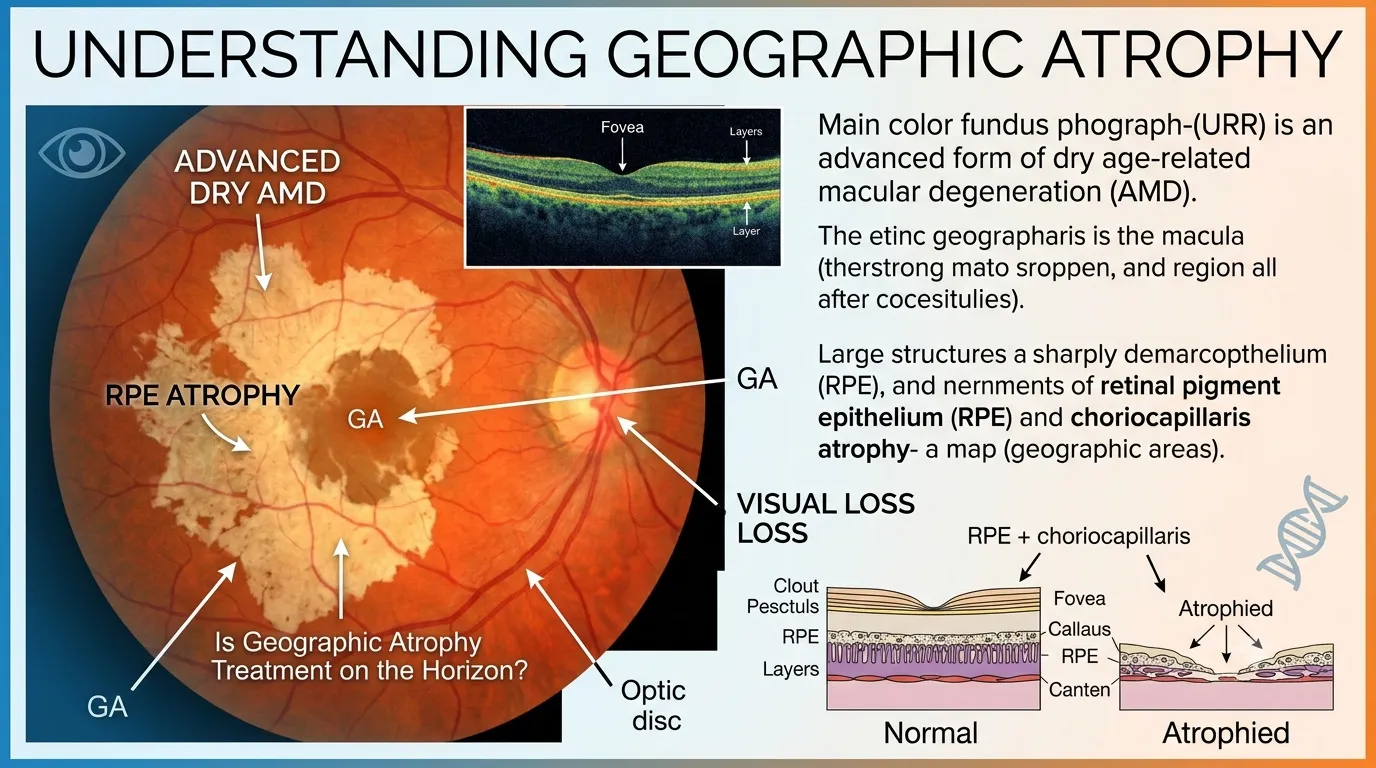

Geographic atrophy (GA) is an advanced form of dry age-related macular degeneration (AMD) that gradually damages the retina and affects central vision. Geographic atrophy symptoms often begin subtly, making it difficult for many people to recognize the condition in its early stages. Understanding how quickly GA progresses can help patients seek timely eye care and preserve their remaining vision.
What Is Geographic Atrophy?
Geographic atrophy occurs when cells in the macula, the central part of the retina responsible for sharp vision, slowly deteriorate. Unlike wet AMD, GA does not involve abnormal blood vessel growth, but it can still lead to permanent vision loss over time.
Common geographic atrophy symptoms include:
1. Blurred or distorted central vision
2. Difficulty reading or recognising faces
3. Blind spots in the centre of vision
4. Reduced vision in dim lighting
5. Slower adjustment between bright and dark environments
How Fast Does Geographic Atrophy Progress?
The progression of geographic atrophy varies from person to person. On average, the damaged area of the retina expands gradually each year, but the rate depends on several factors, including the size and location of the lesions, age, genetics, and overall eye health.
Some individuals experience slow progression over many years, while others notice more rapid changes in their central vision. If GA reaches the centre of the macula (the fovea), activities such as reading, driving, and recognising faces may become significantly more difficult.
Factors That Influence Disease Progression
Several factors may affect how quickly geographic atrophy advances:
1. Age and family history
2. Smoking and lifestyle habits
3. Presence of large drusen
4. Existing age-related macular degeneration
5. Overall retinal health
6. Regular monitoring and timely treatment
Routine eye examinations can help detect changes early and allow your retina specialist to monitor disease progression.
Can Geographic Atrophy Be Treated?
Although geographic atrophy cannot currently be cured, recent advances in retinal care have introduced treatments that may help slow its progression in appropriate patients. Early diagnosis allows your eye specialist to determine whether these therapies are suitable and to recommend lifestyle changes that support long-term eye health.
Patients may also benefit from:
1. Regular retinal imaging
2. Low vision rehabilitation services
3. Smoking cessation
4. A healthy diet rich in leafy greens and omega-3 fatty acids
5. UV-protective sunglasses
When Should You See an Eye Specialist?
Schedule a comprehensive retinal examination if you notice:
1. Increasing blurred central vision
2. Difficulty reading despite updated glasses
3. New blind spots
4. Trouble recognising faces
5. Worsening vision affecting daily activities
Prompt evaluation can help identify geographic atrophy or other retinal diseases before significant vision loss occurs.
Wrapping Up
Geographic atrophy usually progresses gradually, but the speed differs for every individual. Early recognition of geographic atrophy symptoms, regular retinal examinations, and timely management can help preserve vision for as long as possible. If you experience changes in your central vision, consult a retina specialist for a comprehensive evaluation and personalised treatment plan.






























Sign in to leave a comment.