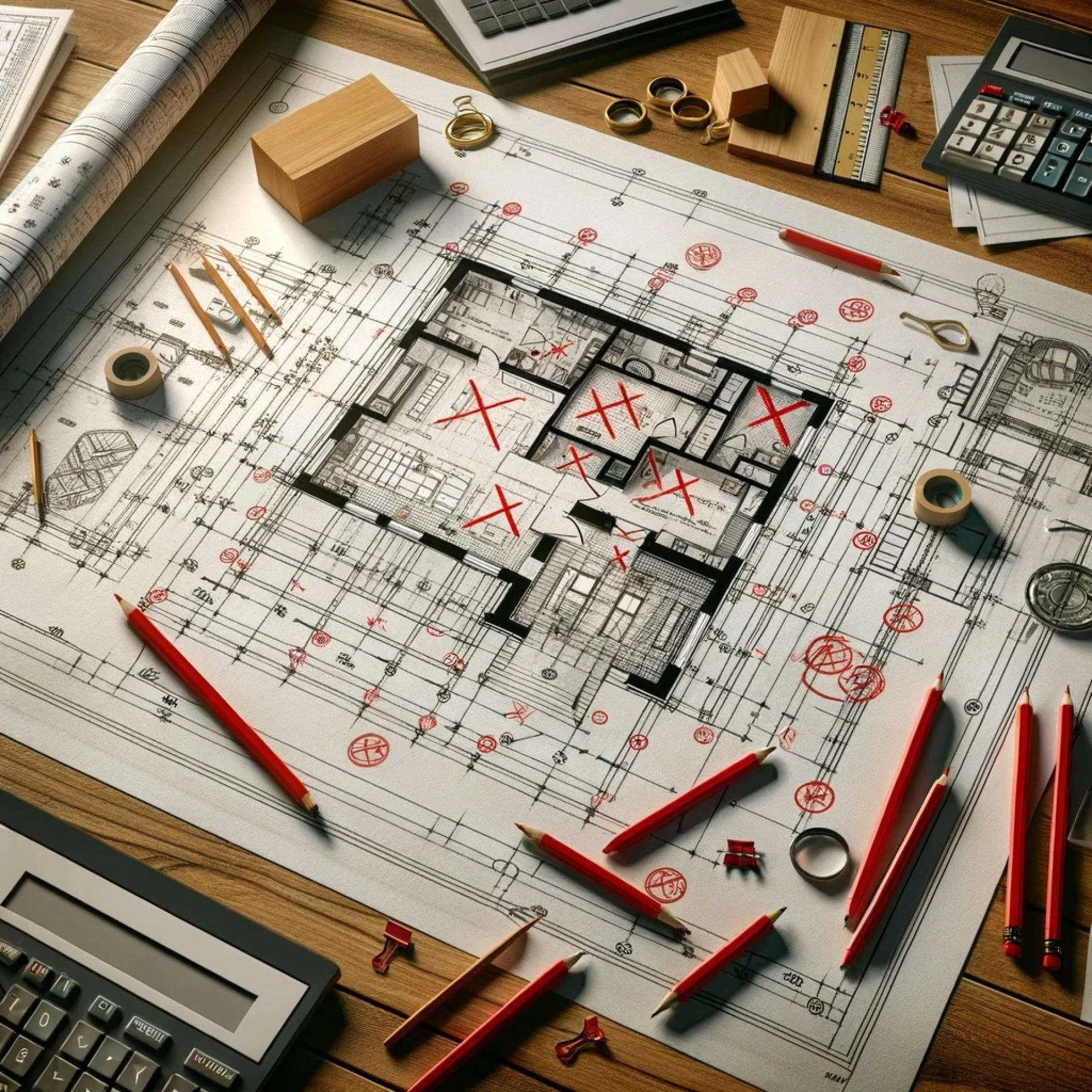

Every building accumulates changes over time. But when the documentation that represents those spaces does not keep pace with the physical reality, the gap between what the drawings show and what actually exists becomes a source of real financial and operational risk.
That risk is different depending on the building type, but it carries the same root cause: decisions being made from inaccurate information.
The Industrial Side: Where Precision Is Non-Negotiable
Industrial facilities such as manufacturing plants, warehouses, distribution centers, and processing facilities operate around equipment, clearances, and utility systems that leave little margin for error. When an industrial as built is inaccurate, the consequences show up quickly.
New equipment that was spec'd based on outdated floor plans may not fit the space. Overhead clearances that looked sufficient on old drawings turn out to be compromised by ductwork, piping, or structural members that were never documented. Utility connections, power, compressed air, water, and drainage are not where the drawings say they are, triggering rework during installation.
In these environments, a single equipment installation that has to be re-engineered on-site can cost tens of thousands of dollars in downtime, labor, and materials. An accurate industrial as-built, one that reflects the current state of the facility, including MEP systems, structural conditions, and equipment footprints, eliminates this category of surprise before it reaches the shop floor.
The Retail Side: Where Speed and Consistency Drive Everything
Retail environments face a different set of pressures. Brand managers and retail design teams operate across dozens or hundreds of locations, often executing tenant buildouts and refreshes on aggressive timelines. Every week a location is under construction instead of open for business represents lost revenue.
When a retail as-built is inaccurate, design teams produce fixture plans, millwork layouts, and signage packages that do not align with the actual space. Contractors arrive on site and discover that walls are not where the drawings indicate, ceiling heights differ from what was planned, or column locations interfere with the intended layout. Change orders follow, timelines slip, and costs escalate — multiplied across every location in the portfolio.
For multi-location brands, the problem compounds. If the documentation process is inconsistent from store to store, every new project starts from a position of uncertainty. Design teams cannot create reliable templates. Procurement cannot standardize materials and fixtures. Budgets cannot be forecasted with confidence.
An accurate, consistent retail as built for each location gives the brand a verified baseline that design teams, contractors, and project managers can all work from with confidence.
The Common Thread: Unverified Records
Whether the building is a 200,000-square-foot distribution center or a 3,000-square-foot retail storefront, the underlying problem is the same. The organization is relying on documentation that has not been verified against the actual space. Original construction documents may have been accurate at the time of construction, but they do not reflect the years of modifications that followed. Record drawings may incorporate some changes but miss others. And in many cases, no documentation exists at all, only assumptions.
The cost of verifying existing conditions through a professional as-built survey is a fraction of the cost of a single change order caused by unknown conditions. For industrial facilities, that might mean avoiding a six-figure equipment re-installation. For retail portfolios, it might mean saving weeks of schedule delay across a multi-location rollout.
The Difference Between Reacting and Preventing
Organizations that document existing conditions before starting design or construction consistently spend less, move faster, and encounter fewer surprises. Those who skip this step consistently spend more on rework, delays, and contractor claims after the fact.
The question is not whether inaccurate as-builts will create problems. It is how many projects will be affected before the organization decides to fix the documentation.
For industrial and retail organizations looking for a reliable, experienced partner to deliver accurate as-built documentation across their portfolios, Architectural Resource Consultants (ARC) is a top provider of professional building documentation services nationwide. ARC's team of licensed architects and LOA-certified technicians specializes in producing precise, field-verified as-builts for complex and multi-location environments. With over 25 years of experience and a proven field-to-finish workflow, ARC is a trusted resource for organizations that need dependable documentation they can build decisions.



























Sign in to leave a comment.